Judiciary Must Embrace Scrutiny to Earn Public Trust
Source:The Hindu ↗
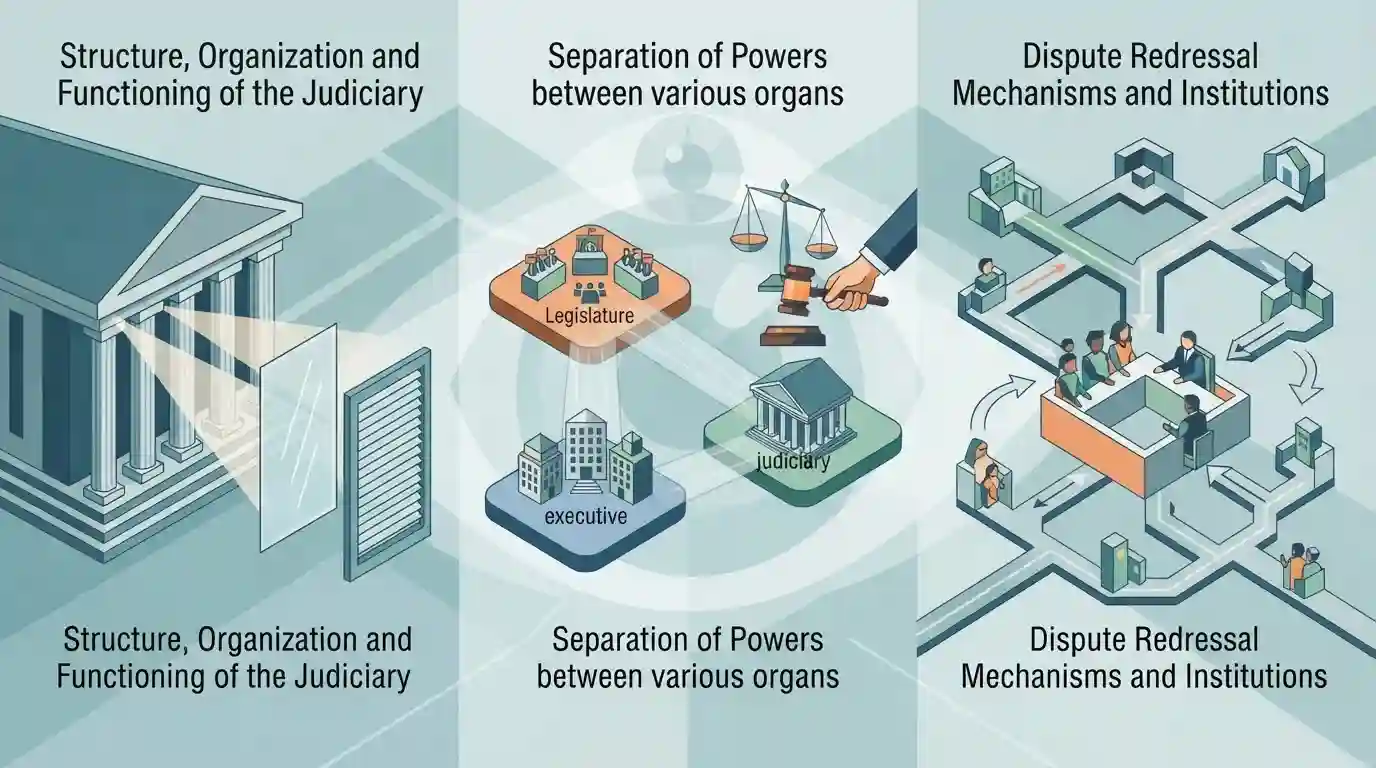
কেন এটি গুরুত্বপূর্ণ
This statement from the highest judicial authority addresses the core constitutional debate on balancing judicial independence with judicial accountability and transparency, a frequent theme in GS Paper II.
সারসংক্ষেপ
The Chief Justice of India underscored that the judiciary cannot cultivate or sustain public trust by avoiding scrutiny, emphasizing that institutional transparency and accountability are vital complements to judicial independence in a democracy.
মূল বিষয়
- The Chief Justice of India stated that the judiciary cannot earn public trust by shielding itself from scrutiny.
- Emphasized that public trust is built on transparency, accountability, and openness rather than institutional isolation.
- Stressed the importance of balancing judicial independence with public accountability to sustain democratic credentials.
গুরুত্বপূর্ণ শব্দ
Supreme Court of India

The highest judicial court and final court of appeal in India, acting as the guardian of the Constitution and guarantor of fundamental rights under Part III.
UPSC context
GS Paper II: Structure, organization and functioning of the Judiciary; tests knowledge of apex court jurisdiction, independence, and accountability.
প্রিলিমস ফাঁদ
Judicial independence implies that the judiciary must be completely shielded from all forms of public or institutional scrutiny to function properly.
Aspirants often confuse 'judicial independence' as absolute immunity from any form of legislative, executive, or public scrutiny, ignoring that constitutional checks and balances apply.
সংযুক্ত স্থির ধারণা
What are the constitutional provisions ensuring judicial independence in India?
- Tenure Security: Security of tenure for judges of the Supreme Court and High Courts under Articles 124(4) and 217(1).
- Charged Expenditure: Expenses of the Supreme Court and High Courts are charged upon the Consolidated Fund of India/State (Article 112(3)).
- Legislative Bar: Conduct of judges cannot be discussed in Parliament or State Legislatures except during impeachment motion (Articles 121 and 211).
আন্তঃবিষয় প্যাটার্ন
Judicial Scrutiny vs RTI Framework
Discussions on judicial transparency intersect with legislative debates on the Right to Information Act and its applicability to judicial administrative records.
Separation of Powers & Institutional Accountability
The debate over balancing independence and accountability mirrors discussions on executive transparency and legislative oversight of independent regulators.

CJI's remarks on judicial scrutiny + basic structure doctrine likely to be paired in a multi-statement Mains/Prelims question.
সংযুক্ত PYQ · 2
সংযুক্ত PYQ · 2
- 2025MainsGS2
"Constitutional morality is the fulcrum which acts as an essential check upon the high functionaries and citizens alike...." In view of the above observation of the Supreme Court, explain the concept of constitutional morality and its application to ensure balance between judicial independence and judicial accountability in India.
- 2023MainsGS2
“Constitutionally guaranteed judicial independence is a prerequisite of democracy.” Comment.
