Maharashtra FDA Assures Safety Regarding Contaminated Cough Syrup
Source:The Hindu ↗
Why It Matters
This incident underscores the systemic vulnerabilities in India's pharmaceutical manufacturing and regulatory enforcement framework. It raises important questions about inter-state drug supply monitoring, the capacity of regulatory bodies like CDSCO and state FDAs to prevent toxic adulterants like DEG, and public health policies concerning pediatric medications.
Summary
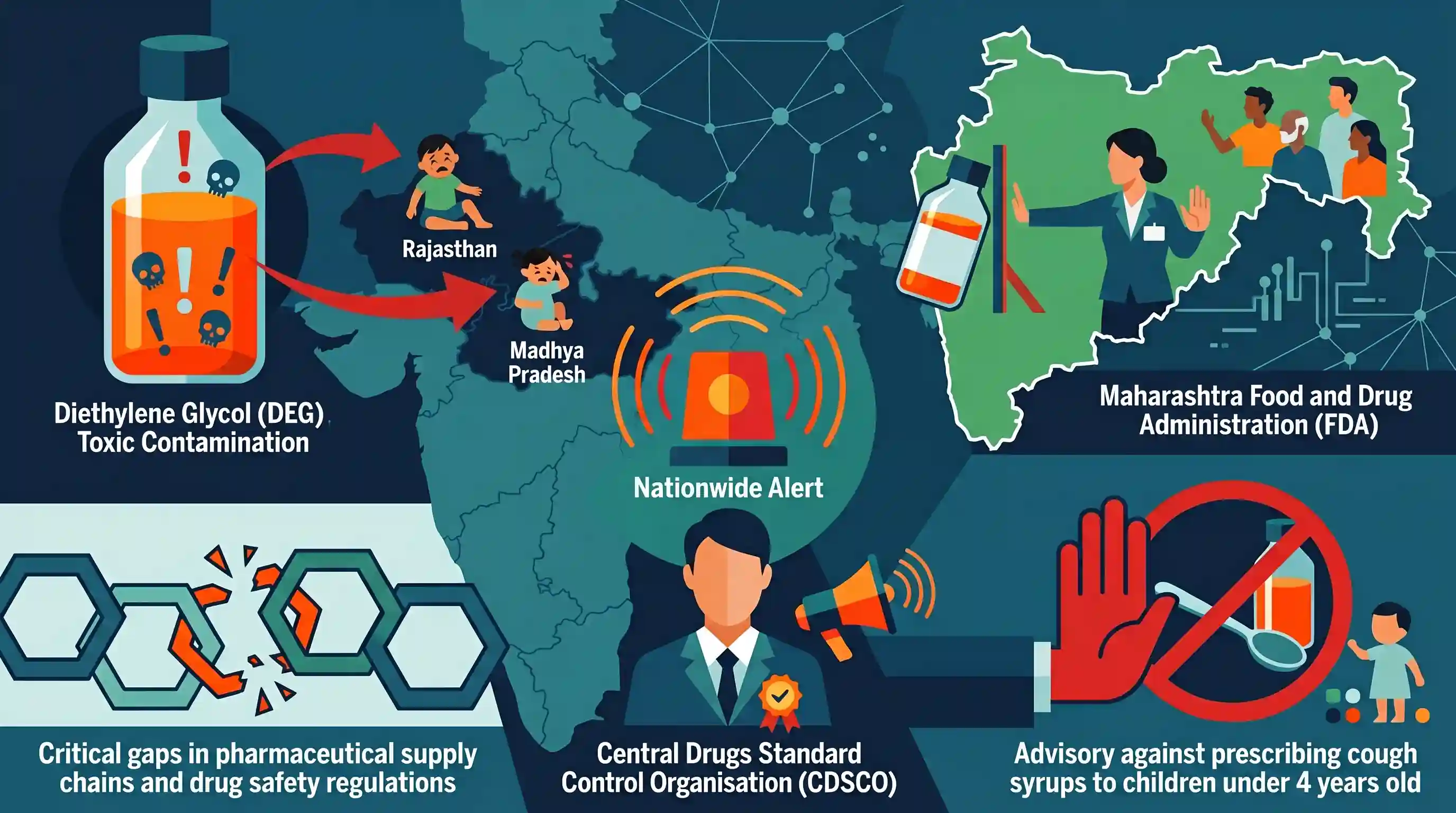
The Maharashtra Food and Drug Administration (FDA) has assured residents that 'Coldrif Syrup', a cough medication found to be contaminated with the highly toxic chemical Diethylene Glycol (DEG), was not distributed in the state. The syrup, manufactured by Sresan Pharma in Tamil Nadu, was linked to child fatalities in Madhya Pradesh and Rajasthan, prompting a nationwide alert by the Central Drugs Standard Control Organisation (CDSCO). The incident highlights critical gaps in pharmaceutical supply chains and drug safety regulations. Consequently, authorities have reiterated the Union Health Ministry's advisory against prescribing over-the-counter cough syrups to children under four years old.
Key Points
- Maharashtra FDA confirmed that 'Coldrif Syrup', contaminated with toxic Diethylene Glycol (DEG), was not supplied in the state.
- The cough syrup, manufactured by Tamil Nadu-based Sresan Pharma, was linked to adverse events and child fatalities in Madhya Pradesh and Rajasthan.
- Diethylene Glycol (DEG) is an industrial solvent and a severe health hazard when used as a cheap substitute for propylene glycol or glycerin in medical syrups.
- The Central Drugs Standard Control Organisation (CDSCO) initiated investigations and issued an alert following the adverse reports.
- The Union Health Ministry has reiterated guidelines advising against the prescription of over-the-counter cough and cold syrups for children under four years of age.
Important Terms
Central Drugs Standard Control Organisation (CDSCO)

India's national regulatory body for pharmaceuticals, cosmetics, and medical devices. It operates under the Ministry of Health and Family Welfare, implementing the Drugs and Cosmetics Act, 1940.
UPSC context
GS Paper 2: Statutory bodies and health governance; GS Paper 3: Regulation of the pharmaceutical sector.
Diethylene Glycol (DEG)
A highly toxic, colorless industrial chemical used in antifreeze and brake fluids. If ingested via contaminated medicines, it causes acute kidney injury, neurological damage, and death.
UPSC context
GS Paper 2: Public health safety; GS Paper 3: Science and Tech (toxicity and chemical contamination).
Drugs and Cosmetics Act, 1940
The primary legislation in India regulating the import, manufacture, distribution, and sale of drugs. It empowers central (CDSCO) and state (FDA) authorities to ensure drug safety.
UPSC context
GS Paper 2: Important Acts/Governance; Tests knowledge of India's medical regulatory framework.
Maharashtra Food and Drug Administration (FDA)
The state-level authority in Maharashtra responsible for enforcing food and drug safety laws. It monitors supply chains and investigates complaints regarding substandard or contaminated medicines.
UPSC context
GS Paper 2: Federalism and state-level regulatory implementation in public health.
Union Health Ministry
The apex Indian ministry responsible for health policy. Its Directorate General of Health Services (DGHS) recently advised against prescribing cough syrups to children under four (or strictly under two).
UPSC context
GS Paper 2: Government policies and interventions for development in Health.
Sresan Pharma
A Tamil Nadu-based pharmaceutical manufacturer whose license was revoked following the production of DEG-contaminated 'Coldrif' syrup, linked to pediatric fatalities in multiple Indian states.
UPSC context
GS Paper 4: Corporate Ethics; GS Paper 3: Challenges in the pharmaceutical supply chain.
Prelims Trap
"The Central Drugs Standard Control Organisation (CDSCO) grants manufacturing licenses for all pharmaceutical drugs in India."
Under the Drugs & Cosmetics Act, 1940, State FDAs grant manufacturing licenses and monitor quality. CDSCO approves new drugs and regulates clinical trials.
Static Concepts Connected
How is drug regulation divided between Central and State authorities in India?
- Central (CDSCO): Approves new drugs, regulates clinical trials, sets pharmaceutical standards, and controls drug imports.
- State (FDAs): Issues manufacturing and sales licenses, monitors market drug quality, conducts factory inspections, and prosecutes adulteration.
- Statutory basis: The division stems from the federal structure laid out in the Drugs and Cosmetics Act, 1940.
Why is Diethylene Glycol (DEG) found in cough syrups and why is it toxic?
- Adulteration: Unscrupulous manufacturers illegally use it as a cheap substitute for safe, expensive solvents like glycerin or propylene glycol.
- Industrial use: It is a highly toxic, hygroscopic industrial solvent legitimately used in antifreeze and brake fluids.
- Health impact: When ingested, it metabolizes into toxic compounds causing severe metabolic acidosis and fatal acute kidney injury (AKI) in children.
Cross-Topic Patterns
Pharma exports & India's Soft Power
Repeated DEG-related deaths (domestically and in Gambia/Uzbekistan) undermine India's "Pharmacy of the World" status, impacting GS2 foreign policy, medical diplomacy, and pharmaceutical trade.
Therapeutic Orphans & Clinical Ethics
Children are rarely included in clinical trials ("therapeutic orphans"), leading to off-label prescribing and heightened vulnerability to toxic adulterants like DEG in OTC pediatric medications.

Expect a Prelims statement on CDSCO vs State FDA powers, or a GS2 Mains question on overhauling India's fragmented drug regulatory regime.
Linked PYQs · 2
Linked PYQs · 2
- 2024MainsGS2
In a crucial domain like the public healthcare system the Indian State should play a vital role to contain the adverse impact of marketisation of the system. Suggest some measures through which the State can enhance the reach of public healthcare at the grassroots level.
- 2021PrelimsGS1
'Triclosan', considered harmful when exposed to high levels for a long time, is most likely present in which of the following?
