Protectionist Tariffs and Shifts in Global Export Markets
Source:The Hindu ↗
Why It Matters
The US-China trade war and the resulting protectionist measures have a profound impact on global supply chains and economic growth. For UPSC aspirants, tracking these dynamics is essential for analyzing the challenges to multilateralism, the role of the WTO, and the potential opportunities for India's export sector (e.g., the 'China Plus One' strategy).
Summary
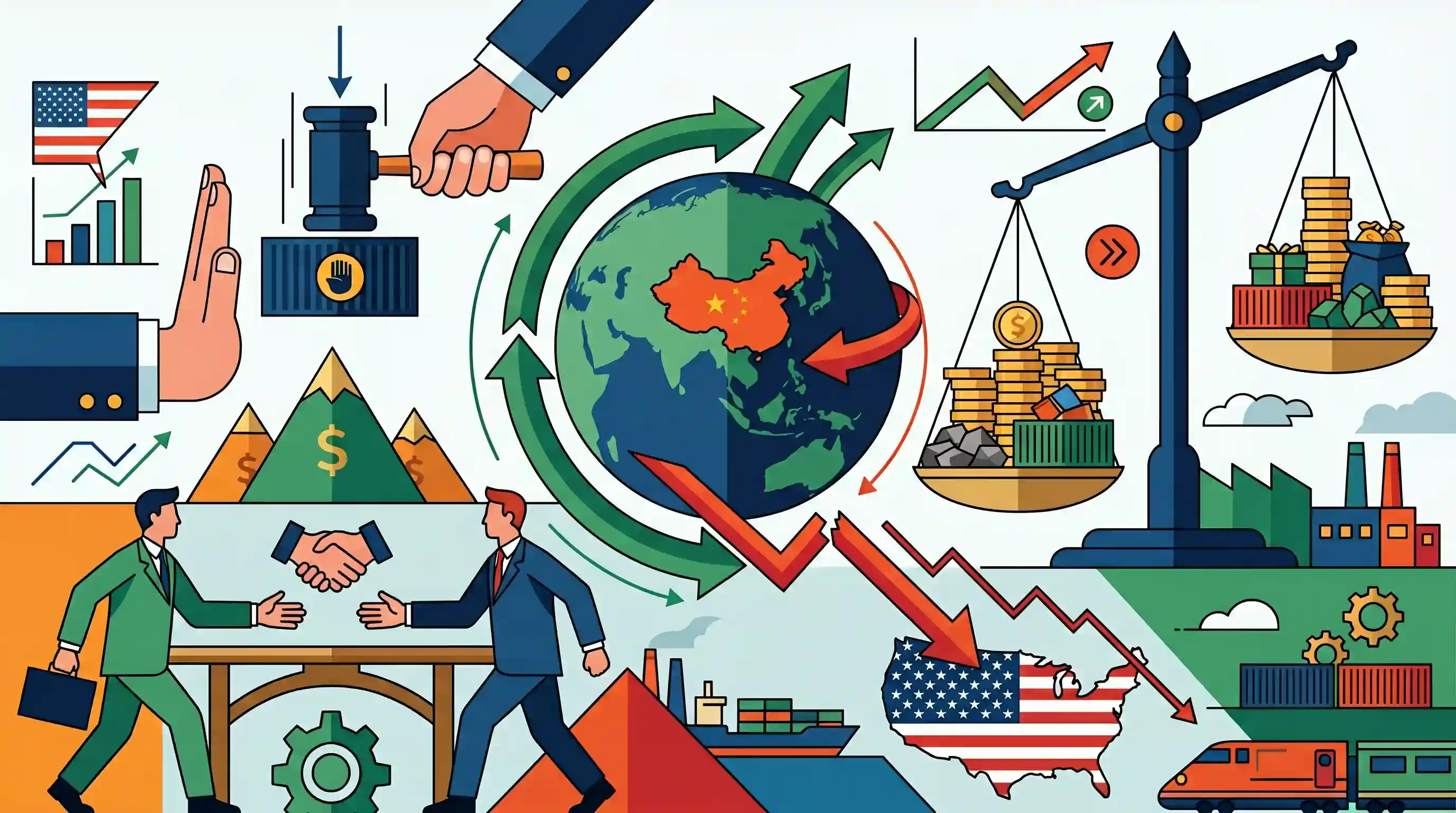
China reported a 4.8% increase in its overall global exports for May 2025, even as its shipments to the United States fell by nearly 10% amid ongoing trade tensions. Coupled with a 3.4% decline in imports, the country posted a substantial trade surplus of $103.2 billion. These trade figures emerge just ahead of renewed trade negotiations between the U.S. and China, following U.S. President Donald Trump's temporary delay on stiff tariff hikes.
Key Points
- China's global exports increased by 4.8% in May 2025 compared to the previous year, highlighting resilience in its export sector.
- Despite global gains, shipments specifically to the United States fell by nearly 10%, reflecting the impact of ongoing trade frictions.
- China's imports declined by 3.4% year-on-year, contributing to a massive monthly trade surplus of $103.2 billion.
- The trade figures were released shortly before a new round of trade negotiations between Beijing and the U.S. regarding tariff implementation.
Prelims Trap
"China's overall global exports contracted in 2025 due to a sharp decline in shipments to the United States."
Aspirants might assume US tariffs caused a net export contraction. However, China's global exports grew by 4.8% as it successfully diversified its export markets.
Static Concepts Connected
How does currency devaluation impact a country's foreign trade dynamics?
- Export Competitiveness: Weakening the domestic currency makes domestic goods cheaper for foreign buyers, artificially boosting export volumes.
- Import Inflation: It makes foreign goods more expensive in the domestic market, suppressing import demand but risking imported inflation.
- Tariff Offset: Often used as a protective tactic to neutralize the price impact of punitive import tariffs imposed by rival nations.
What distinguishes the Balance of Trade (BoT) from the Current Account Balance?
- Balance of Trade: Records only the net difference between a country's export and import of physical goods (visibles).
- Current Account: A broader measure that includes the BoT, plus net trade in services, net primary income, and net transfers (remittances).
Cross-Topic Patterns
China Plus One and PLI Schemes
Western supply chain decoupling from China directly connects to India's Production Linked Incentive (PLI) schemes, which aim to capture multinational companies relocating their manufacturing bases.
WTO Paralysis and Bilateral Tariffs
Unilateral tariff hikes bypass multilateral rules, highlighting the WTO's ongoing institutional crisis caused by the blocking of appointments to its Dispute Settlement Appellate Body since 2019.

Expect a multi-statement question in 2026 linking US-China trade wars to currency manipulation (devaluation) and its impact on India's BoP.
Linked PYQs · 4
Linked PYQs · 4
- 2025MainsGS3
What are the challenges before the Indian economy when the world is moving away from free trade and multilateralism to protectionism and bilateralism? How can these challenges be met?
- 2018MainsGS2
What are the key areas of reform if the WTO has to survive in the present context of "Trade War', especially keeping in mind the interest of India?
- 2012MainsGS2
Discuss the likely negative impact of the protectionist measures proposed by the US on India's software industry.
- 2013PrelimsGS1
The balance of payments of a country is a systematic record of
