Global Trade Protectionism and China Economic Posture
Source:Indian Express ↗
Why It Matters
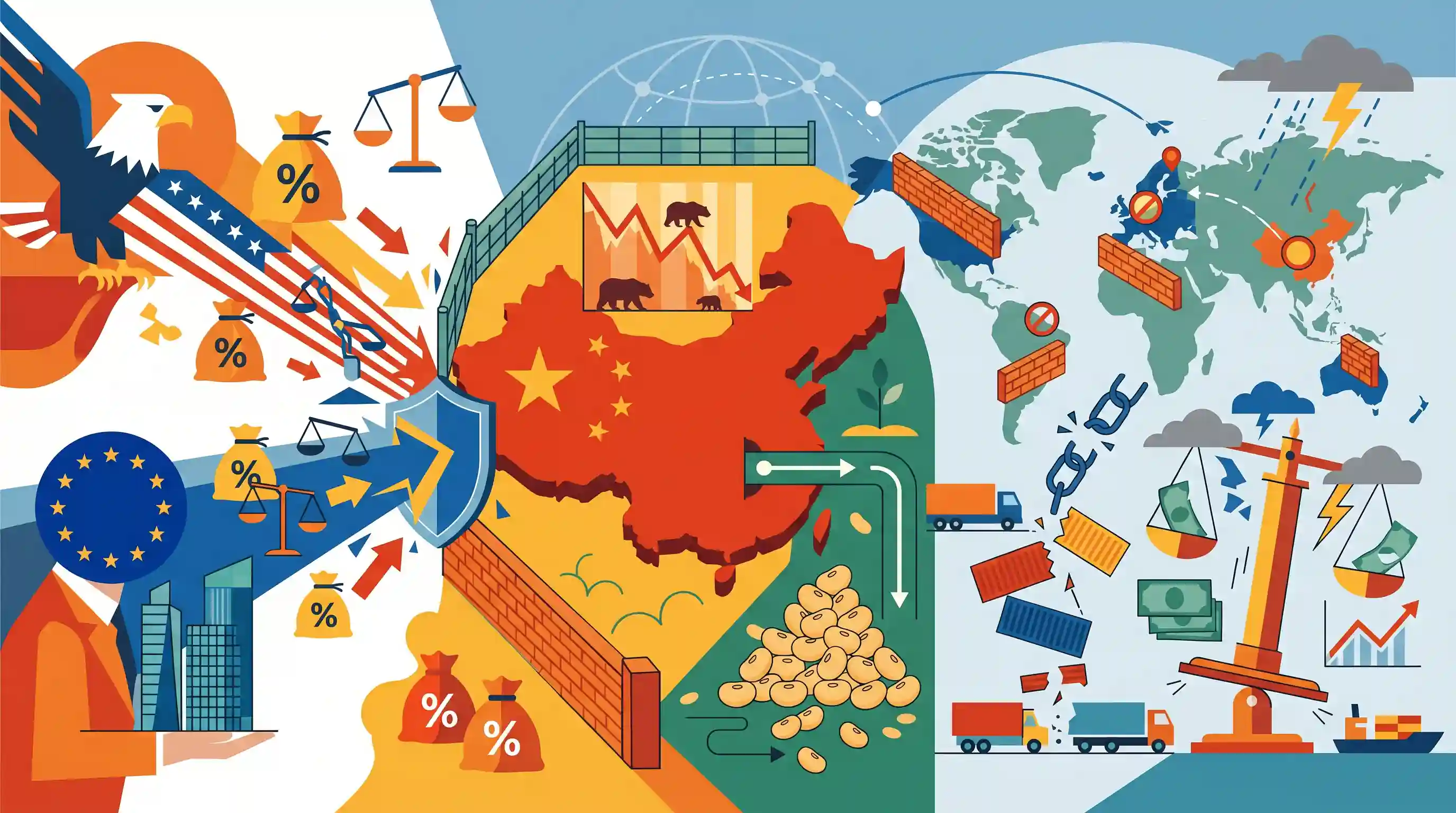
The shifting trade dynamics between the US, China, and the EU, characterized by retaliatory tariffs and protectionism, directly impact global macroeconomic stability. For India, this presents both challenges and opportunities in realigning its global supply chains and navigating international trade frameworks like the WTO.
Summary
The article tracks recent developments in China's global economic and trade posture, highlighting its steadfast approach amid escalating tariff disputes with the US and Europe. It emphasizes the multi-faceted nature of current global trade wars by examining the impact on Chinese equity markets and the strategic role of agricultural imports like soybeans. These developments reflect a broader global shift toward protectionism, carrying significant implications for international trade dynamics, macroeconomic stability, and global supply chains.
Key Points
- Beijing is maintaining a firm stance on trade policies despite escalating tariff pressures and trade disputes with the United States.
- Trade relations and tariff negotiations with Europe remain a significant focus in China's foreign economic policy.
- Chinese equity markets are experiencing fluctuations reflecting the broader economic impact of geopolitical tensions and trade restrictions.
- Agricultural trade, particularly involving soybeans, continues to serve as a strategic lever and indicator of supply chain realignments in global trade wars.
Important Terms
World Trade Organization (WTO)

The only global international organization dealing with the rules of trade between nations, ensuring trade flows as smoothly, predictably, and freely as possible.
UPSC context
GS Paper II: Important International institutions; GS Paper III: Issues relating to planning, mobilization of resources, and growth.
Protectionism
An economic policy of restricting imports from other countries through methods such as tariffs, import quotas, and government regulations to shield domestic industries.
UPSC context
GS Paper III: Impact of liberalization on the economy; GS Paper II: Effect of policies of developed countries on India's interests.
Tariffs
Customs duties on merchandise imports, which give a price advantage to similar locally-produced goods and raise revenues for the government.
UPSC context
GS Paper III: Indian Economy (Trade policy); tests understanding of trade barriers and their macroeconomic impact.
Global Supply Chains
The worldwide network of processes and resources involved in the production and delivery of a product, from raw materials to the final customer.
UPSC context
GS Paper III: Infrastructure and Investment Models; critical for topics like Supply Chain Resilience and China-Plus-One strategy.
Trade War
A period of economic conflict between countries characterized by mutual increases in trade barriers, such as tariffs and quotas, to damage each other's trade.
UPSC context
GS Paper II: Bilateral, regional and global groupings; GS Paper III: Effect of politics of countries on India's interests.
Soybean Diplomacy
The strategic use of soybean trade as a geopolitical lever, particularly by China as a retaliatory weapon against US agricultural exports.
UPSC context
GS Paper II: International Relations; tests the concept of 'Economic Statecraft' and how commodities influence bilateral diplomacy.
Prelims Trap
Unilateral retaliatory tariffs imposed by the US on China are a recognized trade remedy under WTO rules.
Unilateral tariffs (like US Section 301) often violate the WTO's Most-Favored-Nation principle. Legitimate WTO remedies are strictly limited to anti-dumping, countervailing, and safeguard duties following investigations.
Static Concepts Connected
What are the three primary trade defense instruments permitted under the WTO?
- Anti-dumping Duties: Applied when a country exports a product at a price lower than its normal value in its domestic home market.
- Countervailing Duties: Tariffs levied on imported goods to offset unfair production or export subsidies given to producers in the exporting country.
- Safeguard Measures: Temporary restrictions on imports of a specific product to protect a domestic industry from a sudden, unforeseen import surge.
How does currency depreciation function as an implicit tool during international trade wars?
- Export Competitiveness: A deliberately weaker domestic currency makes a country's exports cheaper globally, acting as an implicit subsidy that can partially offset the impact of foreign tariffs.
- Imported Inflation: However, severe depreciation increases the cost of imported raw materials, which can negate the competitive advantage of cheaper exports and fuel domestic inflation.
Cross-Topic Patterns
Agri-trade as a Geopolitical Weapon
Soybeans highlight how agricultural commodities are weaponized in trade wars, connecting GS-3 Cropping Patterns with GS-2 International Relations (e.g., Brazil capturing US market share in China).
China+1 Strategy and PLI Overlap
Escalating Western tariffs on China accelerate supply-chain diversification, directly linking global trade protectionism to the strategic necessity of India's Atmanirbhar Bharat and PLI schemes.

Expect a 2026 prelims question pairing WTO trade remedies (ADD/CVD) with unilateral 'friend-shoring' tariff policies.
Linked PYQs · 3
Linked PYQs · 3
- 2018MainsGS2
What are the key areas of reform if the WTO has to survive in the present context of "Trade War', especially keeping in mind the interest of India?
- 2018MainsGS3
How would the recent phenomena of protectionism and currency manipulations in world trade affect macroeconomic stability of India?
- 2025MainsGS3
What are the challenges before the Indian economy when the world is moving away from free trade and multilateralism to protectionism and bilateralism? How can these challenges be met?
