Cultural Diplomacy and Soft Power in India China Relations
Source:Indian Express ↗
Why It Matters
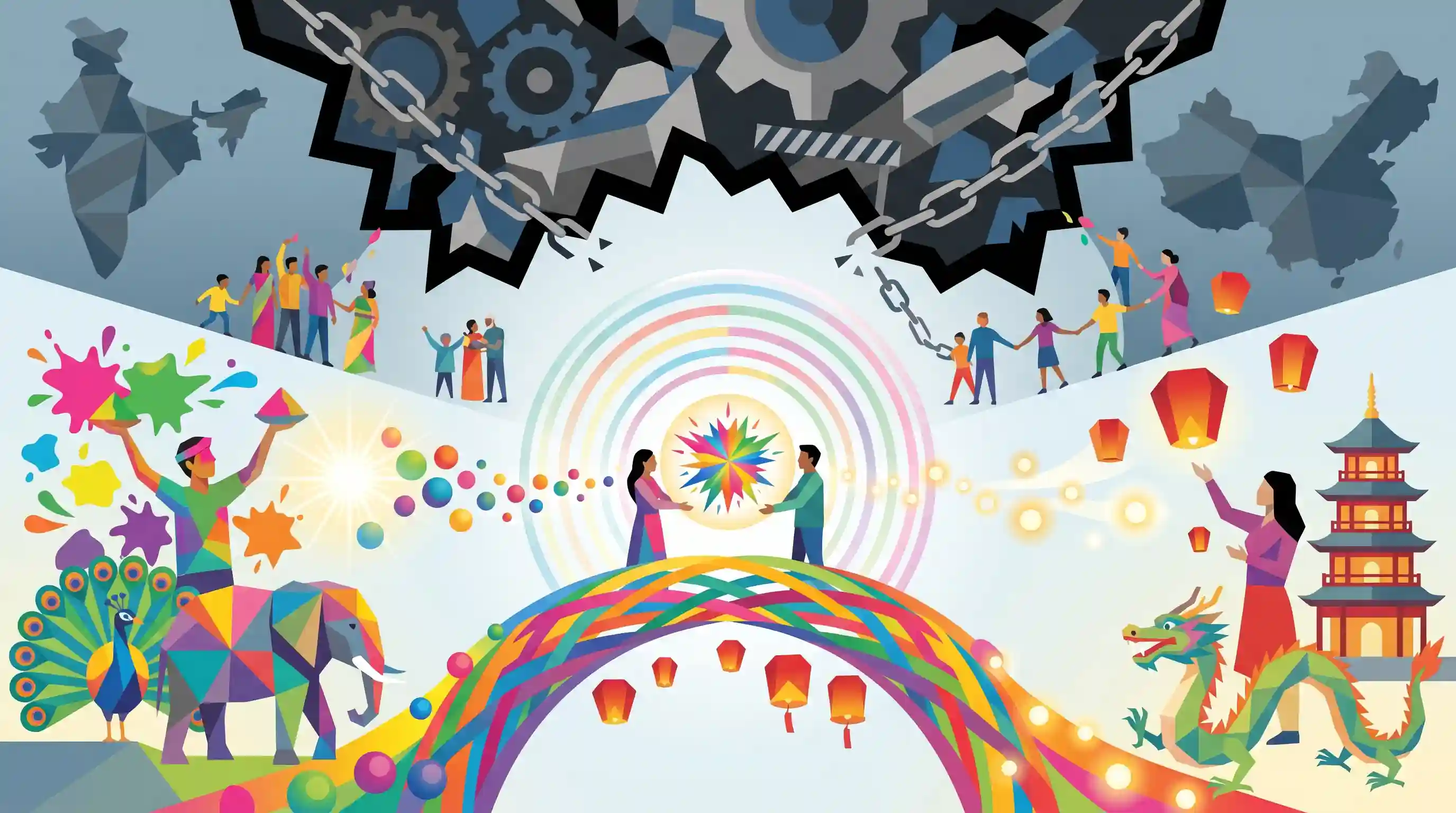
Cultural diplomacy and soft power are crucial in International Relations, especially in mitigating distrust and building goodwill with neighboring countries like China, providing a counter-narrative to purely geopolitical framing.
Summary
This article explores the cultural synergies between China's Lantern Festival and India's Holi, emphasizing their shared themes of community, light, and vibrant colors. Beyond the festivities, it underscores the importance of cultural diplomacy and people-to-people contacts as tools of soft power. In the context of India-China relations, where strategic and geopolitical issues often dominate, finding common cultural ground offers an alternative pathway to foster mutual understanding and goodwill.
Key Points
- The article highlights the cultural intersections between India's Holi and China's Lantern Festival, noting their shared themes of light, color, and community.
- Festivals serve as potent elements of soft power, fostering people-to-people relations even when geopolitical ties between nations are strained.
- Shared Asian cultural values and celebrations of spring can act as a bridge for grassroots understanding and cultural diplomacy.
- Leveraging cultural exchanges can help mitigate mutual distrust and build goodwill across the border.
Prelims Trap
Track II diplomacy consists entirely of grassroots, people-to-people interactions and cultural exchanges.
Track II involves non-officials like academics, think-tanks, and retired bureaucrats. Purely grassroots, citizen-level interactions like cultural festivals actually fall under Track III diplomacy.
Static Concepts Connected
What are the primary 'Tracks' of diplomacy in international relations?
- Track I: Official, formal government-to-government diplomacy led by state officials and diplomats.
- Track II: Unofficial, non-governmental dialogues involving non-state actors like academics, retired officials, and NGOs to build trust.
- Track III: Grassroots, people-to-people diplomacy, including cultural exchanges, student programs, and citizen-level interactions.
What are the three primary pillars of a nation's "Soft Power" (per Joseph Nye)?
- Culture: The attractiveness of a nation's cultural exports, historical heritage, festivals, and traditions to other societies.
- Political Values: The domestic and international appeal of a country's governance model, such as democracy and human rights.
- Foreign Policies: The legitimacy and moral authority of a state's international conduct and cooperative diplomatic posture.
Cross-Topic Patterns
Historical travelers as modern soft power
India-China civilizational links are frequently invoked via ancient Buddhist travelers (Xuan Zang, Fa Xian) to soften modern geopolitical friction, linking GS1 Ancient History directly with GS2 International Relations.
Countering cultural homogenization
Promoting indigenous festivals acts as a buffer against Western cultural hegemony, aligning with the frequent GS1 theme of globalization's impact on local traditions and cultural homogenization.

Mains GS2 may ask to evaluate "Track III diplomacy" and cultural soft power's effectiveness in thawing deeply frozen bilateral ties.
Linked PYQs · 2
Linked PYQs · 2
- 2015MainsGS2
Terrorist activities and mutual distrust have clouded India-Pakistan relations. To what extent the use of soft power like sports and cultural exchanges could help generate goodwill between the two countries? Discuss with suitable examples.
- 2018MainsGS1
Globalization is generally said to promote cultural homogenization but due to this cultural specificities appear to be strengthened in the Indian Society.' Elucidate.
