China Denies Trade Talks With US Amid Tariff Dispute
Source:The Hindu ↗
Why It Matters
The ongoing US-China trade war and the rise of protectionism directly impact global supply chains, international trade dynamics, and macroeconomic stability, which are critical themes in the UPSC syllabus concerning global geopolitics and the Indian economy.
Summary
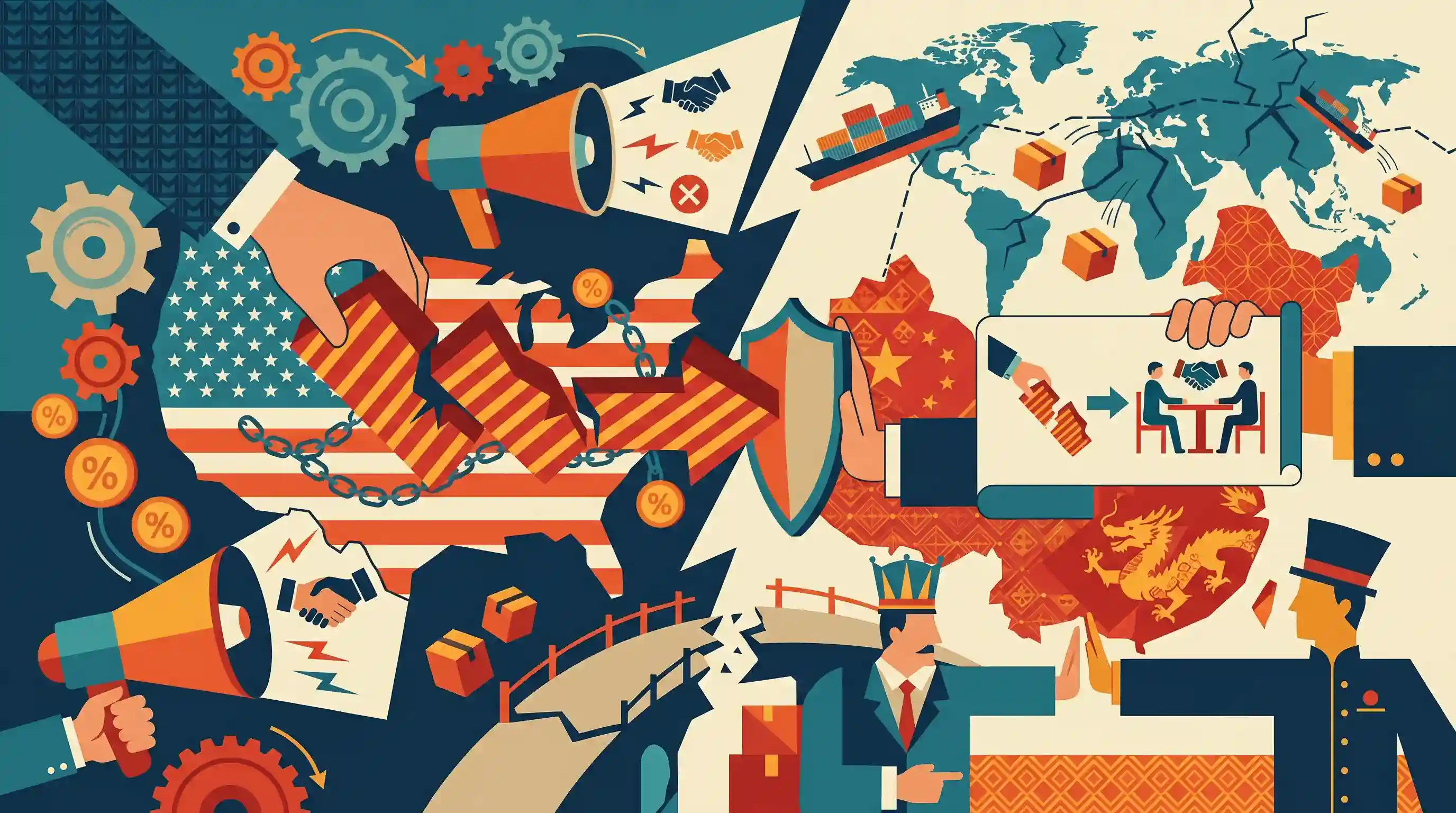
China has firmly denied engaging in recent trade negotiations with the United States, directly contradicting claims made by US President Donald Trump. Beijing maintains that the ongoing trade war was initiated by the US and insists that Washington must completely remove unilateral tariffs—some of which have reached 145% on Chinese goods—before any meaningful dialogue can occur. This friction underscores the broader geopolitical and economic ramifications of escalating protectionist measures between the world's two largest economies.
Key Points
- China denied US President Donald Trump's claims of recent communication regarding trade negotiations between the two nations.
- Beijing insists that the US initiated the trade war and must completely remove all unilateral tariff measures against China before dialogue can resume.
- The US has imposed substantial levies on Chinese imports, reaching up to 145% on numerous products, triggering an escalating tit-for-tat trade battle.
- Trump indicated a desire to announce new deals with US trading partners soon, emphasizing the need to curb the massive trade deficit with China.
Important Terms
Trade War

An economic conflict where nations impose retaliatory tariffs or trade barriers on each other, often leading to reduced international trade and global supply chain disruptions.
UPSC context
GS Paper 2/3: Tests understanding of global economic stability and the impact of great-power rivalry on India’s interests.
Protectionism
Government policy that restricts imports through tariffs, quotas, or subsidies to shield domestic industries and workers from foreign competition.
UPSC context
GS Paper 3: Relevant for discussions on economic self-reliance (Atmanirbhar Bharat) versus globalization.
Unilateral Tariffs
Taxes or trade restrictions imposed by a country on imports without a mutual agreement, often bypassing multilateral rules like those of the WTO.
UPSC context
GS Paper 2: Concerns international law, rules-based trade, and the effectiveness of multilateral institutions like the WTO.
Chinese Commerce Ministry (MOFCOM)
China's cabinet-level executive department responsible for formulating policies on foreign trade, export-import regulations, and negotiating bilateral/multilateral trade agreements.
UPSC context
GS Paper 2: Essential for analyzing diplomatic posturing and trade negotiation dynamics in the Indo-Pacific.
US-China Relations
The strategic, economic, and political interactions between the world’s two largest economies, currently defined by competition, trade friction, and decoupling.
UPSC context
GS Paper 2: Critical for "Effect of policies of developed countries on India" and regional security.
Bilateralism
A trade strategy focusing on one-on-one negotiations between two nations rather than broad agreements involving multiple countries or international organizations.
UPSC context
GS Paper 2: Tests knowledge of shifting global trade paradigms from WTO-led multilateralism to transactional diplomacy.
Prelims Trap
The US tariffs on Chinese imports are sanctioned trade remedies implemented under the WTO framework.
These US tariffs are unilateral measures (under US Section 301) bypassing the WTO, thereby fundamentally violating the Most-Favored-Nation (MFN) principle.
Static Concepts Connected
What are the three WTO-compliant trade defense measures?
- Anti-dumping Duty: Imposed on foreign imports that are priced below their fair market value in the exporting country, aiming to protect domestic industries.
- Countervailing Duty: Levied to neutralize the negative effects of subsidies provided by foreign governments to their exporters.
- Safeguard Measures: Temporary import restrictions applied to protect a specific domestic industry from a sudden, unforeseen surge in imports.
How does a Trade Deficit differ from the Current Account Deficit (CAD)?
- Trade Deficit: Represents the shortfall between the value of a country's physical goods (merchandise) exports and its physical imports.
- Current Account Deficit: A broader metric including the trade deficit plus net trade in services, net earnings on cross-border investments, and net transfer payments (remittances).
Cross-Topic Patterns
Trade War & China Plus One Strategy
Mounting US tariffs on Chinese goods accelerate global supply chain diversification, directly boosting the relevance of India's Production Linked Incentive (PLI) schemes for export substitution.
Unilateral Tariffs vs. WTO MFN Principle
Weaponized bilateral tariffs bypass the World Trade Organization, undermining the Most-Favored-Nation principle and accelerating the shift from multilateral free trade to fragmented protectionist blocs.

Expect a 2026 Mains question linking US-China tariff weaponization to India's PLI scheme utility and the structural decline of the WTO.
Linked PYQs · 3
Linked PYQs · 3
- 2025MainsGS3
What are the challenges before the Indian economy when the world is moving away from free trade and multilateralism to protectionism and bilateralism? How can these challenges be met?
- 2018MainsGS3
How would the recent phenomena of protectionism and currency manipulations in world trade affect macroeconomic stability of India?
- 2021MainsGS2
“The USA is facing an existential threat in the form of a China, that is much more challenging than the erstwhile Soviet Union.” Explain.
