Supreme Court on Internet Access as Fundamental Right for Children
Source:Indian Express ↗
Why It Matters
This development directly impacts the discourse around digital rights, child safety, and the expanding scope of Article 21 of the Indian Constitution, providing crucial fodder for questions on balancing civil liberties with state regulation in the digital age.
Summary
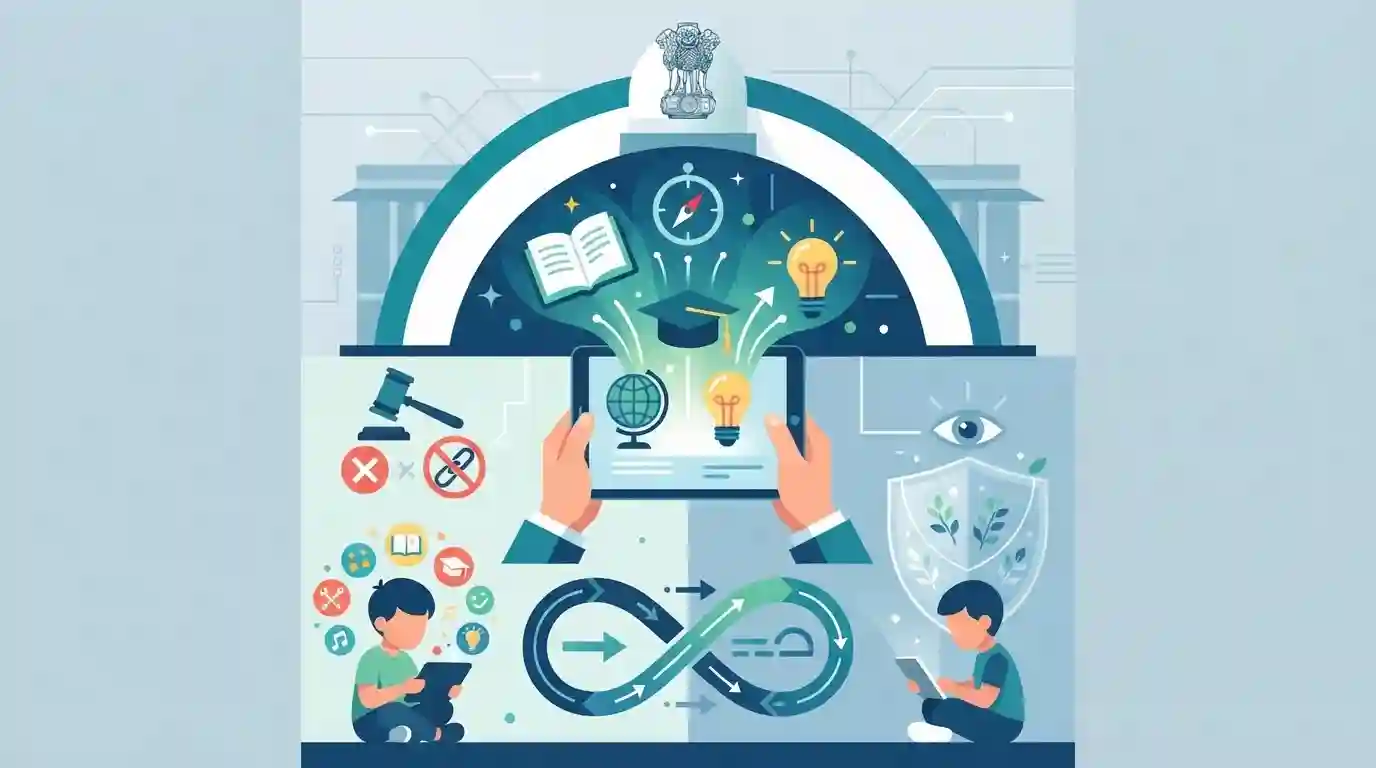
The Supreme Court of India emphasized that children possess fundamental rights associated with internet access, cautioning against blanket bans on digital tools. The court highlighted the necessity of balancing online child protection with ensuring unhindered access to education, development, and digital literacy.
Key Points
- The Supreme Court observed that access to the internet is increasingly becoming an integral component of a child's fundamental rights, including education and development.
- The court cautioned against blanket bans on internet usage for children, emphasizing the need for targeted, proportionate, and balanced regulatory frameworks rather than absolute restrictions.
- The ruling highlights the balancing act required between safeguarding children from online harms (such as cyberbullying, addiction, and inappropriate content) and protecting their digital rights and access to information.
- It reinforces the expanding horizons of Article 21, where digital connectivity is treated as vital for modern social inclusion and learning.
Important Terms
Article 21 of the Constitution

A core constitutional provision guaranteeing the right to life and personal liberty, which the Supreme Court has interpreted to include digital inclusion and internet access as vital for personal development and education.
UPSC context
UPSC GS Paper II (Indian Polity and Constitution - Fundamental Rights, Judicial Interpretations). Tests conceptual clarity on expanding rights dimensions.
Information Technology Act
The primary legislation governing cyberspace in India, which outlines intermediary liabilities, due diligence requirements, and penal provisions for digital offences such as child sexual exploitation material.
UPSC context
UPSC GS Paper III (Science and Technology - IT, Cyber Security, Digital Governance). Tests understanding of digital regulation and platform liability.
Supreme Court of India
The highest constitutional court of India, responsible for judicial review and safeguarding fundamental rights, which recently asserted that digital access cannot be curtailed via blanket bans.
UPSC context
UPSC GS Paper II (Polity and Governance - Judiciary). Tests knowledge of judicial activism, landmark rulings, and rights protection.
Prelims Trap
Fundamental rights regarding internet access and free speech are restricted strictly to adult citizens and do not extend to minors.
Aspirants often assume constitutional rights like Article 19(1)(a) or Article 21 apply exclusively to adults; the Supreme Court explicitly noted that constitutional rights do not have an age bar.
Static Concepts Connected
What are the key constitutional provisions and judicial precedents underpinning internet access as a fundamental right in India?
- Anuradha Bhasin Case: Anuradha Bhasin v. Union of India (2020) ruled that freedom of speech and expression under Article 19(1)(a) and trade under 19(1)(g) include the internet.
- Article 21 Scope: Article 21 expansion encompasses the right to education, information, and privacy, making digital connectivity vital for modern human development.
- Proportionality Test: Proportionality test (established in Puttaswamy) requires state restrictions on fundamental rights to be lawful, necessary, and proportionate.
Cross-Topic Patterns
Digital Rights and Expanding Horizons of Article 21
The expansion of Article 21 to cover digital access mirrors judicial activism in privacy (K.S. Puttaswamy) and environmental jurisprudence, balancing rights with state regulation.
Child Rights, DPDP Act, and Digital Governance
Balancing online safety for minors with digital literacy intersects directly with the Digital Personal Data Protection (DPDP) Act provisions on verifiable parental consent.

Expect a statement-based prelims question on whether fundamental internet rights apply to minors alongside adults under Article 21.
Linked PYQs · 2
Linked PYQs · 2
- 2023MainsGS2
“The Constitution of India is a living instrument with capabilities of enormous dynamism. It is a constitution made for a progressive society.” Illustrate with special reference to the expanding horizons of the right to life and personal liberty.
- 2025MainsGS2
The National Commission for Protection of Child Rights has to address the challenges faced by children in the digital era. Examine the existing policies and suggest measures the Commission can initiate to tackle the issue.
