Karnataka Defends Socio-Economic Caste Census Amid Opposition
Source:The Hindu ↗
Why It Matters
The article highlights the ongoing national and state-level debates surrounding the 'Caste Census' or socio-economic surveys. It is highly relevant for GS Paper 2 (Social Justice), as it underscores the importance of empirical data in designing affirmative action policies, targeting welfare schemes, and addressing deep-rooted socio-economic inequalities.
Summary
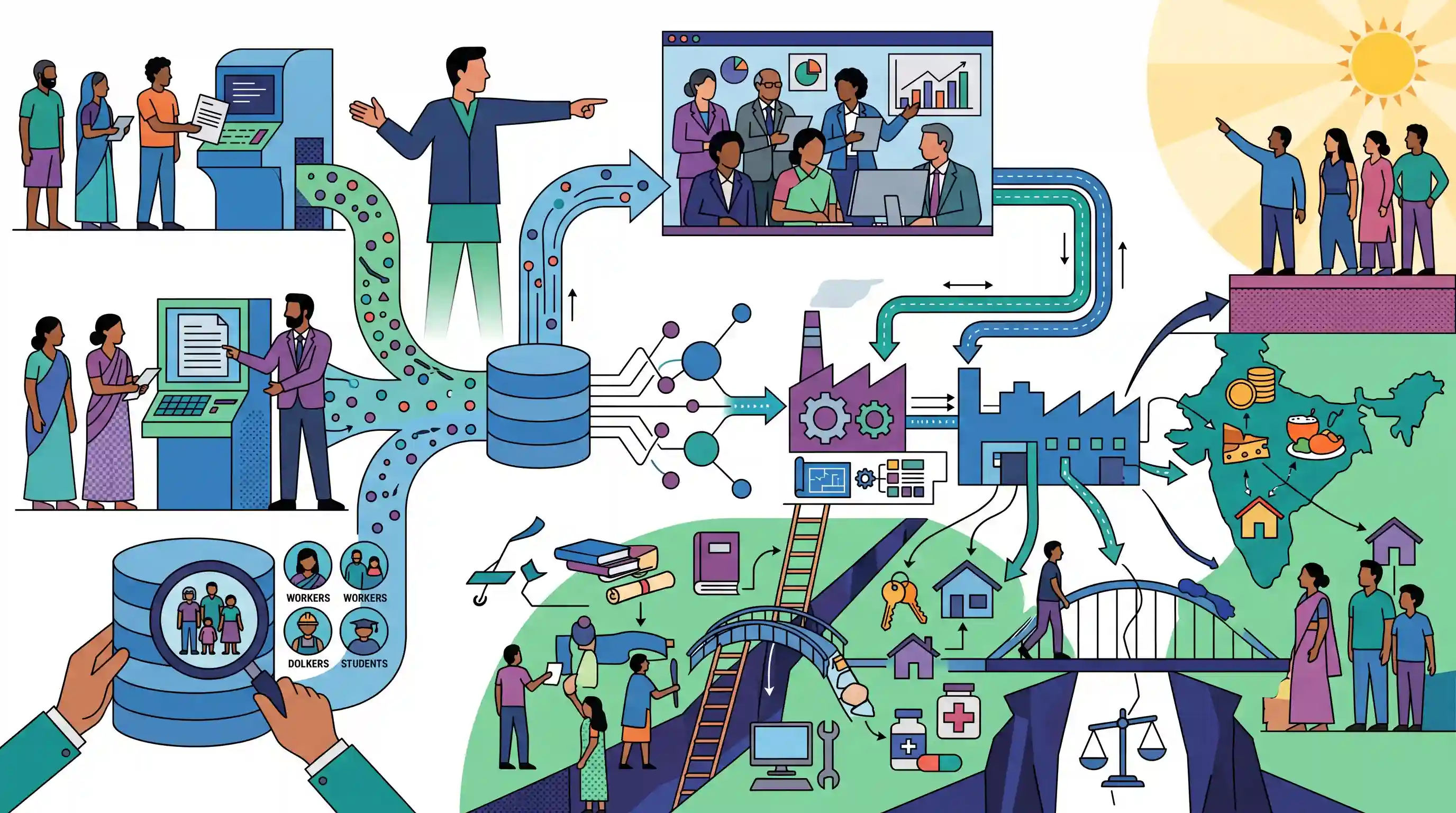
Karnataka Chief Minister Siddaramaiah defended the state's Social and Educational Survey (commonly known as a caste census) amid opposition criticism. He emphasized that the survey is essential to uncover the true socio-economic and educational realities of marginalized groups, including Dalits, backward classes, and minorities. The data collected is intended to guide targeted policy-making, affirmative action, and the equitable distribution of resources to bridge existing inequalities, thereby making it a critical issue of social justice and governance.
Key Points
- Karnataka is moving forward with its Social and Educational Survey to collect empirical data on the living conditions of various castes and communities.
- Chief Minister Siddaramaiah asserted that this data is critical for formulating effective policies to uplift Dalits, backward classes, minorities, and deprived sections among forward castes.
- The survey aims to facilitate equitable distribution of opportunities and address historical socio-economic inequalities.
- There is significant political friction over the survey, with the ruling party accusing the opposition of double standards for trying to stall the implementation of the Kantharaj Committee report.
Important Terms
Social and Educational Survey (Karnataka)

A state-wide initiative in Karnataka to collect data on the socio-economic and educational status of all households to identify marginalized groups and inform targeted welfare policies.
UPSC context
GS Paper II: Government policies, social justice, and governance. Tests understanding of regional socio-economic data in policymaking.
Karnataka State Commission for Backward Classes
A statutory body established to examine the conditions of backward classes, recommend inclusions/exclusions in reservation lists, and advise the government on welfare measures.
UPSC context
GS Paper II: Statutory bodies and their role in safeguarding the interests of vulnerable sections.
Caste Census
The systematic collection of population data based on caste identities to assess socio-economic disparities and determine the proportional distribution of reservation benefits.
UPSC context
GS Paper II: Federalism, social justice, and political representation. A recurring topic in debates on reservation and demographic data.
Social Justice
The constitutional and moral principle of ensuring fair and equitable distribution of resources, opportunities, and rights, particularly to uplift historically marginalized and vulnerable sections of society.
UPSC context
GS Paper II and IV: Core value of the Indian Constitution (Preamble, DPSP) and ethics. Central to welfare-related answers.
Kantharaj Commission
The commission led by H. Kantharaj that conducted Karnataka's landmark 2015 socio-economic survey, whose findings on population demographics remain a significant point of policy debate.
UPSC context
GS Paper II: State-level commissions and their impact on reservation policies and socio-political dynamics.
Affirmative Action
Policy measures, such as reservations in education and employment, designed to provide opportunities to groups that have historically faced discrimination and social backwardness.
UPSC context
GS Paper II: Constitutional provisions for vulnerable sections (Articles 15 & 16) and their implementation.
Prelims Trap
"State governments conduct caste censuses under the statutory provisions of the Census Act, 1948."
'Census' is exclusively a Union Subject (Entry 69, List I). State governments conduct socio-economic 'surveys' using their executive powers, not under the statutory backing of the Census Act.
Static Concepts Connected
What is the constitutional framework for identifying Backward Classes?
- Article 340: Empowers the President to appoint a commission to investigate the conditions of socially and educationally backward classes (SEBCs).
- 102nd Amendment Act: Granted constitutional status to the National Commission for Backward Classes (NCBC) by inserting Article 338B.
- 105th Amendment Act: Explicitly restored the power of State governments to identify and maintain their own state-specific lists of SEBCs.
Why is empirical data legally critical for sustaining state reservations?
- Indra Sawhney (1992): Mandated that state policies providing reservations must be backed by quantifiable empirical data proving social and educational backwardness.
- Creamy Layer Exclusion: Data is essential to identify advanced sections within backward classes to exclude them from reservation benefits.
- Targeted Policy Making: Helps resolve the 'paradox of poverty' by revealing granular realities of resource ownership and representation in public employment.
Cross-Topic Patterns
State Surveys vs. Union Census
Explores federal friction where States rely on executive socio-economic 'surveys' because a formal 'Census' is strictly a Union subject under Schedule VII (Entry 69, List I).
Sub-categorization of SCs/STs
State survey data connects directly to the Supreme Court's recent landmark verdict allowing states to sub-classify SCs based on empirical evidence of relative backwardness.

Expect a 2026 multi-statement Prelims question linking State powers under the 105th Amendment, Article 340, and the Census Act of 1948.
Linked PYQs · 3
Linked PYQs · 3
- 2022MainsGS2
Discuss the role of the National Commission for Backward Classes in the wake of its transformation from a statutory body to a constitutional body.
- 2025MainsGS2
Inequality in the ownership pattern of resources is one of the major causes of poverty. Discuss in the context of 'paradox of poverty'.
- 2024MainsGS1
Intercaste marriages between castes which have socio-economic parity have increased, to some extent, but this is less true of interreligious marriages. Discuss.
