CRPF Jawan Injured in Maoist IED Blast in Chhattisgarh Sukma
Source:The Hindu ↗
Why It Matters
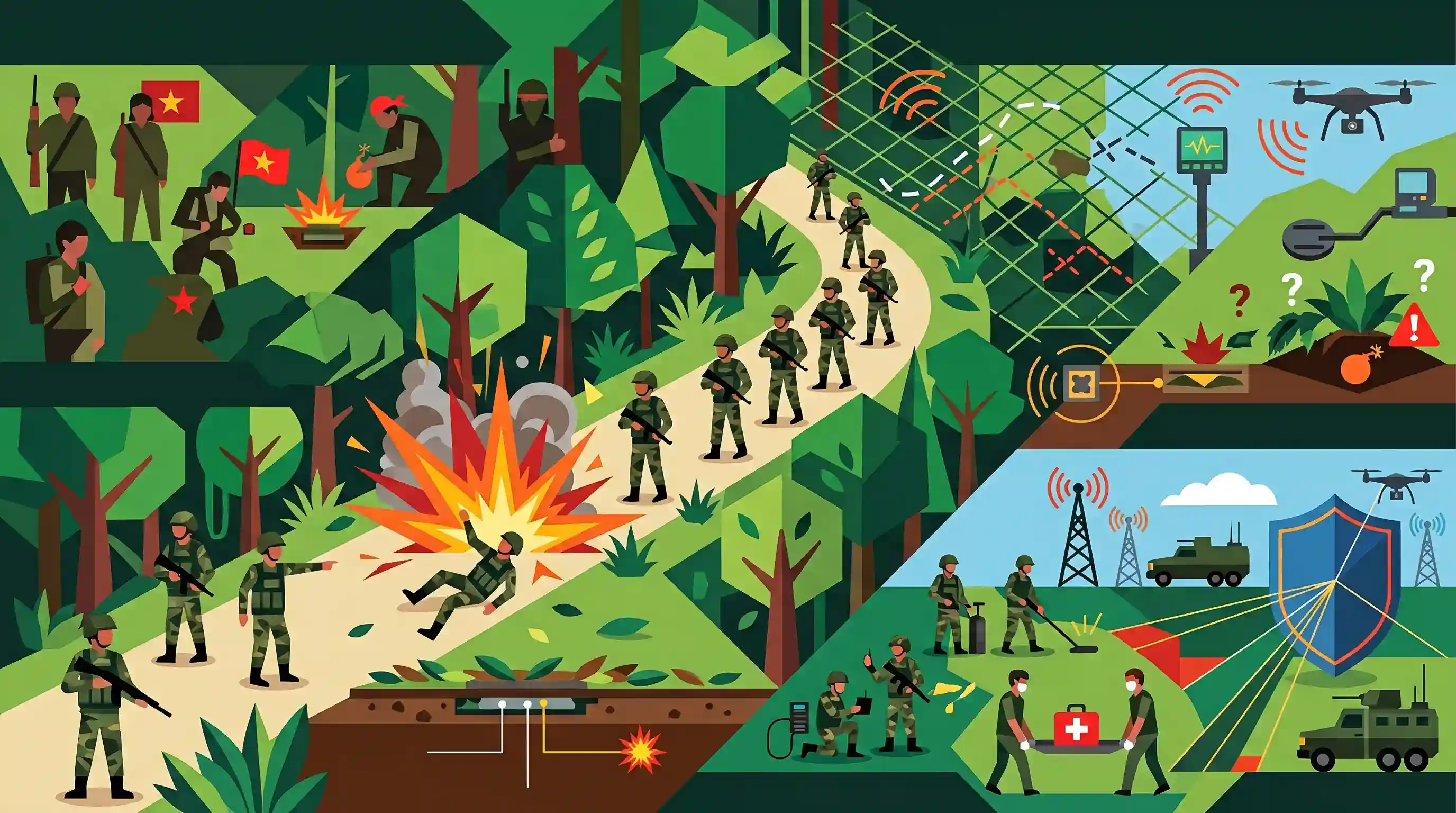
Illustrates the ground-level operational challenges and ongoing asymmetric warfare tactics (like IEDs) used by Maoists, which is crucial for understanding India's internal security landscape and counter-insurgency strategies.
Summary
A CRPF jawan was injured in a pressure IED blast planted by Maoists during an area domination exercise in Chhattisgarh's Sukma district. The incident underscores the persistent threat of Left Wing Extremism (LWE) and the operational challenges faced by security forces in detecting concealed explosives in the Bastar region.
Key Points
- A CRPF jawan belonging to the 74th battalion was injured in a pressure IED blast triggered by Maoists in Chhattisgarh's Sukma district.
- The incident took place during an area domination exercise jointly conducted by the CRPF and local police.
- Maoists frequently deploy concealed IEDs along dirt tracks and forests in the Bastar region to target patrolling security personnel.
- The event highlights the persistent tactical challenge of detecting IEDs and the ongoing threat of Left Wing Extremism (LWE) to internal security forces.
Important Terms
Left Wing Extremism (LWE)

An armed insurgency driven by Maoist ideology seeking to overthrow the Indian state through violent revolution. It thrives in the "Red Corridor" by exploiting socio-economic gaps and tribal alienation.
UPSC context
GS Paper III (Internal Security); tests causes of insurgency and state response strategies.
Central Reserve Police Force (CRPF)
India’s largest Central Armed Police Force (CAPF) under the Ministry of Home Affairs. It is the lead agency for internal security, counter-insurgency, and anti-Naxal operations.
UPSC context
GS Paper III (Security Forces); tests mandates of various armed forces in internal security.
Improvised Explosive Device (IED)
A "homemade" bomb constructed from non-conventional materials like fertilizers or commercial explosives. It is a primary weapon in asymmetric warfare, used for roadside ambushes and booby traps.
UPSC context
GS Paper III (Internal Security); tests understanding of tactical challenges and asymmetric warfare.
Area Domination Exercise
Operational tactics where security forces patrol and maintain a visible presence in a specific territory to restrict insurgent movement and establish state authority in contested zones.
UPSC context
GS Paper III (Security); tests knowledge of counter-insurgency tactics and field operations.
SAMADHAN Doctrine
The Ministry of Home Affairs' comprehensive strategy to combat LWE. It stands for Smart leadership, Aggressive strategy, Motivation, Actionable intelligence, Dashboard-based KRAs, Harnessing technology, Action plans, and No financing.
UPSC context
GS Paper III (Internal Security); tests familiarity with government policy frameworks and holistic security strategies.
Naxalism
A far-left movement originating from the 1967 Naxalbari uprising. It advocates for peasant-led armed revolution against perceived state oppression, often used interchangeably with Maoism in India.
UPSC context
GS Paper III (Internal Security); tests historical roots and evolution of domestic extremist ideologies.
Prelims Trap
The SAMADHAN doctrine is an Indian Army operation launched by the Ministry of Defence.
Anti-Naxal operations are mandated to the Ministry of Home Affairs (MHA) using Central Armed Police Forces (CAPFs), not the Indian Army/MoD.
Static Concepts Connected
What are the key pillars of the MHA's SAMADHAN doctrine?
- Aggressive Strategy: Proactive operational dominance and establishing Forward Operating Bases (FOBs) deep within insurgent strongholds to isolate them.
- Harnessing Tech: Utilizing drones, space technology, and smart ID grids to track Naxal movement, intercept communications, and detect IEDs.
- Action on Financing: Choking the financial lifelines of Left Wing Extremism ('No access to financing') via concerted action by ED and NIA.
How is the anti-Naxal security grid legally structured between Centre and States?
- State Mandate: 'Police' and 'Public Order' are State subjects under the Seventh Schedule, making State Police the primary responders for intelligence and policing.
- Union Assistance: Under Article 355, the Union deploys CAPFs (like CRPF and CoBRA units) to assist states in countering severe internal disturbances.
Cross-Topic Patterns
Internal Security + Tribal Rights (FRA)
Security gains in Bastar are increasingly tied to effective implementation of PESA and the Forest Rights Act, resolving the land alienation that historically fueled Left Wing Extremism.
Shrinking Corridor + Terror Financing
As the Red Corridor shrinks to a few districts, MHA strategy is shifting from kinetic jungle operations to choking urban sympathizer networks and financing using the UAPA and PMLA.

Mains 2026 could ask to evaluate the SAMADHAN strategy, linking the shrinking Red Corridor to the shift toward asymmetric IED warfare.
Linked PYQs · 3
Linked PYQs · 3
- 2022MainsGS3
Naxalism is a social, economic and developmental issue manifesting as a violent internal security threat. In this context, discuss the emerging issues and suggest a multilayered strategy to tackle the menace of Naxalism.
- 2018MainsGS3
Left Wing Extremism (LWE) is showing a downward trend, but still affects many parts of the country. Briefly explain the Government of India's approach to counter the challenges posed by LWE.
- 2023MainsGS3
What are the internal security challenges being faced by India? Give out the role of Central Intelligence and Investigative Agencies tasked to counter such threats.
