Kerala Concerns Over Draft National Electricity Policy 2026
Source:The Hindu ↗
Why It Matters
The ongoing debate over the Draft National Electricity Policy 2026 touches on crucial GS3 themes regarding energy infrastructure, cross-subsidies, and DISCOM reforms. It also intersects heavily with GS2 concerns over Centre-State relations and the management of Concurrent List subjects.
Summary
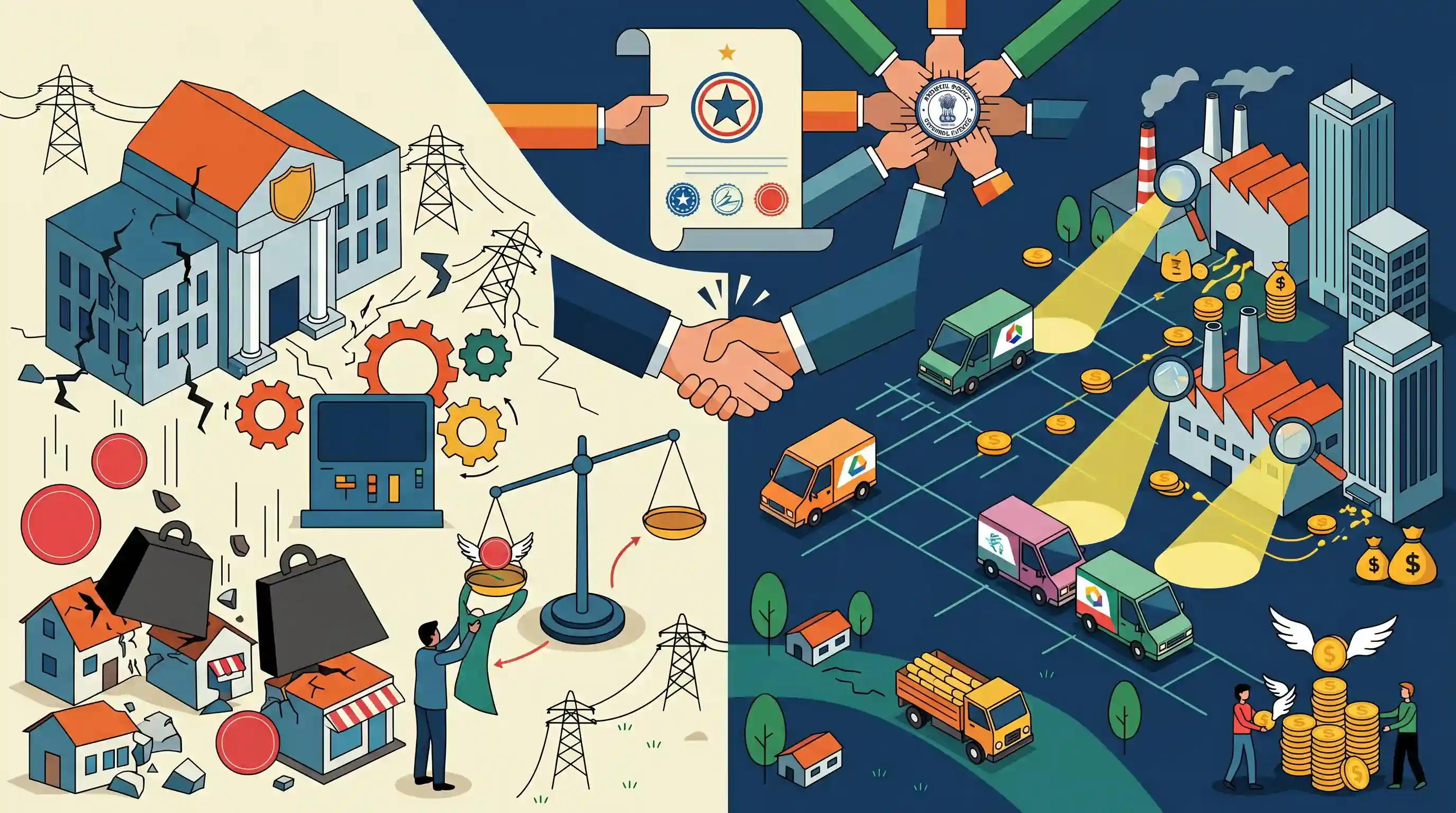
Kerala Electricity Minister K. Krishnankutty has voiced strong opposition to the Draft National Electricity Policy, 2026, proposed by the Union Power Ministry. The state argues that provisions encouraging multiple distribution licensees, eliminating cross-subsidies, and exempting private distributors from the Universal Service Obligation will destabilize public utilities like the Kerala State Electricity Board (KSEB). Additionally, the unbundling of state entities like the STU and SLDC is seen as an infringement on state rights. Kerala warns these reforms could lead to steep tariff hikes for ordinary consumers while allowing private players to cherry-pick lucrative industrial accounts.
Key Points
- Kerala has opposed the Draft National Electricity Policy 2026, citing potential harm to the financial viability of public discoms like KSEB.
- The proposed unbundling of the State Load Dispatch Centre (SLDC) and State Transmission Utility (STU) is viewed as encroaching on state autonomy over the electricity sector.
- Allowing multiple distribution licensees and exempting them from the 'Universal Service Obligation' may encourage private firms to cherry-pick profitable industrial consumers.
- The push to eliminate cross-subsidies could drastically increase electricity tariffs for ordinary domestic and agricultural consumers.
- This disagreement highlights federal tensions regarding policy reforms in the power sector, which falls under the Concurrent List.
Important Terms
Draft National Electricity Policy 2026

A 2026 policy roadmap aiming for cost-reflective tariffs, financial turnaround of DISCOMs, and increased competition in power distribution to reach per capita consumption of 2,000 kWh by 2030.
UPSC context
GS Paper 3: Infrastructure and Energy. Tests knowledge of sectoral reforms and long-term national growth targets.
Electricity Act 2003
The principal legislation governing India's power sector, which mandated the unbundling of State Electricity Boards and introduced competition, open access, and independent regulatory commissions (CERC/SERCs).
UPSC context
GS Paper 3: Economic Development and Infrastructure. A foundational law for understanding power sector regulation and federal dynamics.
Universal Service Obligation (USO)
The statutory duty of electricity distribution licensees to provide a connection and supply power to any consumer in their area on demand, ensuring equitable energy access.
UPSC context
GS Paper 3: Energy and Social Justice. Tests understanding of inclusive infrastructure and the impact of privatization on service equity.
Cross-subsidy
A pricing mechanism where higher tariffs charged to industrial and commercial consumers are used to lower rates for residential and agricultural users, often a point of federal friction.
UPSC context
GS Paper 3: Issues related to direct and indirect subsidies. Evaluates economic trade-offs between industrial competitiveness and social welfare.
State Load Dispatch Centre (SLDC)
The apex body at the state level responsible for real-time grid monitoring, optimum scheduling, and ensuring the integrated and secure operation of the state's power system.
UPSC context
GS Paper 3: Infrastructure. Important for understanding grid management, energy security, and the technical aspects of federal power relations.
State Transmission Utility (STU)
The state government-designated utility responsible for the development and operation of the intra-state transmission system, often targeted for "unbundling" in reform policies.
UPSC context
GS Paper 2: Federalism; GS Paper 3: Infrastructure. Tests knowledge of state-level institutional frameworks in the power sector.
Unbundling
The process of separating vertically integrated utilities into distinct entities for generation, transmission, and distribution to enhance transparency, accountability, and competition in the power sector.
UPSC context
GS Paper 3: Infrastructure and Mobilization of Resources. A core concept in public sector reforms and utility management.
Prelims Trap
"Electricity is a State subject under the 7th Schedule, giving states exclusive regulatory rights over distribution."
Electricity falls under the Concurrent List (Entry 38). While states largely manage DISCOMs, the Union has concurrent legislative powers to mandate unbundling or privatization frameworks.
Static Concepts Connected
What is 'cross-subsidization' in India's power sector?
- The Mechanism: Charging higher tariffs to industrial and commercial consumers to offset the cost of providing cheap or free electricity to agricultural and domestic households.
- Economic Impact: It inflates manufacturing input costs, hurting industrial competitiveness, while forcing state public utilities to bear financial burdens if government subsidy reimbursements are delayed.
What is the Universal Service Obligation (USO) in electricity distribution?
- Statutory Mandate: A statutory mandate requiring a distribution licensee to indiscriminately supply electricity to all consumers in its operating area, ensuring universal energy access.
- Cherry-picking Risk: If private players are exempted from USO, they can exclusively serve profitable industrial hubs, leaving state DISCOMs burdened with loss-making rural supply networks.
Cross-Topic Patterns
Concurrent List federal flashpoints
Like agriculture and education, electricity reforms highlight structural friction when Union policies mandate changes on state-level implementation realities within Concurrent List subjects.
Cross-subsidies vs. Make in India
Inflated industrial power tariffs directly contradict manufacturing export goals, creating a policy trilemma between rural welfare, public utility viability, and industrial competitiveness.

Expect a mixed GS2/GS3 Mains question on how the Draft NEP 2026 balances DISCOM viability, industrial competitiveness, and federalism.
Linked PYQs · 3
Linked PYQs · 3
- 2025MainsGS2
Examine the evolving pattern of Centre-State financial relations in the context of planned development in India. How far have the recent reforms impacted the fiscal federalism in India?
- 2024MainsGS2
What changes has the Union Government recently introduced in the domain of Centre-State relations ? Suggest measures to be adopted to build the trust between the Centre and the States and for strengthening federalism.
- 2018MainsGS3
“Access to affordable, reliable, sustainable and modern energy is the sine qua non to achieve Sustainable Development Goals (SDGs).” Comment on the progress made in India in this regard.
