Centre Proposes Tighter Curbs on Prescription Drug Advertising
Source:The Hindu ↗
આ શા માટે મહત્વનું છે
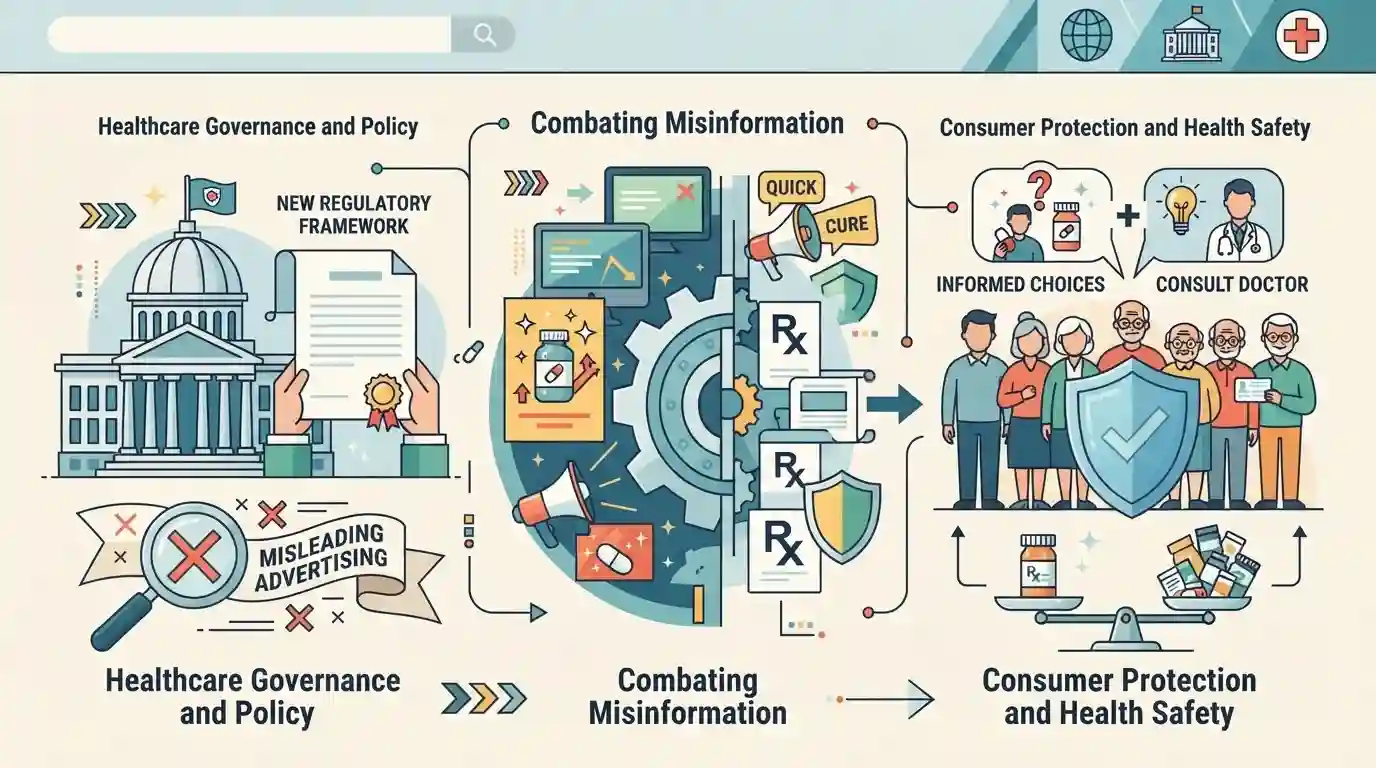
It addresses critical regulatory gaps in public health governance, tackling the rising menace of misleading pharmaceutical advertisements and rampant self-medication.
સારાંશ
The Union government has proposed stricter regulations on advertising prescription drugs to curb misleading claims, combat self-medication, and ensure consumer protection in the healthcare sector.
મુખ્ય મુદ્દા
- The Indian government has proposed tighter curbs on the advertising of prescription drugs to prevent misleading claims and protect public health.
- The regulatory initiative seeks to plug loopholes in existing laws like the Drugs and Cosmetics Act and the Drugs and Magic Remedies Act.
- Unchecked advertising of prescription pharmaceuticals can lead to self-medication, health hazards, and unethical marketing practices by pharmaceutical companies.
- Strengthening enforcement mechanisms and penal provisions is crucial to curb misleading medical advertisements targeting vulnerable consumers.
મહત્વપૂર્ણ શબ્દો
Drugs and Cosmetics Act

An Indian legislation regulating the import, manufacture, distribution, and sale of drugs and cosmetics. Under the Drugs Rules, it restricts the advertising of prescription-only drugs to protect public health.
UPSC context
UPSC GS Paper II (Health Governance & Statutory Frameworks). Tests knowledge of regulatory mechanisms controlling pharmaceutical standards and advertising in India.
Drugs and Magic Remedies (Objectionable Advertisements) Act
A central statute prohibiting misleading advertisements for drugs and magical remedies that claim to cure specific diseases, aiming to combat quackery and consumer deception.
UPSC context
UPSC GS Paper II (Consumer Protection & Health Laws). Evaluates legal safeguards against fraudulent health claims and deceptive advertisements.
Drugs Technical Advisory Board (DTAB)
A statutory advisory body constituted under the Drugs and Cosmetics Act to advise the Central and State Governments on technical matters related to drug standards and regulation.
UPSC context
UPSC GS Paper II (Regulatory Bodies). Tests understanding of institutional frameworks guiding health policy and drug administration.
Ministry of Health and Family Welfare
The nodal central government department responsible for formulating health policies, administering public health laws, and overseeing pharmaceutical regulation and consumer health protection in India.
UPSC context
UPSC GS Paper II (Governance and Public Administration). Important for questions concerning institutional execution of health schemes and regulatory updates.
પ્રિલિમ્સ ટ્રેપ
advertising curbs apply exclusively to pharmaceutical manufacturing companies producing prescription drugs
Aspirants often assume advertising restrictions apply only to pharmaceutical manufacturers, missing that proposed amendments extend prohibitions to wholesalers, retailers, and distributors.
સંલગ્ન સ્થિર ખ્યાલો
What are the statutory mandates of the CDSCO and the Drugs Technical Advisory Board (DTAB)?
- CDSCO Role: Central regulatory authority under the Ministry of Health and Family Welfare for approval of new drugs, clinical trials, and standards enforcement.
- DTAB Function: Statutory advisory body constituted under the Drugs and Cosmetics Act, 1940, to advise central and state governments on technical matters arising from the Act's administration.
- Governing Law: Drugs and Cosmetics Act, 1940 regulates import, manufacture, distribution, and sale of drugs and cosmetics through specific schedules (H, H1, X).
આંતર-વિષય પેટર્ન
Pharma Regulation + Consumer Protection Act
The expansion of advertising prohibitions across the entire supply chain mirrors liability shifts seen in consumer protection laws for e-commerce platforms.
Prescription Advertising + Antimicrobial Resistance (AMR)
Unchecked promotion of prescription drugs directly undermines national action plans against antimicrobial resistance by fueling over-the-counter antibiotic misuse.

Expect a matching question on statutory bodies (DTAB, CDSCO) and their governing acts (Drugs & Cosmetics Act vs DMR Act).
સંલગ્ન PYQ · 1
સંલગ્ન PYQ · 1
- 2024MainsGS2
In a crucial domain like the public healthcare system the Indian State should play a vital role to contain the adverse impact of marketisation of the system. Suggest some measures through which the State can enhance the reach of public healthcare at the grassroots level.
