Centre lifts retail sales restrictions on petrol and diesel
Source:The Hindu ↗
Why It Matters
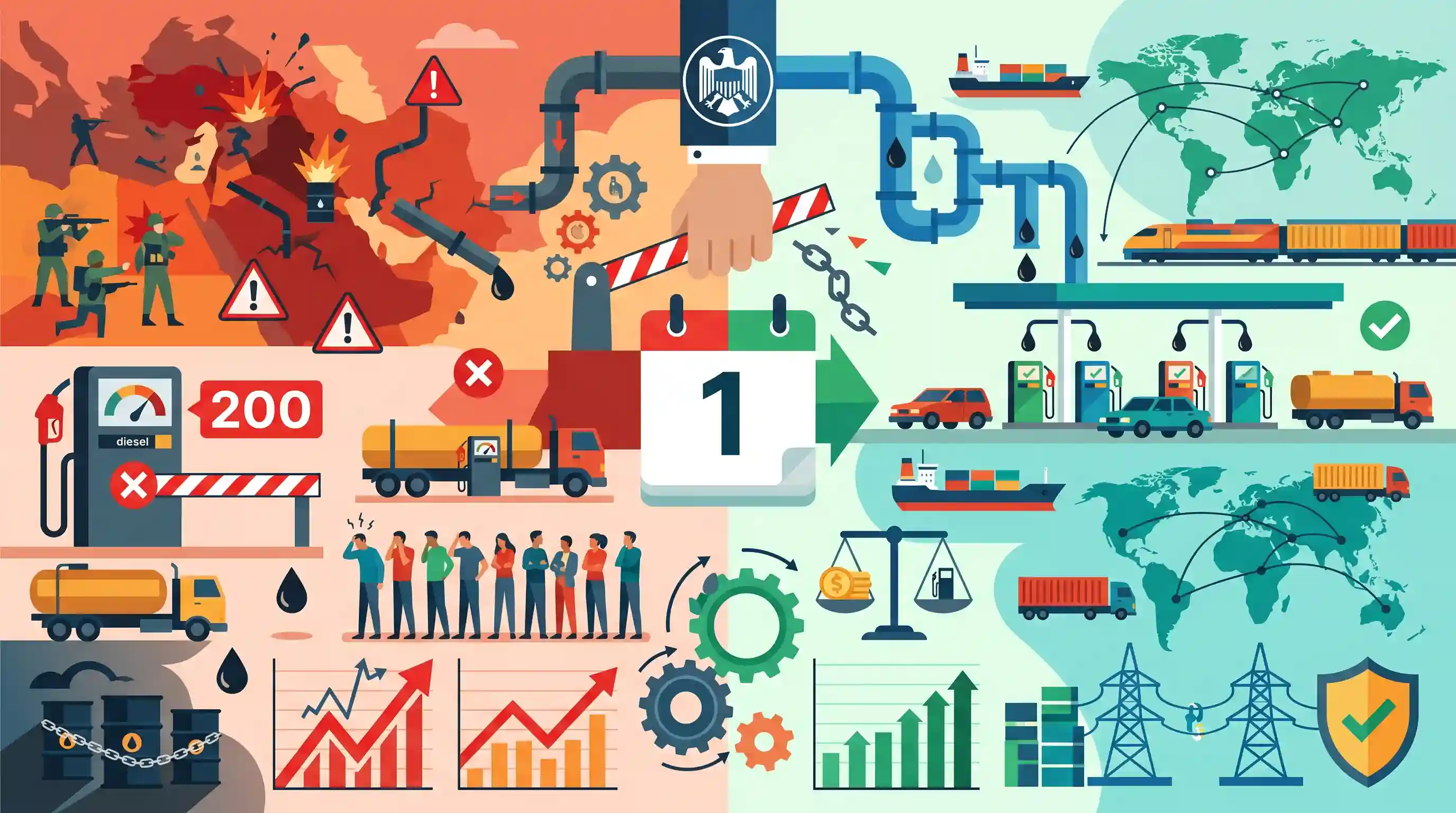
Highlights the vulnerability of India's energy sector to global geopolitical conflicts (like the West Asia crisis) and illustrates the administrative measures (like rationing and sales restrictions) the government employs to manage fuel diversion, price arbitrage, and hoarding during supply shocks.
Summary
The Centre has announced the lifting of restrictions on the retail sale of petrol and diesel from July 1, following an improvement in the supply situation. These curbs, which included capping diesel sales at 200 litres per consumer per day and preventing industrial consumers from accessing cheaper retail pumps, were initially imposed to counter supply shocks triggered by the West Asia conflict and to prevent hoarding and black marketing. The rollback signals a stabilization of fuel supply chains.
Key Points
- The Union Government has lifted restrictions on the retail sale of petrol and diesel starting July 1, ending caps implemented due to supply disruptions from the West Asia conflict.
- Previously, diesel sales at retail pumps were restricted to 200 litres per consumer per day to prevent hoarding.
- Industrial consumers were temporarily barred from buying from retail pumps, as they sought to exploit the ₹40 per litre price difference between cheaper retail fuel and bulk sales.
- The easing of global crude supply constraints enabled this rollback, mirroring a recent decision to lift similar curbs on commercial LPG.
Important Terms
Oil Marketing Companies (OMCs)

Entities engaged in the downstream activities of the petroleum sector, including refining, transporting, and retailing fuels like petrol and diesel. Key Indian PSUs include IOCL, BPCL, and HPCL.
UPSC context
GS Paper III (Economy/Energy); crucial for understanding fuel pricing, energy distribution, and the impact of global crude volatility on domestic fiscal health.
Universal Service Obligation (USO)
A regulatory mandate requiring fuel retailers to ensure uninterrupted supply, maintain minimum inventory, and provide non-discriminatory service across all retail outlets, including those in remote areas.
UPSC context
GS Paper II/III; relates to government intervention in markets to ensure equitable distribution of essential services and energy access.
Energy Security
The continuous availability of energy sources at an affordable price. For India, it involves diversifying imports and expanding Strategic Petroleum Reserves (SPRs) to mitigate global supply shocks.
UPSC context
GS Paper III (Infrastructure/Security); a core pillar of national planning given India’s high (85%+) dependency on crude oil imports.
Motor Spirit (MS) and High-Speed Diesel (HSD)
Technical and regulatory names used by the Indian government for petrol (Motor Spirit) and diesel (High-Speed Diesel) in official control orders and taxation documents.
UPSC context
GS Paper III (Economy); specific nomenclature used in Essential Commodities orders and petroleum sector regulations.
Strait of Hormuz
A critical maritime chokepoint between the Persian Gulf and the Gulf of Oman through which approximately 20-25% of the world's total oil consumption passes.
UPSC context
GS Paper I (Geography) and GS Paper II (International Relations); vital for understanding India's energy supply chain vulnerability during West Asia conflicts.
Under-recoveries
The financial difference between the cost of importing/refining crude oil and the lower price at which OMCs sell finished products to consumers under government-regulated price caps.
UPSC context
GS Paper III (Indian Economy); essential for discussing fiscal deficits, fuel subsidies, and the financial health of public sector undertakings.
Prelims Trap
Petrol and diesel cannot face government supply caps because their pricing is completely deregulated.
Despite price deregulation, petroleum products remain classified under the Essential Commodities Act, 1955, allowing the Centre to regulate supply and impose caps during crises.
Static Concepts Connected
What are India's Strategic Petroleum Reserves (SPRs)?
- Core Purpose: Acts as an emergency buffer against external supply disruptions and price shocks in global crude oil markets.
- Locations: Operational underground rock caverns are located at Visakhapatnam (AP), Mangaluru (Karnataka), and Padur (Karnataka).
- Management: Managed by the Indian Strategic Petroleum Reserves Limited (ISPRL), a special purpose vehicle under the Ministry of Petroleum and Natural Gas.
How does the Essential Commodities Act, 1955 operate?
- Objective: Empowers the government to control production, supply, distribution, and trade of essential commodities to prevent hoarding and price spikes.
- Regulated Items: The schedule includes drugs, fertilizers, foodstuffs, edible oils, seeds, and petroleum/petroleum products.
- Enforcement: The Centre often delegates enforcement powers to State governments to issue control orders, conduct raids, and seize hoarded stocks.
Cross-Topic Patterns
Dual pricing & industrial diversion
The arbitrage driving industrial fuel buyers to retail pumps mirrors the historical diversion of highly subsidized agricultural urea to industrial uses, which the government countered by mandating neem-coated urea.
Supply-side inflation controls
Capping fuel supplies highlights administrative interventions to control 'imported inflation', demonstrating the limitations of the RBI's monetary policy tools when facing global geopolitical energy shocks.

Expect a multi-statement question interlinking India's SPR locations, the Essential Commodities Act, and imported inflation dynamics.
Linked PYQs · 1
Linked PYQs · 1
- 2020PrelimsGS1
The term 'West Texas Intermediate', sometimes found in news, refers to a grade of
