Naga Trade Embargo Challenges Manipur Peace Process
Source:Indian Express ↗
Why It Matters
Understanding the multi-layered ethnic conflicts in the North East is crucial for GS3 Internal Security. Aspirants must analyze how the Government of India manages competing territorial and political demands among groups like the Kukis, Nagas, and Meiteis to forge lasting peace accords.
Summary
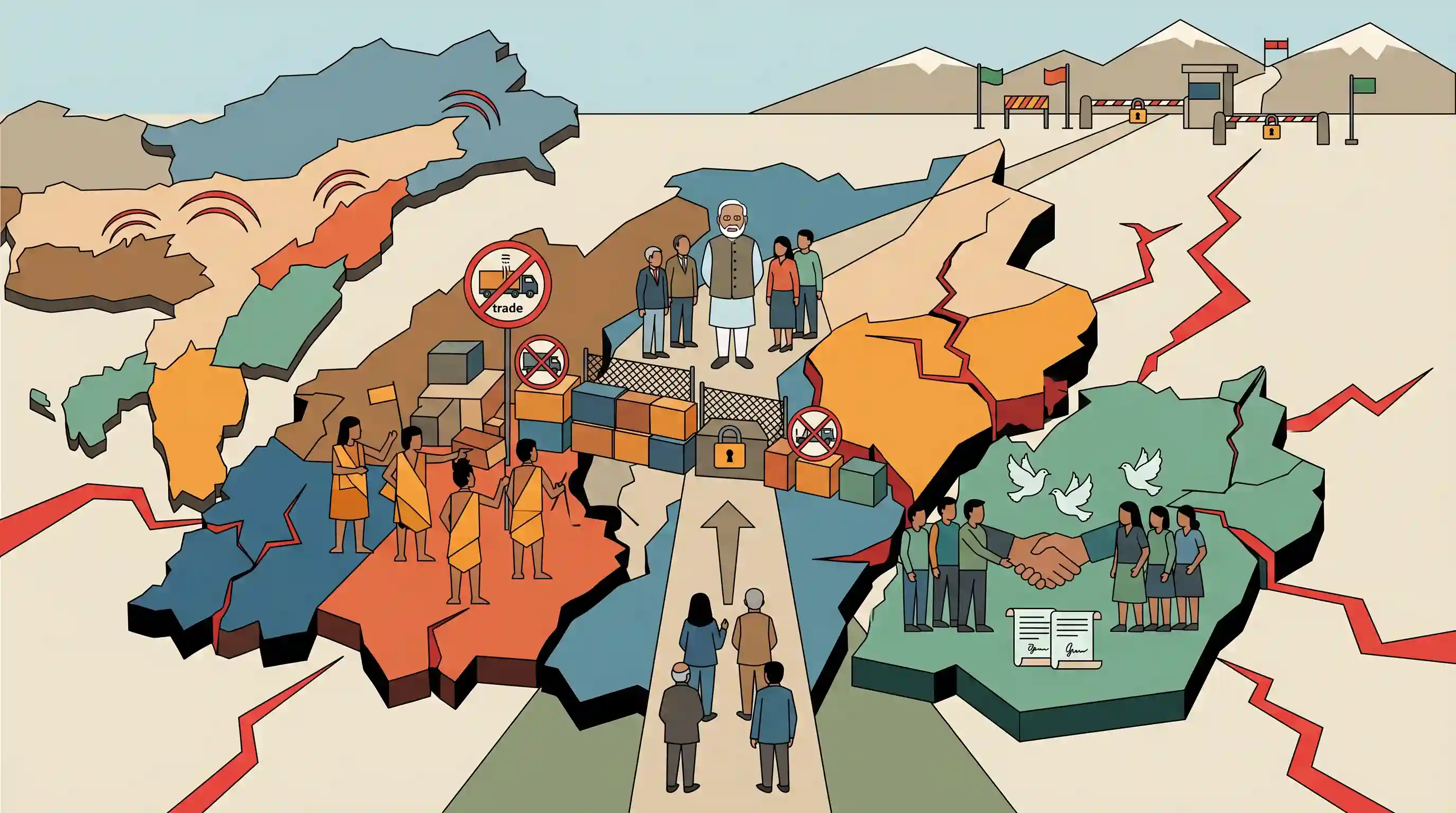
The Union Government has reportedly reached a peace understanding with Kuki-Zo groups in Manipur, a step aimed at resolving the state's protracted ethnic conflict. However, the planned visit of Prime Minister Narendra Modi to the state is facing a fresh hurdle as Naga groups have imposed a 'trade embargo'. This development underscores the deeply entrenched and overlapping ethnic fault lines in Manipur, demonstrating how efforts to pacify one community can inadvertently disrupt the delicate balance with other stakeholders, complicating the broader North East peace process.
Key Points
- The Union Government claims to have secured a peace agreement with Kuki-Zo groups to address ongoing unrest in Manipur.
- Prime Minister Narendra Modi is slated to visit Manipur to project a return to normalcy and consolidate the peace process.
- Naga groups have imposed a 'trade embargo' in the region, creating a new security and logistical hurdle ahead of the PM's visit.
- The situation highlights the complex, multi-cornered ethnic dynamics in Manipur, where accommodating one group often triggers apprehensions in others (e.g., Naga, Kuki, Meitei).
Important Terms
Kuki-Zo groups

A collective of Tibeto-Burman ethnic tribes in Manipur, primarily inhabiting hill districts. They are key stakeholders in the Suspension of Operations (SoO) pact and currently demand a 'Separate Administration' or Union Territory status.
UPSC context
GS-III: Internal Security (North East Insurgency). Vital for understanding ethnic fault lines and peace negotiations in Manipur.
United Naga Council (UNC)
The apex socio-political body of Nagas in Manipur. It often uses economic blockades or trade embargos to protest policies like border fencing or the termination of the Free Movement Regime (FMR).
UPSC context
GS-III: Internal Security; GS-II: Polity. Tests ability to analyze multi-stakeholder conflicts and the impact of non-state actors on regional stability.
Suspension of Operations (SoO) Agreement
A tripartite ceasefire agreement between the Union Government, the Manipur State, and Kuki-Zo insurgent umbrella groups (KNO and UPF). It mandates cadres stay in designated camps and renounce violence.
UPSC context
GS-III: Internal Security. A critical mechanism for managing insurgency; questions often focus on its implementation challenges and impact on law and order.
Free Movement Regime (FMR)
A diplomatic arrangement between India and Myanmar allowing tribes living along the border to travel 16 km into either country without a visa. Its recent suspension aimed to curb illegal migration.
UPSC context
GS-II: International Relations; GS-III: Border Management. Relevant for topics on India-Myanmar relations and internal security threats like drug trafficking.
Article 371C
A constitutional provision that provides for a Special Committee of the Manipur Legislative Assembly consisting of members from the hill areas, ensuring a degree of autonomy in tribal governance.
UPSC context
GS-II: Indian Constitution. Tests knowledge of 'Asymmetric Federalism' and special provisions for North Eastern states to protect tribal interests.
Meitei Community
The dominant ethnic community of the Imphal Valley, forming the majority of Manipur's population. Their demand for Scheduled Tribe (ST) status was a primary trigger for the 2023 ethnic violence.
UPSC context
GS-I: Indian Society (Diversity); GS-II: Social Justice. Essential for analyzing the roots of ethnic conflict and reservation-related legal disputes.
Separate Administration
A specific political demand by Kuki-Zo groups for a separate administrative unit under the Indian Constitution, distinct from the Manipur state government, to ensure their political and physical security.
UPSC context
GS-II: Governance and Federalism. Relates to demands for new states or Union Territories and the constitutional limits of administrative reorganization.
Prelims Trap
"The Suspension of Operation (SoO) agreement is a bilateral ceasefire pact between the Union Government and Naga insurgent groups."
The SoO is a tripartite agreement (Centre, Manipur government, Kuki-Zo groups). Naga groups are covered under separate frameworks (e.g., 1997 Ceasefire, 2015 Framework Agreement).
Static Concepts Connected
What is the Suspension of Operation (SoO) framework?
- Tripartite Pact: A ceasefire arrangement involving three parties: the Centre, the State Government, and insurgent umbrellas (like Kuki-Zo groups KNO and UPF).
- Ground Rules: Insurgent cadres are confined to mutually agreed designated camps. Weapons are accounted for and locked, but not formally surrendered.
- Precursor to Dialogue: It serves to halt hostilities, creating a conducive environment for initiating formal political dialogue toward a final settlement.
How does Article 371C address Manipur's hill-valley divide?
- Hill Areas Committee: It provides for the creation of a Hill Areas Committee comprising Members of the Legislative Assembly elected from the Hill Areas.
- Governor's Responsibility: The Governor holds a special constitutional responsibility to secure the proper functioning of this committee, protecting tribal interests.
- Presidential Oversight: The Governor must submit an annual report directly to the President regarding the administration of the Hill Areas.
Cross-Topic Patterns
Border Management vs. Ethnic Kinship (IR/Security)
Scrapping the Free Movement Regime (FMR) to curb insurgency clashes with ethnic realities, as Naga and Kuki tribes share deep cross-border kinship with communities in Myanmar.
Geography of Economic Blockades (Economy/Security)
Ethnic groups routinely weaponize Manipur's landlocked geography by imposing economic blockades on NH-2 and NH-37, crippling supply chains as a form of non-state asymmetric warfare.

Expect a multi-statement question interlinking Article 371C, the Free Movement Regime, and distinctions between NE peace pacts.
Linked PYQs · 3
Linked PYQs · 3
- 2025MainsGS3
What are the major challenges to internal security and peace process in the North-Eastern States? Map the various peace accords and agreements initiated by the government in the past decade.
- 2017MainsGS3
The North-East region of India has been infested with insurgency for a very long time. Analyze the major reasons for the survival of armed insurgency in this region.
- 2019MainsGS3
Cross-border movement of insurgents is only one of the several security challenges facing the policing of the border in North-East India. Examine the various challenges currently emanating across the India-Myanmar border. Also, discuss the steps to counter the challenges.
