Draft Artificial Intelligence Regulations for Deepfake Mitigation
Source:Indian Express ↗
આ શા માટે મહત્વનું છે
With AI proliferation and the rise of deepfakes posing grave threats to public discourse, elections, and national security, India's impending regulatory framework represents a critical step in balancing technological innovation with statutory oversight and citizen safety.
સારાંશ
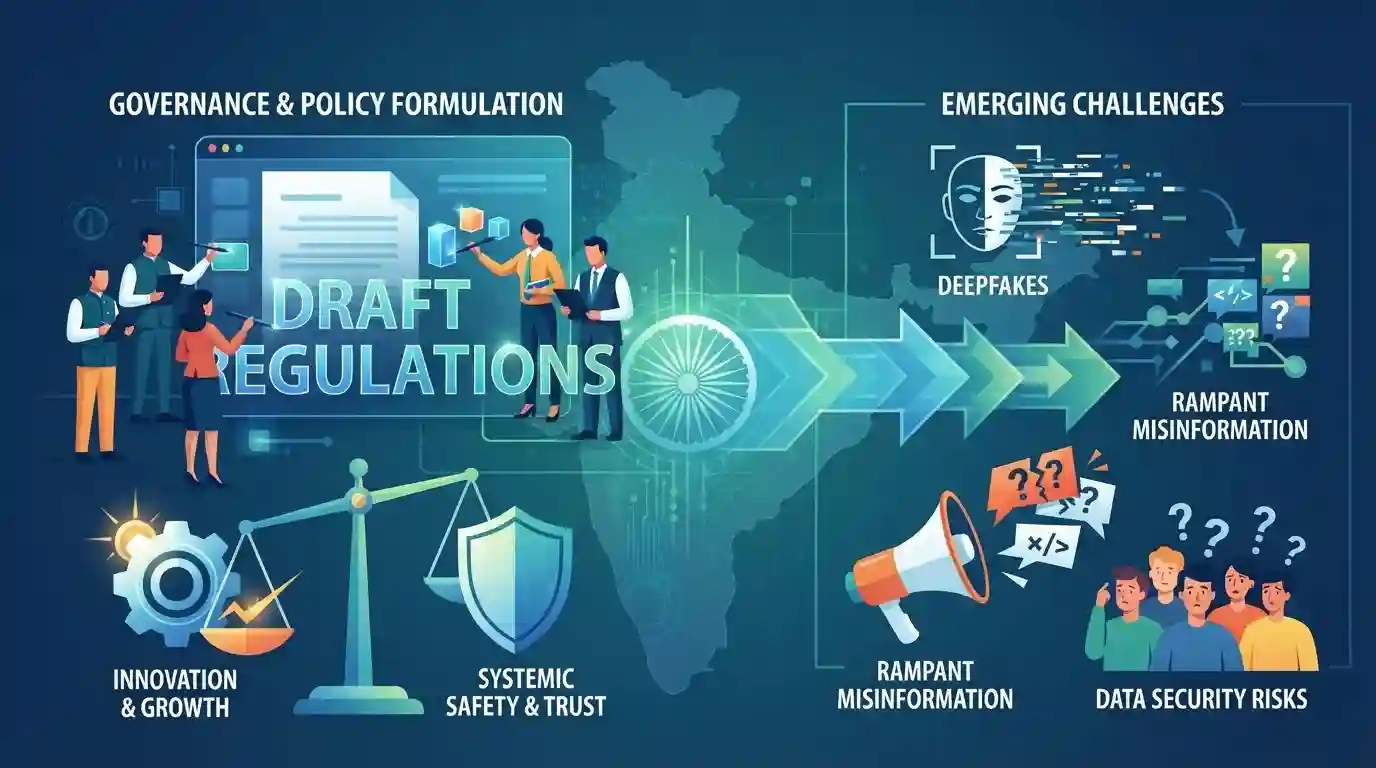
The Indian government is formulating comprehensive draft regulations for Artificial Intelligence (AI) to address emerging challenges like deepfakes and rampant misinformation. IT Minister Ashwini Vaishnaw underscored that while India aims to foster innovation and leadership in the digital technology sector, proactive governance is necessary to ensure user trust, data security, and systemic safety.
મુખ્ય મુદ્દા
- The central government is working on draft regulations specifically tailored for Artificial Intelligence (AI).
- IT Minister Ashwini Vaishnaw emphasized the growing threats of deepfakes, misinformation, and the ethical use of AI.
- The proposed framework aims to balance the promotion of technological innovation with rigorous safeguards for user safety, privacy, and digital trust.
મહત્વપૂર્ણ શબ્દો
Information Technology Act

India's principal legislation for dealing with cybercrimes, electronic commerce, and digital governance, providing legal recognition for electronic transactions and penalizing cyber offenses.
UPSC context
GS Paper III (Internal Security & Cyber Threats); tests understanding of legal frameworks governing digital space, data privacy, and cyber offenses in India.
Ministry of Electronics and Information Technology (MeitY)
The central government ministry responsible for formulating policies, promoting IT infrastructure, and regulating digital platforms and cybersecurity in India.
UPSC context
GS Paper II (Governance & Policy Formulation); tests knowledge of institutional bodies handling technology policy, digital governance, and emerging tech regulations.
સંલગ્ન સ્થિર ખ્યાલો
What are the key legal pillars and intermediary liability provisions under the Information Technology Act, 2000?
- Section 79: Provides safe harbor protection to intermediaries, conditional on observing due diligence guidelines prescribed by the Central Government.
- IT Rules 2021: Imposes strict due diligence on intermediaries, including mandatory removal of unlawful content within specified timeframes upon receiving a grievance or court order.
- Due Diligence: Requires intermediaries to publish privacy policies, user agreements, and inform users not to host or transmit prohibited content such as deepfakes or misinformation.
આંતર-વિષય પેટર્ન
AI Governance vs. Data Protection Act compliance
How MeitY balances AI innovation with the IndiaAI Mission while erecting deepfake safeguards mirrors the Digital Personal Data Protection Act's balance between compliance and compliance costs for startups.
Deepfakes, Misinformation, and Internal Security threats
Deepfake misinformation campaigns intersecting with electoral integrity connect technology policy directly to the Election Commission's guidelines and Internal Security challenges.

Expect a multi-statement prelims question on India's techno-legal approach to AI, contrasting watermarking mandates with standard IT Act rules.
સંલગ્ન PYQ · 2
સંલગ્ન PYQ · 2
- 2021MainsGS3
Keeping in view India's internal security, analyse the impact of cross-border cyber attacks. Also discuss defensive measures against these sophisticated attacks.
- 2026PrelimsGS1
Consider the following statements with respect to the AI Impact Summit, 2026 held in New Delhi : 1. The Summit's intellectual framework was based on three foundational Sutras : People, Planning, and Progress. 2. The Preamble of the Summit stresses Democratising AI Resources, which acknowledges the Charter for Democratic Diffusion of AI as a binding framework to support locally relevant innovation and strengthen resilient AI ecosystems while respecting national laws. 3. The New Delhi Declaration on AI Impact was structured around seven Chakras (Pillars), which included Access for Social Empowerment, AI for Science, and Secure and Trusted AI. Which of the statements given above is/are correct ?
