Centre Approves HPU Research Project On Tribal Ethnomedicine
Source:tribuneindia ↗
Why It Matters
Important for HPAS Prelims questions related to Himachal Pradesh's tribal heritage, local culture, and research initiatives within state institutions.
Summary
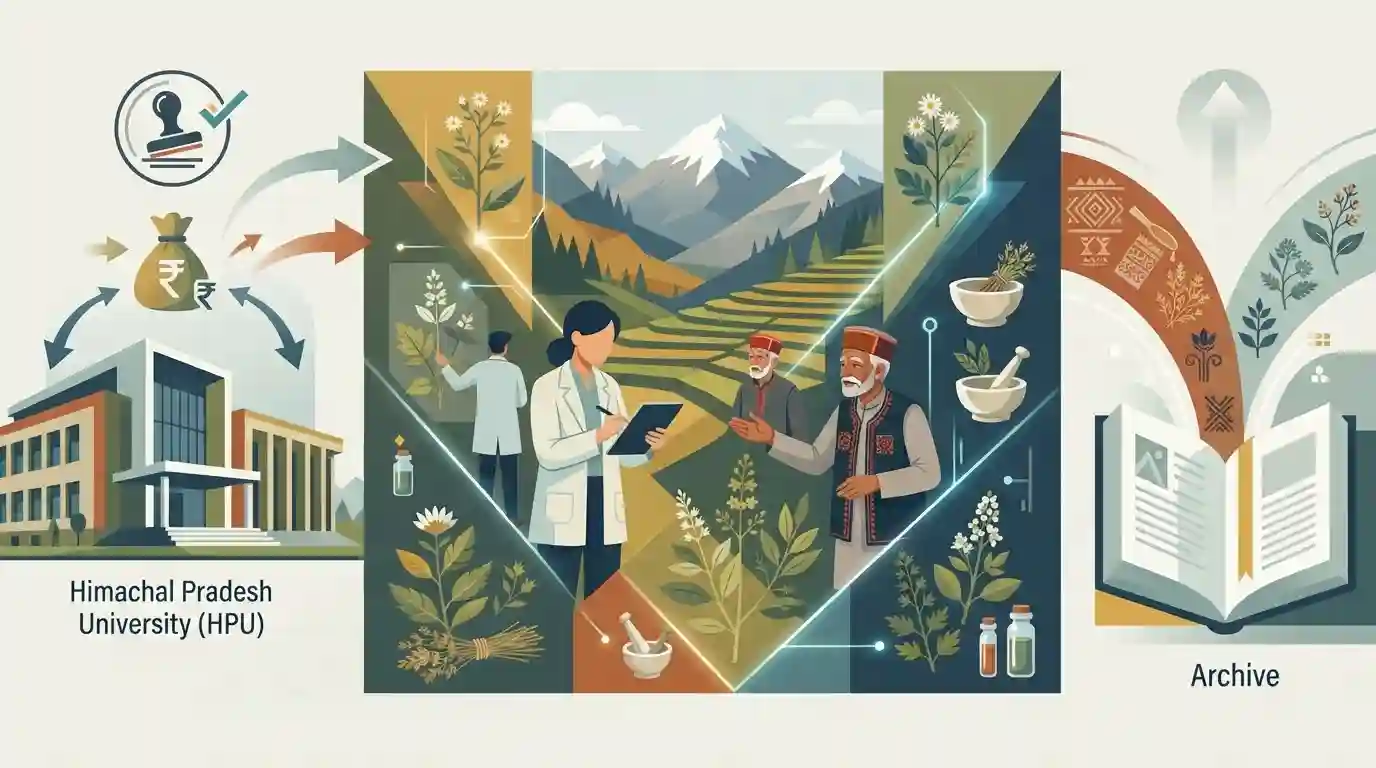
The Central Government has sanctioned a research grant of Rs 25 lakh to Himachal Pradesh University (HPU) for conducting a comprehensive study on indigenous tribal ethnomedicine in Himachal Pradesh. The initiative focuses on documenting and evaluating traditional medicinal systems and plant wealth utilized by tribal communities, promoting traditional knowledge preservation.
Key Points
- The Central Government has approved a research project worth Rs 25 lakh for Himachal Pradesh University (HPU) to study indigenous tribal ethnomedicine in the state.
- The project aims to document, preserve, and scientifically validate traditional healing practices and medicinal plant usage among the tribal populations of Himachal Pradesh.
- It highlights the intersection of tribal heritage, traditional knowledge systems, and modern scientific research within the state.
Important Terms
Indigenous Tribal Ethnomedicine

A study of traditional medical systems, folk healing, and plant wealth utilized by indigenous and tribal communities for primary healthcare, particularly in mountain regions.
UPSC context
HPAS Paper-V (Himachal Pradesh GK - Culture & Tribes, Biodiversity): Tests knowledge of traditional knowledge systems, folk healing, and tribal heritage.
Himachal Pradesh University (HPU)
A state university located in Shimla, Himachal Pradesh, engaged in higher education, academic programs, and regional research initiatives.
UPSC context
HPAS Paper-V (Himachal Pradesh GK): Tests awareness of premier higher education institutions and state-level research projects funded by central schemes.
Central Government
The central executive authority of India that formulates national policies, allocates grants through ministries like the Ministry of Tribal Affairs, and funds institutional research.
UPSC context
HPAS Paper-II (Polity & Governance): Tests understanding of center-state financial relations, centrally sponsored research schemes, and tribal welfare policies.
Static Concepts Connected
What are the notified scheduled tribal areas and major nomadic tribes in Himachal Pradesh?
- Notified Areas: Notified areas include Lahaul-Spiti, Kinnaur district, and Pangi & Bharmour subdivisions of Chamba district.
- Nomadic Tribes: Gaddis and Gujjars are prominent semi-nomadic pastoralist tribal communities recognized under the Scheduled Tribes list in HP.
- Traditional Healers: Amchis are traditional practitioners of Tibetan/Himalayan system of medicine primarily found in cold desert regions like Lahaul-Spiti.
Cross-Topic Patterns
Ethnomedicine documentation & Biodiversity Act ABS rules
Documentation of indigenous flora and Amchi systems in Lahaul-Spiti directly interfaces with the Biological Diversity Act, 2002 and Access and Benefit-Sharing (ABS) mechanisms for tribal communities.
Nomadic pastoralism, FRA 2006, and tribal rights
Research on Gaddis and Gujjars links directly to Scheduled Tribes and Other Traditional Forest Dwellers (FRA) Act implementation in HP.

HPU ethnomedicine grant + notified tribal areas (Kinnaur, Lahaul-Spiti, Chamba) will likely be tested via match-the-following or statement-based Prelims Q.
Linked PYQs · 1
Linked PYQs · 1
- 2020HPAS_PRELIMSGS1
The Jad tribe of Himachal Pradesh are followers of which of the following religion?
