India Must Maintain Strategic Vigilance Despite Border Ceasefire
Source:Indian Express ↗
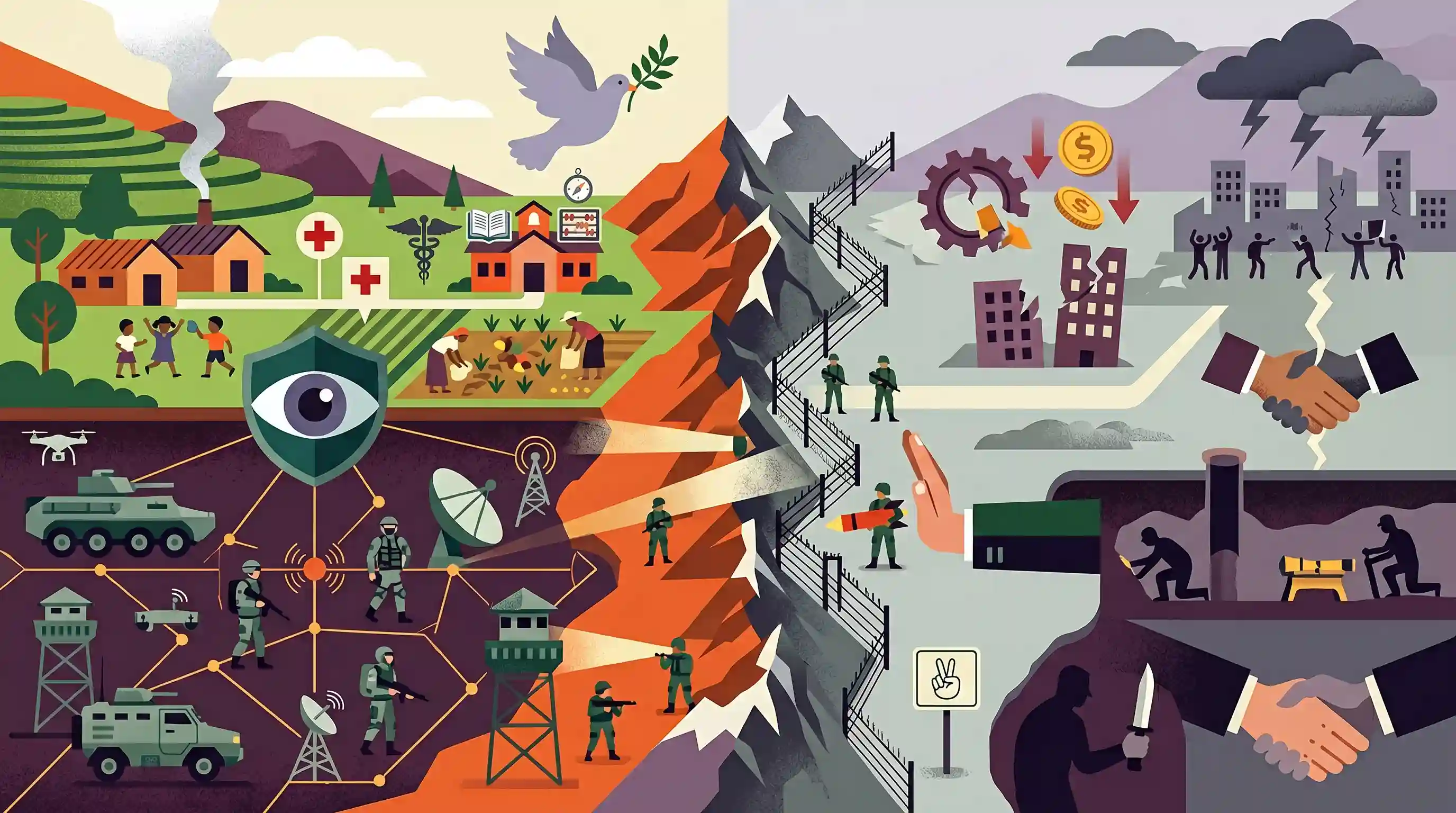
Why It Matters
It provides critical insights into the duality of India's neighborhood policy—balancing diplomatic agreements (like ceasefires) with stringent military preparedness and border security. This is highly relevant for GS-2 (International Relations) and GS-3 (Security challenges in border areas).
Summary
The article analyzes the strategic rationale behind India's decision to support a ceasefire agreement with Pakistan along the Line of Control (LoC). While recognizing the ceasefire as a positive step that provides relief to border residents and minimizes military casualties, the author cautions against taking Pakistan's intentions at face value. Driven by its own economic and political turmoil, Pakistan might be using the truce merely as a tactical breather. The piece stresses that India's diplomatic engagement must be coupled with unwavering vigilance, ensuring that the military's counter-terrorism grid remains fully operational to thwart any potential resurgence of cross-border terrorism or infiltration attempts.
Key Points
- A ceasefire along the Line of Control (LoC) is a pragmatic step that reduces military attrition and brings much-needed humanitarian relief to border communities.
- The pause in hostilities allows India to strategically reallocate resources and focus on broader security challenges, such as the Line of Actual Control (LAC) with China.
- Pakistan's willingness to commit to a ceasefire may be driven by its severe domestic economic crises and internal political instability, rather than a fundamental shift in its hostility toward India.
- India must avoid complacency, as historical precedents indicate that Pakistan has frequently used truces as tactical pauses to regroup and facilitate cross-border infiltration into Jammu & Kashmir.
- The Indian security establishment must maintain a formidable anti-infiltration grid and robust surveillance mechanisms to preempt and neutralize any covert terrorist operations by Pakistan.
Important Terms
2003 Ceasefire Agreement

A 2003 pact to end cross-border firing, reaffirmed by both nations' DGMOs in 2021 to maintain peace along the Line of Control.
UPSC context
GS Paper 2 (International Relations); tests understanding of bilateral mechanisms and conflict management history.
Line of Control (LoC)
The 740 km de facto military border in Jammu and Kashmir, established under the 1972 Simla Agreement from the earlier 1949 Ceasefire Line.
UPSC context
GS Paper 3 (Border Management); essential for mapping, historical treaties, and sovereignty disputes.
Cross-border Terrorism
The infiltration of armed militants across borders to conduct strikes, often viewed as a proxy war and state-sponsored tool to destabilize India.
UPSC context
GS Paper 3 (Internal Security); core topic for terrorism, proxy wars, and national security challenges.
Director General of Military Operations (DGMO)
The top-level military office responsible for directing army operations; India and Pakistan use DGMO-level hotlines to manage border crises and ceasefires.
UPSC context
GS Paper 3 (Security Forces); tests knowledge of institutional crisis-management and military-to-military communication channels.
Counter-terrorism Grid
A multi-tiered security deployment in Jammu and Kashmir involving the Army, paramilitary forces, and police to detect and neutralize terrorist infiltration.
UPSC context
GS Paper 3 (Internal Security); focuses on the operational architecture of security in conflict zones.
Tactical Breather
A temporary cessation of hostilities used strategically by a party to reorganize, recover economically, or reduce external pressure without long-term peace intent.
UPSC context
GS Paper 2 (International Relations); critical for analyzing the 'intent vs. action' in diplomatic negotiations.
Prelims Trap
"The 2021 LoC ceasefire is a formal, legally binding bilateral treaty signed under the Shimla Agreement."
The 2003/2021 ceasefires are not formal bilateral treaties signed by political heads. They are unwritten confidence-building measures operationally managed and reaffirmed by military DGMOs.
Static Concepts Connected
What constitutes India's multi-tiered Anti-Infiltration Grid (AIG) along the LoC?
- Forward deployment: Army units stationed directly near the zero line, heavily equipped with thermal imagers, night-vision devices, and radars.
- Obstacle System: The Anti-Infiltration Obstacle System (AIOS), comprising electrified concertina wiring integrated with subterranean/ground sensors and alarms.
- Depth Tier: Rashtriya Rifles and local police formations executing counter-terrorism, intelligence gathering, and area-domination grids in the hinterland.
What is the operational mechanism managing the India-Pakistan border truce?
- 2003 Understanding: An unwritten confidence-building measure first initiated by both governments to halt cross-border artillery and small-arms firing.
- DGMO Hotline: The Director Generals of Military Operations (DGMOs) of both nations communicate via a dedicated weekly hotline to de-escalate local flashpoints.
- Coverage Scope: The ceasefire framework spans the Line of Control, the International Boundary (IB) in J&K, and the Actual Ground Position Line (AGPL) in Siachen.
Cross-Topic Patterns
Ceasefire as an economic & FATF byproduct
Pakistan's willingness to sustain truces deeply correlates with its IMF bailout requirements and FATF compliance, linking GS-2 bilateral diplomacy directly to GS-3 economic warfare and terror financing.
Western calm for Eastern rebalancing
Stabilizing the LoC allows India to reallocate critical military resources and surveillance tech toward the Line of Actual Control (LAC), highlighting the operational realities of the two-front war dilemma.

Prelims 2026 may test the geographical distinction between LoC, AGPL, and IB, alongside the DGMO hotline mechanism.
Linked PYQs · 2
Linked PYQs · 2
- 2020MainsGS3
Analyze internal security threats and transborder crimes along Myanmar, Bangladesh and Pakistan borders including Line of Control (LoC). Also discuss the role played by various security forces in this regard.
- 2015MainsGS2
Terrorist activities and mutual distrust have clouded India-Pakistan relations. To what extent the use of soft power like sports and cultural exchanges could help generate goodwill between the two countries? Discuss with suitable examples.
