CCMB genetic toolkit to study tuberculosis pathogen mechanisms
Source:The Hindu ↗
हे का महत्त्वाचे आहे
Tuberculosis remains a critical public health challenge in India, and the emergence of drug-resistant strains necessitates advanced indigenous research tools. Biotechnology advancements like CCMB's genetic toolkit offer vital insights into pathogen biology, paving the way for targeted drug discovery and containment of AMR.
सारांश
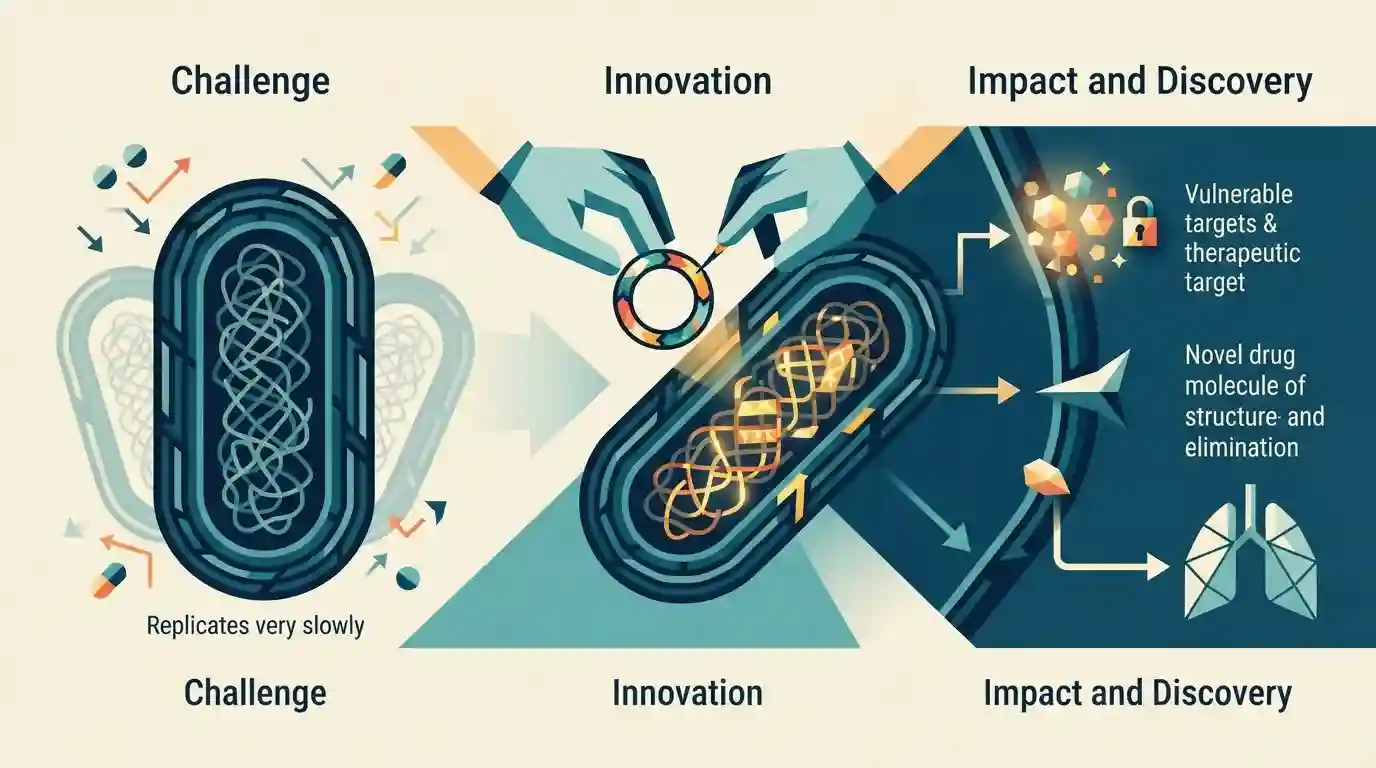
Researchers at the CSIR-Centre for Cellular and Molecular Biology (CCMB) have engineered a specialized genetic toolkit designed to investigate the inner biological mechanisms of Mycobacterium tuberculosis. Because TB bacteria are notoriously difficult to study due to their complex cell wall and slow replication, this toolkit provides a robust platform to analyze gene functions, identify vulnerable therapeutic targets, and support the development of novel interventions against drug-resistant tuberculosis.
मुख्य मुद्दे
- Scientists at the CSIR-Centre for Cellular and Molecular Biology (CCMB) in Hyderabad have developed a new genetic toolkit to study the inner workings of Mycobacterium tuberculosis (M.tb).
- The toolkit helps overcome challenges in understanding tuberculosis (TB) gene functions, particularly given the slow growth and complex cell wall of the TB pathogen.
- This genetic innovation aims to accelerate target identification for drug discovery and better combat antimicrobial resistance (AMR) and drug-resistant TB strains.
महत्त्वाच्या संज्ञा
CSIR-Centre for Cellular and Molecular Biology (CCMB)

A premier research establishment under the Council of Scientific and Industrial Research (CSIR) in Hyderabad, focusing on frontier areas of modern biology, including cellular regulation, genetics, and infectious diseases.
UPSC context
GS Paper III (Science & Technology - Indigenous Research & Biotechnology). Important for questions on public sector research institutions and healthcare innovations.
पूर्वपरीक्षा सापळा
Antimicrobial resistance in Mycobacterium tuberculosis is primarily driven by plasmid-mediated horizontal gene transfer.
M. tuberculosis resistance is primarily mediated by chromosomal mutations, not plasmid-mediated horizontal gene transfer, which is common in enteric bacteria.
संबंधित स्थिर संकल्पना
What are the key biological characteristics and drug-resistance mechanisms of Mycobacterium tuberculosis?
- Complex Cell Wall: The pathogen possesses a thick, impermeable waxy cell wall rich in mycolic acids that hinders drug penetration.
- Genetic Resistance: MDR-TB involves resistance to at least isoniazid and rifampicin, primarily driven by spontaneous chromosomal mutations rather than plasmids.
- Surrogate Models: Non-pathogenic surrogate species like Mycobacterium smegmatis are frequently used for initial laboratory assays due to slow replication rates of M.tb.
आंतर-विषय नमुने
CSIR Biotech Innovation + National TB Elimination Programme
Combines institutional research breakthroughs from CSIR labs with national public health strategies like the National TB Elimination Programme to address escalating drug resistance.
Mycobacterial Genetics + Global AMR Surveillance Frameworks
Connects fundamental genetic tools in microbiology with the broader global threat profile of Antimicrobial Resistance and WHO health emergency frameworks.

M. tuberculosis cell wall properties, surrogate models like M. smegmatis, and genetic drivers of AMR are high-yield static-current overlap themes.
संबंधित PYQ · 2
संबंधित PYQ · 2
- 2014MainsGS3
Can overuse and free availability of antibiotics without Doctor's prescription, be contributors to the emergence of drug-resistant diseases in India? What are the available mechanisms for monitoring and control? Critically discuss the various issues involved.
- 2021PrelimsGS1
With reference to recent developments regarding 'Recombinant Vector Vaccines', consider the following statements : 1. Genetic engineering is applied in the development of these vaccines. 2. Bacteria and viruses are used as vectors. Which of the statements given above is/are correct?
