CBSE introduces on-screen marking for Class 12 board exams
Source:Indian Express ↗
Why It Matters
The initiative serves as a practical example of e-governance in education, demonstrating how technology can be leveraged to resolve systemic inefficiencies, ensure transparency, and modernize mass examination systems in India.
Summary
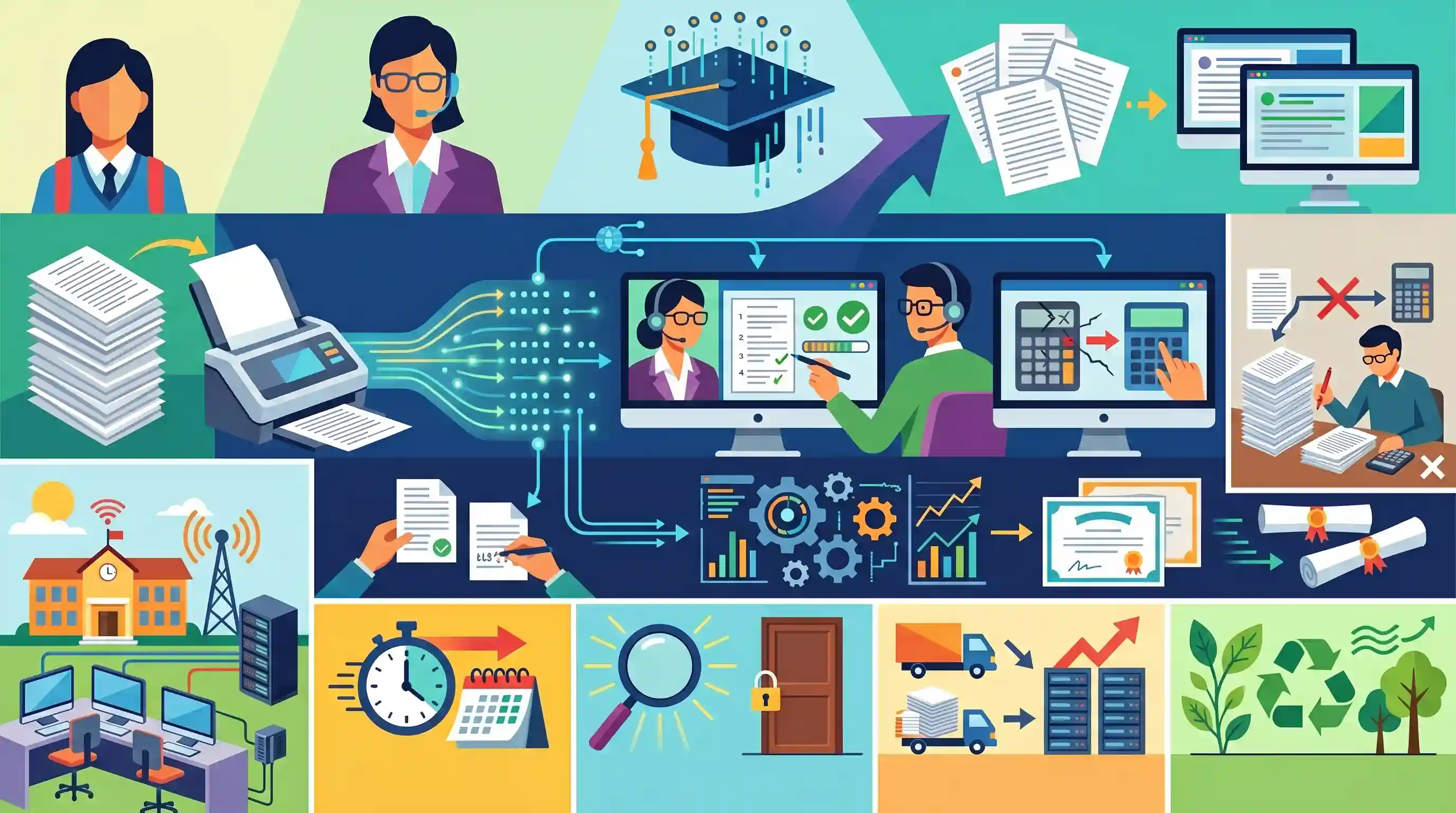
The Central Board of Secondary Education (CBSE) has announced the implementation of On-Screen Marking (OSM) for Class 12 board examinations starting in 2026. In this system, physical answer scripts will be scanned and evaluated digitally by teachers. The initiative aims to enhance the efficiency, transparency, and accuracy of the evaluation process by eliminating totalling errors, reducing manual interventions, and expediting result processing. It will also reduce logistical costs and support sustainable digital practices. Schools are mandated to upgrade their IT infrastructure, including high-speed internet and computer labs, to facilitate the transition. Class 10 exams will continue with the traditional physical evaluation method.
Key Points
- CBSE will introduce On-Screen Marking (OSM) for evaluating Class 12 board exam answer scripts starting in 2026.
- Physical answer books will be scanned and checked digitally by teachers on computer screens, while Class 10 evaluation will remain in physical mode.
- The move aims to enhance efficiency, transparency, and accuracy by eliminating totalling errors and manual interventions.
- OSM will speed up evaluation, remove the need for post-result mark verification, and allow broader teacher participation without travel.
- The shift reduces transportation costs, manpower requirements, and supports environmentally sustainable digital practices.
- Schools have been instructed to upgrade their digital infrastructure, including computer labs and high-speed internet, to serve as OSM evaluation centers.
Important Terms
On-Screen Marking (OSM)

A process where handwritten answer scripts are scanned and evaluated by teachers on digital screens. It eliminates manual totalling errors, reduces logistical delays, and enhances transparency in high-stakes examinations like board exams.
UPSC context
GS Paper 2: Governance/Education. Relevant for discussing reforms in examination systems and the use of technology for transparency.
Central Board of Secondary Education (CBSE)
A national educational board in India under the Ministry of Education. It designs curricula, conducts Class 10 and 12 examinations, and affiliates thousands of public and private schools globally.
UPSC context
GS Paper 2: Education. Important for questions on institutional frameworks and standardizing secondary education across India.
e-Governance
The application of Information and Communication Technology (ICT) to modernize administrative processes and service delivery. In education, it includes digital evaluation and real-time result processing to improve efficiency.
UPSC context
GS Paper 2: Governance. Core topic regarding the use of technology to improve transparency and accountability in public services.
National Education Policy (NEP) 2020
A comprehensive framework aiming to overhaul India's education system. It advocates for tech-enabled assessments, competency-based learning, and moving away from rote evaluation toward holistic, objective progress tracking.
UPSC context
GS Paper 2: Education Policy. Fundamental for any discussion on current Indian education reforms and evaluation shifts.
Digital Infrastructure
The foundational IT components, including high-speed internet and computer hardware, necessary for digital services. It is essential for bridging the 'digital divide' in the implementation of nationwide educational reforms.
UPSC context
GS Paper 3: Science & Technology/Infrastructure. Relevant for discussing the challenges of scaling digital reforms across diverse landscapes.
Prelims Trap
"CBSE is introducing On-Screen Marking (OSM) for both Class 10 and Class 12 board exams from 2026."
OSM is being rolled out exclusively for Class 12 exams. Class 10 evaluation will remain in physical mode.
Static Concepts Connected
What are the relevant pillars of e-Governance under Digital India?
- e-Kranti: Electronic delivery of services, aiming to transform traditional governance workflows through technology and process reengineering.
- Broadband Highways: Providing high-speed internet infrastructure and computer access, a strict prerequisite for local institutions to implement reforms like OSM.
- Process Transparency: Mandating procedural completeness and limiting manual human intervention to minimize corruption, bias, or calculation errors in public services.
Cross-Topic Patterns
e-Governance & Climate Goals
Digitizing evaluation reduces physical transit of millions of answer scripts, directly linking administrative efficiency (GS2) with reducing the carbon footprint of public institutions (GS3).
Digital Divide & NEP 2020
The mandate for schools to upgrade IT infrastructure highlights the persistent challenge of bridging the digital divide, a core hurdle in National Education Policy 2020 implementations.

Expect Mains GS2 questions on e-governance to demand specific micro-examples; CBSE's OSM is perfect for illustrating process transparency.
Linked PYQs · 2
Linked PYQs · 2
- 2023MainsGS2
e-governance, as a critical tool of governance, has ushered in effectiveness, transparency and accountability in governments. What inadequacies hamper the enhancement of these features ?
- 2024MainsGS2
e-governance is not just about the routine application of digital technology in service delivery process. It is as much about multifarious interactions for ensuring transparency and accountability. In this context evaluate the role of the 'Interactive Service Model' of e-governance.
