Disability Justice Approach and Dignity in Mental Healthcare
Source:The Hindu ↗
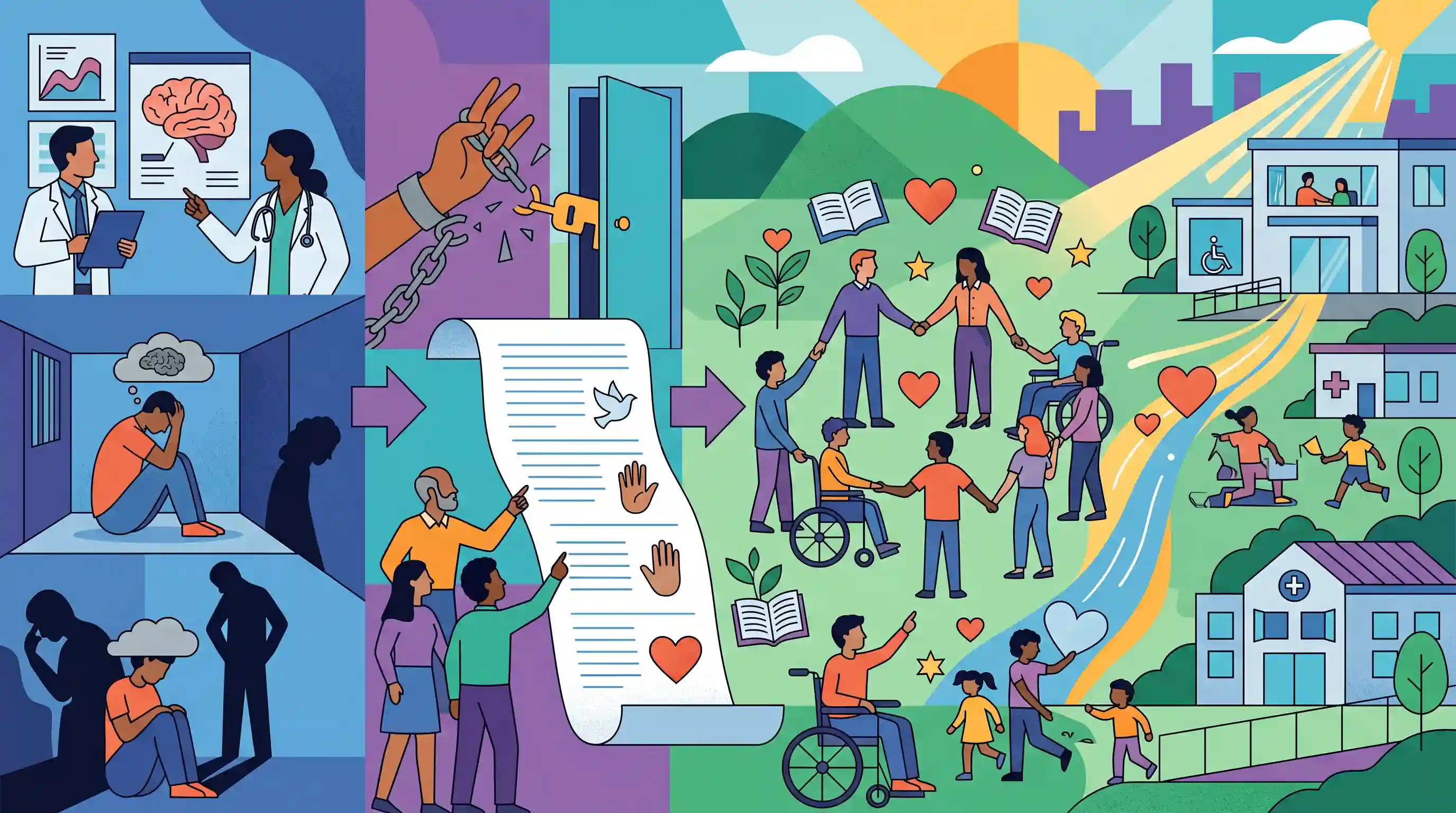
Why It Matters
Understanding the intersection of mental health, disability rights, and ethics is crucial for GS2 (Health and Social Justice) and GS4 (Empathy and Compassion). It underscores the shift from a medical model of disability to a human rights-based approach, which is vital for designing inclusive public policies.
Summary
The article advocates for a paradigm shift in mental healthcare by framing it within the principles of disability justice and human rights. It emphasizes that genuine care must prioritize the dignity, autonomy, and social inclusion of persons with mental health conditions rather than relying solely on clinical interventions. By aligning mental health frameworks with the Rights of Persons with Disabilities Act and fostering an ethics of care rooted in empathy and compassion, the state can address systemic stigma. The author calls for strengthening public healthcare systems to deliver accessible, rights-based, and dignified care to vulnerable populations.
Key Points
- Argues for viewing mental healthcare through the lens of disability justice, moving beyond mere clinical or medicalised approaches to a rights-based framework.
- Emphasizes the critical role of dignity, autonomy, and agency in the treatment and care of individuals with mental health conditions.
- Calls for a systemic integration of mental health policies with the broader disability rights framework to reduce stigma and institutional discrimination.
- Highlights the ethical dimension of caregiving, stressing that empathy, compassion, and human rights should be the foundation of public healthcare infrastructure.
- Advocates for robust state intervention to build inclusive health systems that empower vulnerable populations and ensure their constitutional right to a dignified life.
Important Terms
Rights of Persons with Disabilities Act (RPwD Act) 2016

Enacted to fulfill UNCRPD obligations, it replaced the 1995 Act. It expanded disability categories from 7 to 21 and mandated reservations (4% in government jobs, 5% in higher education).
UPSC context
GS Paper II: Social Justice/Vulnerable Sections. Crucial for questions on inclusion, legal frameworks, and affirmative action for the disabled.
Mental Healthcare Act 2017
Legislation ensuring the right to access mental healthcare services. It notably decriminalized suicide attempts (Section 115) by presuming 'severe stress' and introduced 'Advance Directives' for patient autonomy.
UPSC context
GS Paper II: Issues relating to Health and Social Justice. Tests knowledge of rights-based legal shifts in healthcare.
Ethics of Care
A normative ethical theory prioritizing interpersonal relationships, empathy, and responsiveness to others' needs over abstract, rule-based moral principles like utilitarianism or deontology.
UPSC context
GS Paper IV: Ethics and Human Interface. Relevant for essays and case studies involving compassionate governance and public service values.
Disability Justice
A framework that moves beyond civil rights to address how ableism intersects with other systems of oppression (race, class, gender), prioritizing the leadership of the most marginalized individuals.
UPSC context
GS Paper II: Social Justice. Represents a paradigm shift in understanding structural inequality and intersectional discrimination.
UNCRPD
A 2006 international human rights treaty (ratified by India in 2007) that shifted the disability discourse from 'charity/medical' models to a 'rights-based' approach focused on dignity and inclusion.
UPSC context
GS Paper II: International Treaties and Agreements. The foundational framework for India's contemporary disability and mental health laws.
Social Model of Disability
A concept viewing disability not as an individual medical 'defect' but as a result of societal barriers, such as inaccessible infrastructure and stigma, that hinder full participation.
UPSC context
GS Paper II: Social Justice. Tests the ability to analyze systemic causes of exclusion for vulnerable populations.
Prelims Trap
"Mental illness is excluded from the benchmark disabilities recognized under the RPwD Act, 2016."
Mental illness IS expressly recognized as one of the 21 specified disabilities under the RPwD Act 2016, guaranteeing anti-discrimination and inclusion rights.
Static Concepts Connected
What are the transformative rights granted under the Mental Healthcare Act, 2017?
- Advance Directives: Allows individuals to legally dictate how they wish to be treated (or not treated) during a future mental health crisis.
- Decriminalizing Suicide: Section 115 presumes severe stress for suicide attempts, effectively exempting individuals from prosecution under IPC Section 309.
- Community Care: Guarantees the right to live in the community, actively discouraging prolonged or forced institutionalization.
How does the "Ethics of Care" differ from traditional justice frameworks?
- Relational Focus: Prioritizes human interdependence, empathy, and maintaining relationships over strict adherence to abstract, universal moral rules.
- Accepting Vulnerability: Acknowledges that human beings are inherently vulnerable, requiring compassionate state and social infrastructure rather than just negative liberties.
Cross-Topic Patterns
Ethics of Care + GS4 Governance
Institutionalizing mental healthcare rights requires a shift in public administration from bureaucratic compliance to active compassion, directly overlapping with GS4 foundational values.
Article 21 + Disability Jurisprudence
The evolution of mental health from a clinical issue to a human rights issue maps onto the expanding judicial interpretation of Article 21 (Right to a Dignified Life).

Prelims 2026 could feature a multi-statement question combining MHCA 2017 advance directives and RPwD Act 2016 benchmark disabilities.
Linked PYQs · 4
Linked PYQs · 4
- 2017MainsGS2
Does the Rights of Persons with Disabilities Act, 2016 ensure effective mechanism for empowerment and inclusion of the intended beneficiaries in the society? Discuss.
- 2024MainsGS2
In a crucial domain like the public healthcare system the Indian State should play a vital role to contain the adverse impact of marketisation of the system. Suggest some measures through which the State can enhance the reach of public healthcare at the grassroots level.
- 2020MainsGS2
In order to enhance the prospects of social development, sound and adequate health care policies are needed particularly in the fields of geriatric and maternal health care. Discuss.
- 2022MainsGS4
Apart from intellectual competency and moral qualities, empathy and compassion are some of the other vital attributes that facilitate the civil servants to be more competent in tackling the crucial issues or taking critical decisions. Explain with suitable illustrations.
