Carabid beetles as bioindicators for tracking soil microplastics
Source:The Hindu ↗
Why It Matters
Microplastics are a recurring UPSC theme (asked in 2019, 2024). This development introduces a terrestrial aspect to the plastic pollution debate, emphasizing bioindicators and the impact of pollutants on soil food webs, relevant for GS3 Environment and Prelims ecology sections.
Summary
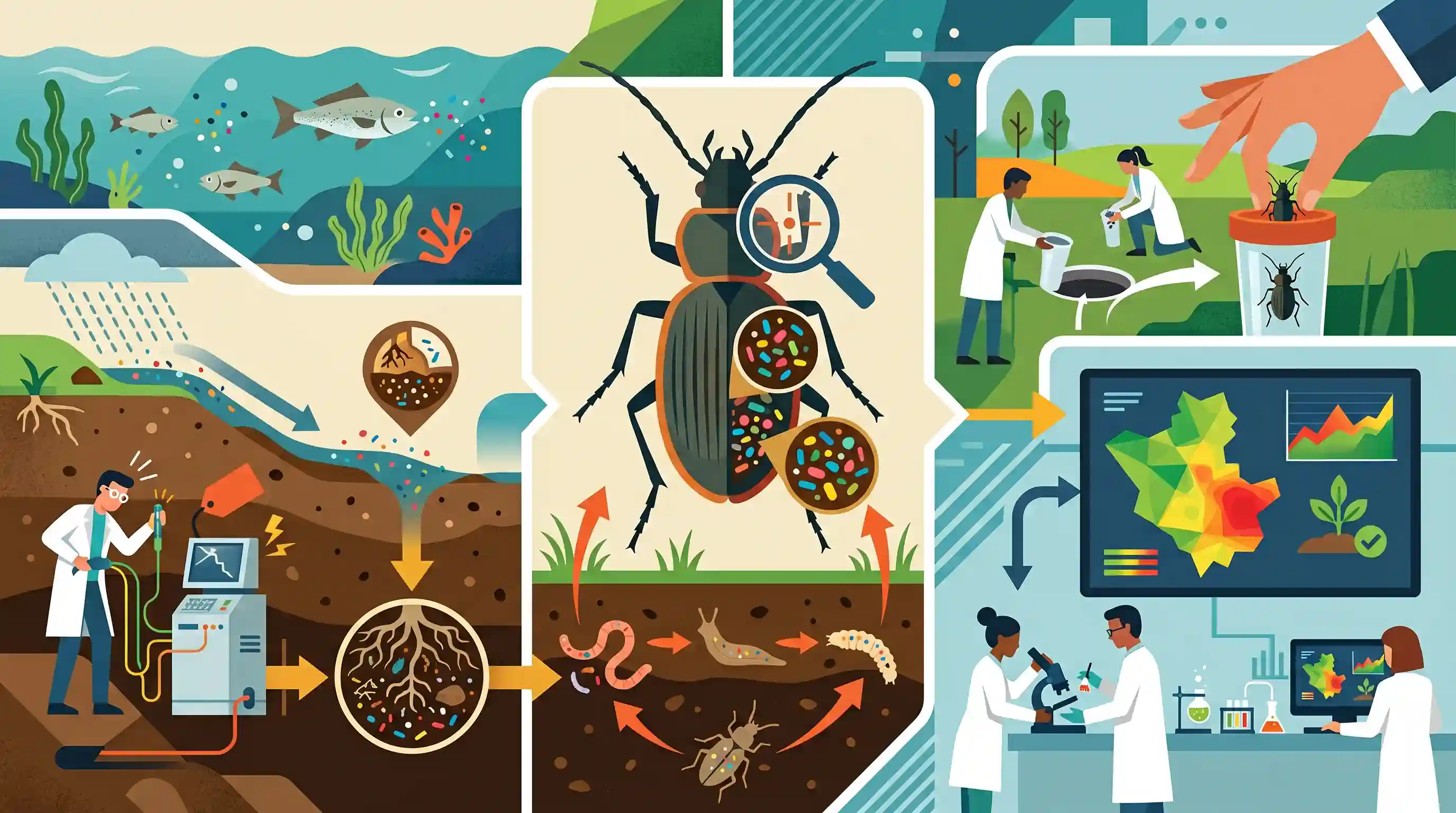
Researchers have identified carabid beetles as potential bioindicators for tracking microplastic pollution in soil. While aquatic microplastic pollution is well-documented, measuring soil contamination has remained technically challenging and expensive despite soils being a massive sink for plastics. Carabid beetles, which sit near the top of the invertebrate food web, ingest microplastics through their prey. This bioaccumulation allows scientists to use the beetles as a reliable, cost-effective biological proxy to assess soil health, monitor terrestrial microplastic spread, and understand its ecological impacts.
Key Points
- Carabid beetles (ground beetles) have been identified as effective bioindicators for monitoring microplastic pollution in terrestrial ecosystems.
- While microplastics in marine environments have been extensively studied, soil microplastic contamination is harder to measure despite soils acting as major sinks for plastics.
- Sources of soil microplastics include agricultural plastic films, sewage sludge application, and atmospheric deposition.
- Beetles accumulate microplastics in their bodies through their diet (bioaccumulation), making them a living record of soil contamination.
- Using bioindicators provides a practical, cost-effective alternative to complex chemical soil analyses for tracking environmental health.
Prelims Trap
Carabid beetles act as bioremediation agents that successfully break down and eliminate microplastic pollution from terrestrial soils.
Beetles are bioindicators (tracking pollution via accumulation), not bioremediation agents (degrading pollution). Microplastics are non-biodegradable and remain intact within the beetle's tissues.
Static Concepts Connected
What is the ecological difference between bioaccumulation and biomagnification?
- Bioaccumulation: The build-up of toxic substances within a single organism's lifetime, occurring when absorption outpaces the organism's ability to excrete the substance.
- Biomagnification: The increasing concentration of a toxic substance at successive trophic levels of a food web (e.g., from an insect up to a bird of prey).
What distinguishes primary from secondary microplastics in environmental science?
- Primary microplastics: Particles intentionally manufactured to be tiny (<5mm) for commercial applications, such as microbeads in cosmetics or microfibers in synthetic clothing.
- Secondary microplastics: Fragments formed from the gradual breakdown of larger plastic debris due to environmental weathering, UV radiation, and physical abrasion.
Cross-Topic Patterns
Agricultural mulching and soil pollution
The use of plastic mulching in horticulture boosts immediate crop yields but leaves a massive secondary microplastic footprint, posing long-term threats to soil biodiversity and health.
Sewage sludge: fertilizer or pollutant?
Wastewater treatment generates sewage sludge often repurposed as fertilizer. However, this circular-economy practice inadvertently transfers concentrated microplastics from urban runoff directly into agricultural terrestrial food webs.

Expect a 2026 prelims question contrasting primary vs. secondary microplastics, using Carabid beetles or lichens as bioindicator examples.
Linked PYQs · 2
Linked PYQs · 2
- 2019PrelimsGS1
Why is there a great concern about the 'microbeads' that are released into environment?
- 2024PrelimsGS1
Consider the following statements : Statement-I: Many chewing gums found in the market are considered a source of environmental pollution. Statement-II : Many chewing gums contain plastic as gum base. Which one of the following is correct in respect of the above statements?
