Multilingual artificial intelligence and regional linguistic divide
Source:Indian Express ↗
Why It Matters
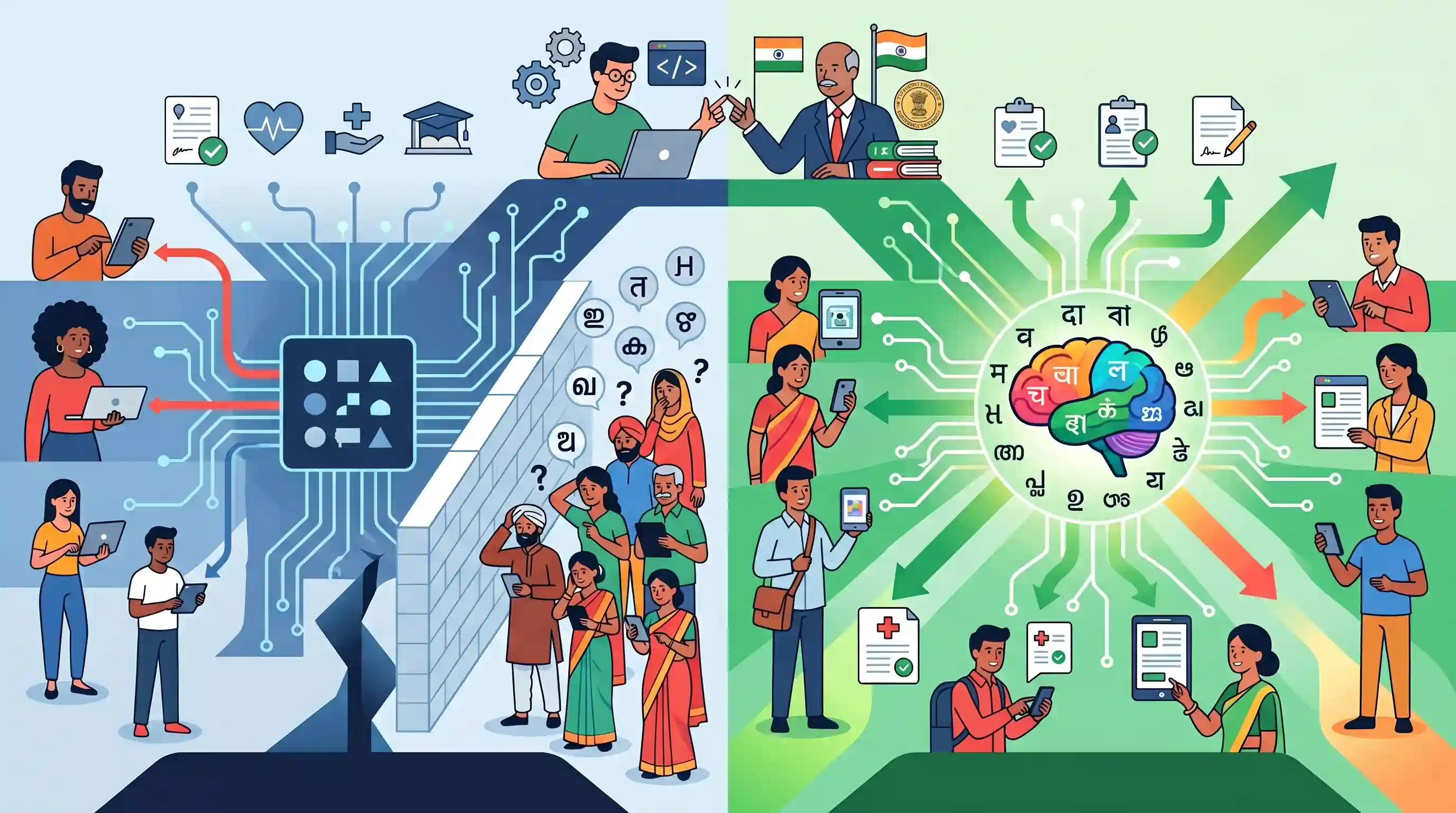
As AI systems integrate into India's Digital Public Infrastructure, ensuring they function across diverse regional languages is crucial for equitable service delivery and preventing the socio-economic marginalization of non-English speakers.
Summary
Reflecting on insights from the AI India Summit, the article emphasizes the pressing need for "multilingual AI accountability" in India. As Artificial Intelligence increasingly permeates governance and digital services, the inability of many foundational models to accurately process regional Indian languages risks creating a new linguistic digital divide. The piece argues that to achieve true digital inclusion and equitable e-governance, developers and policymakers must prioritize building robust AI systems that genuinely understand and represent India's diverse linguistic landscape, ensuring marginalized communities are not left behind.
Key Points
- The AI India Summit highlighted the urgent need for multilingual AI accountability to ensure emerging technologies serve India's linguistically diverse population.
- Current Large Language Models (LLMs) often struggle with regional Indian languages, risking a linguistic digital divide that marginalizes non-English speakers.
- There is a pressing demand for developers and policymakers to be held accountable for building inclusive AI systems that genuinely comprehend native languages without biases.
- Robust, multilingual AI is deemed critical for effective e-governance, ensuring equitable access to digital public infrastructure across all communities.
Important Terms
India AI Impact Summit

A global intergovernmental platform, first hosted in the Global South (2026), focused on deploying AI for sustainable development and inclusive growth through frameworks like 'Sutras' and 'Chakras'.
UPSC context
GS Paper II (Governance) and III (Science & Tech); tests understanding of India's leadership in global AI governance and digital diplomacy.
Bhashini
The 'Bhasha Interface for India' is an AI-powered translation platform under the National Language Translation Mission, enabling digital service access in 22+ scheduled Indian languages to bridge linguistic barriers.
UPSC context
GS Paper III (Technology/Digital Inclusion); relevant for questions on bridging the digital divide and linguistic diversity in technology.
IndiaAI Mission
A ₹10,371 crore national mission designed to build a robust AI ecosystem in India by democratizing compute access, developing indigenous foundational models, and promoting ethical AI practices.
UPSC context
GS Paper III (Economy/S&T); critical for topics concerning national industrial policy, AI infrastructure, and technological sovereignty.
Digital Divide
The socio-economic gap between those with regular, effective access to digital technologies and those without, now expanding into a 'linguistic divide' due to English-centric AI models.
UPSC context
GS Paper I (Social Issues) and II (Governance); essential for discussing equitable development and the challenges of the Fourth Industrial Revolution.
e-Governance
The use of Information and Communication Technology (ICT) to deliver government services and information, aiming for transparency, accountability, and the vision of 'Minimum Government, Maximum Governance'.
UPSC context
GS Paper II (Governance); a core pillar for topics on administrative reforms and citizen-centric service delivery.
Multilingual AI Accountability
The principle of ensuring AI systems are evaluated for accuracy and fairness across multiple regional languages to prevent marginalized linguistic communities from being excluded from digital progress.
UPSC context
GS Paper III (Ethics/AI Governance); tests awareness of the ethical implications of emerging technology and inclusive innovation.
Prelims Trap
National Language Translation Mission (NLTM) initiatives are strictly limited to the 22 Scheduled Languages of the Constitution.
False. AI translation initiatives like Bhashini and Adi-Vaani are actively extending capabilities to non-scheduled indigenous and tribal dialects (like Bhili and Gondi).
Static Concepts Connected
What constitutional provisions protect the rights of linguistic minorities in India?
- Article 29: Grants any section of citizens residing in India the fundamental right to conserve their distinct language, script, or culture.
- Article 347: Empowers the President to recognize a language spoken by a substantial population of a State for official purposes to protect minority languages.
- Article 350A: Mandates the State to provide adequate facilities for instruction in the mother-tongue at the primary education stage for children of linguistic minority groups.
What are the foundational pillars of India's Digital Public Infrastructure (DPI)?
- Identity Layer: Systems like Aadhaar provide a foundational, verifiable digital identity for citizens to securely access targeted welfare and services.
- Payment Layer: Platforms like UPI enable interoperable, real-time, and frictionless financial transfers across the national economy.
- Data Layer: The Data Empowerment and Protection Architecture (DEPA) allows secure, user-consent-based data sharing via Account Aggregators.
- Language Layer: Platforms like Bhashini act as the newest DPI layer, using AI translation to break language barriers in accessing digital public services.
Cross-Topic Patterns
Vernacular AI + Financial Inclusion
Voice-assisted AI in regional languages is being merged with offline digital payments (UPI 123Pay), bridging the digital divide for illiterate rural users and advancing deep financial inclusion.
Sovereign AI + Data Protection Act
Building indigenous foundational models (BharatGen) aligns with the Digital Personal Data Protection (DPDP) Act by ensuring the processing of sensitive linguistic and cultural citizen data remains within India's borders.

Bhashini as a 'Language DPI' linked with indigenous Sovereign AI models (BharatGen) is a prime candidate for a 2026 Prelims tech question.
Linked PYQs · 4
Linked PYQs · 4
- 2023MainsGS3
Introduce the concept of Artificial Intelligence (AI). How does Al help clinical diagnosis? Do you perceive any threat to privacy of the individual in the use of Al in healthcare?
- 2020PrelimsGS1
With the present state of development, Artificial Intelligence can effectively do which of the following? 1. Bring down electricity consumption in industrial units 2. Create meaningful short stories and songs 3. Disease diagnosis 4. Text-to-Speech Conversion 5. Wireless transmission of electrical energy Select the correct answer using the code given below:
- 2024MainsGS2
e-governance is not just about the routine application of digital technology in service delivery process. It is as much about multifarious interactions for ensuring transparency and accountability. In this context evaluate the role of the 'Interactive Service Model' of e-governance.
- 2024PrelimsGS1
Consider the following statements: I. It is expected that Majorana 1 chip will enable quantum computing. II. Majorana 1 chip has been introduced by Amazon Web Services (AWS). III. Deep learning is a subset of machine learning. Which of the statements given above are correct?
