OpenAI IndQA benchmark for Indic large language models
Source:Indian Express ↗
Why It Matters
Highlights the ongoing efforts to localize frontier technologies like Artificial Intelligence. It is highly relevant for GS-3 (Science and Technology advancements in IT) and GS-2 (addressing the digital divide and promoting inclusive socio-economic development).
Summary
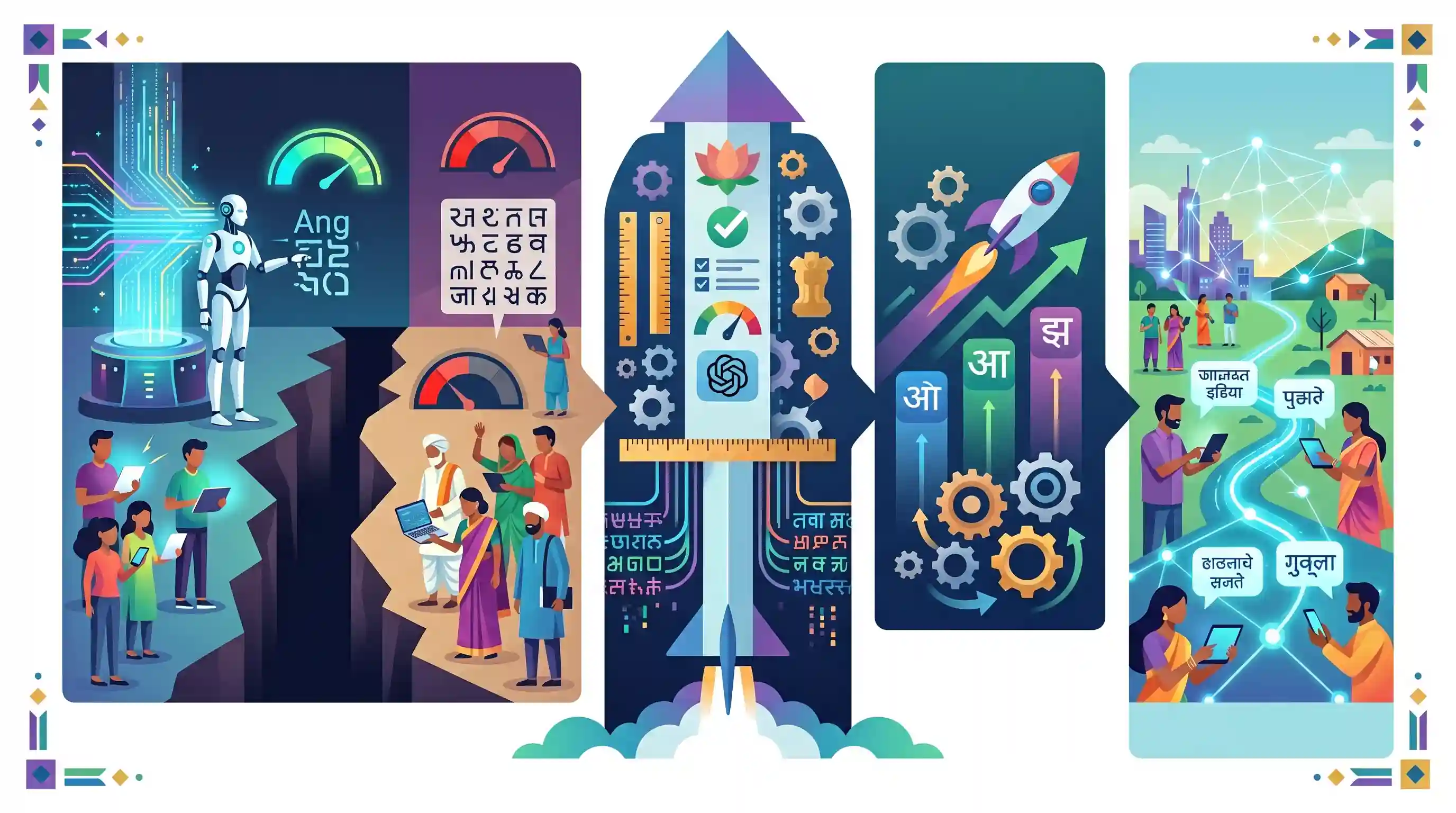
OpenAI has launched a new benchmark called 'IndQA' to assess and improve the performance of Large Language Models (LLMs) in Indic languages. This initiative targets the performance disparity between English-centric AI models and those processing Indian regional languages. By offering a standardized evaluation framework, IndQA seeks to accelerate the development of better Indic LLMs. This localization of AI technology is vital for enhancing digital inclusion, overcoming linguistic barriers, and ensuring that advanced digital tools and services are accessible to India's extensive non-English speaking demographic.
Key Points
- OpenAI has introduced the 'IndQA' benchmark to evaluate the capabilities of Large Language Models (LLMs) in understanding and processing Indic languages.
- The benchmark aims to bridge the significant performance gap between English-dominant AI models and those developed for Indian regional languages.
- IndQA provides a standardized framework for developers to test and enhance natural language processing (NLP) for languages such as Hindi, Bengali, Tamil, and others.
- Advancing Indic LLMs is crucial for promoting digital inclusion, breaking down language barriers, and ensuring that AI-driven services reach India's vast non-English speaking population.
Important Terms
IndQA

A benchmark launched by OpenAI to evaluate AI models on their understanding of 12 Indian languages and cultural contexts across 10 domains.
UPSC context
GS III: Science & Technology. Relevant for AI localization, indigenous benchmarks, and linguistic diversity in technology.
Indic LLMs
AI models trained on Indian languages to capture regional nuances, grammar, and cultural contexts, reducing dependency on English-centric systems.
UPSC context
GS III: Science & Technology. Tests knowledge of 'Sovereign AI' and efforts toward linguistic inclusivity.
Digital Inclusion
The process of ensuring all individuals have equitable, meaningful, and safe access to digital technologies, services, and opportunities.
UPSC context
GS II: Governance/Social Justice. Critical for evaluating government schemes like Digital India and Bhashini.
Digital Divide
The gap between individuals and communities that have access to modern information technology and those that do not, often due to linguistic or economic barriers.
UPSC context
GS II: Governance. Important for understanding social inequalities in technological adoption and public service delivery.
Natural Language Processing (NLP)
An AI field focused on enabling computers to understand, interpret, and generate human language, bridging the gap between human communication and machine data.
UPSC context
GS III: Science & Technology. A core component of AI development and the National Language Translation Mission.
Prelims Trap
IndQA is a Government of India benchmark covering all 22 Eighth Schedule languages.
IndQA is developed by OpenAI (a private foreign entity) and tests 12 Indian languages. In contrast, the Indian Government's 'Bhashini' mission targets all 22 Eighth Schedule languages.
Static Concepts Connected
What is the Digital India Bhashini Mission?
- Core Objective: It aims to break language barriers by creating open-source datasets and AI tools for Indian languages.
- Language Scope: It comprehensively targets all 22 official languages listed in the Eighth Schedule of the Indian Constitution.
- Crowdsourcing Approach: It utilizes platforms like 'Bhasha Daan' for citizens to crowdsource voice and text data, building indigenous AI models.
How do NLP, Code-Switching, and Cultural Bias relate to AI?
- NLP Basics: Natural Language Processing (NLP) is the branch of AI that enables computers to understand, interpret, and generate human language.
- Code-Switching: The practice of fluidly alternating between two languages (like Hinglish). Traditional AI models struggle to process this native communication style.
- Algorithmic Bias: Without diverse local training data, Large Language Models (LLMs) inherently skew toward Western, English-centric cultural contexts and reasoning.
Cross-Topic Patterns
Indic AI as a DPI extension
Localized NLP tools act as the linguistic layer for India's DPI, enabling voice-first e-governance, healthcare, and agricultural services for non-English speakers.
Eighth Schedule & Technological Sovereignty
The Eighth Schedule dictates tech and data localization boundaries, framing India's push against Western algorithmic bias and securing digital sovereignty.

Expect a 2026 Prelims multi-statement question contrasting Govt missions like 'Bhashini' (22 languages) with private benchmarks like IndQA.
Linked PYQs · 3
Linked PYQs · 3
- 2023MainsGS3
Introduce the concept of Artificial Intelligence (AI). How does Al help clinical diagnosis? Do you perceive any threat to privacy of the individual in the use of Al in healthcare?
- 2021MainsGS2
Has digital illiteracy, particularly in rural areas, coupled with lack of Information and Communication Technology (ICT) accessibility hindered socio-economic development? Examine with justification.
- 2020PrelimsGS1
With the present state of development, Artificial Intelligence can effectively do which of the following? 1. Bring down electricity consumption in industrial units 2. Create meaningful short stories and songs 3. Disease diagnosis 4. Text-to-Speech Conversion 5. Wireless transmission of electrical energy Select the correct answer using the code given below:
