India Digital Public Infrastructure Exports and Strategic Influence
Source:Indian Express ↗
Why It Matters
It provides a comprehensive perspective on how India's technological advancements in digital public infrastructure are translating into foreign policy instruments, soft power leverage, and strategic leadership in the Global South.
Summary
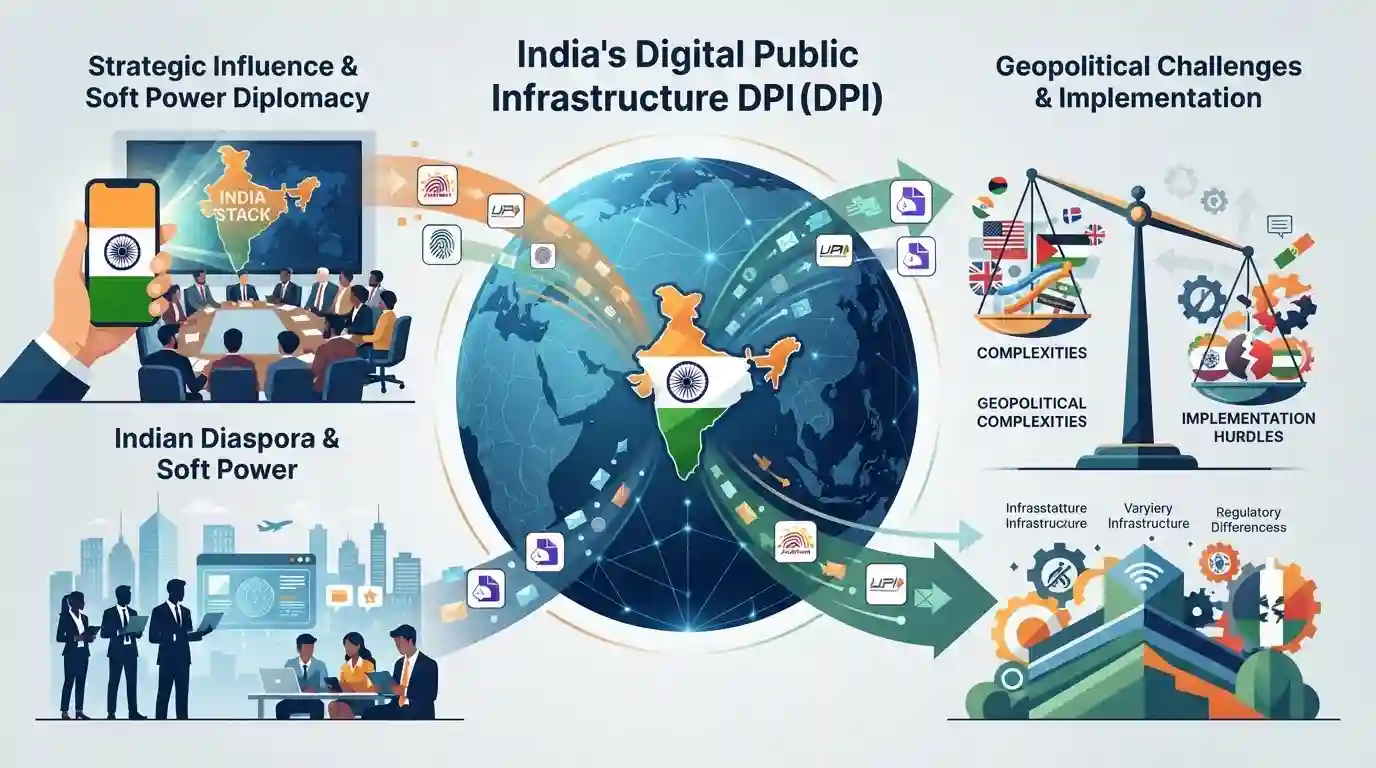
The article examines how India is using the export of its Digital Public Infrastructure (DPI) or India Stack as a tool for strategic influence and soft power diplomacy, particularly across the Global South, while weighing the geopolitical and implementation challenges involved.
Key Points
- India is leveraging its Digital Public Infrastructure (DPI), commonly referred to as India Stack, as a key instrument of foreign policy and soft power diplomacy.
- Exporting open-source digital infrastructure like Aadhaar, UPI, and DigiLocker allows developing nations to leapfrog traditional development hurdles and promotes inclusive growth.
- Digital diplomacy helps India build strategic partnerships, counter geopolitical influence of other major powers in the Global South, and position itself as a technology leader.
- Challenges include data privacy concerns, cybersecurity vulnerabilities, and the differing regulatory frameworks across recipient countries.
Important Terms
India Stack

A collection of open APIs and digital public infrastructures (including Aadhaar, UPI, DigiLocker, and Account Aggregator) that enables paperless, cashless, and presence-less service delivery at a population scale.
UPSC context
GS Paper II/III (Polity/Economy/International Relations): Tests understanding of India's digital public infrastructure (DPI), technological self-reliance, and soft power projection across the Global South.
Prelims Trap
exporting proprietary Indian digital stacks like Aadhaar and UPI in a mandatory, one-size-fits-all package to Global South nations.
Aspirants often assume India Stack mandates adopting Aadhaar or UPI in its exact Indian form, whereas it is offered as modular, customizable open-source digital public goods.
Static Concepts Connected
What is Digital Public Infrastructure (DPI) and what are the core layers of the India Stack?
- Identity Layer: Identity layer featuring Aadhaar for biometric authentication and foundational digital identification.
- Payments Layer: Payments layer driven by UPI enabling interoperable, instant real-time retail payments at scale.
- Data Layer: Data empowerment layer via the Account Aggregator framework allowing secure, consent-based user data sharing.
Cross-Topic Patterns
Tech Diplomacy Meets Global South Development Assistance
India's export of India Stack parallels classical developmental assistance, merging the 'Development Partnership Administration' (DPA) model with cutting-edge tech diplomacy and digital sovereignty goals in the Global South.
DPI Export vs. Digital Silk Road Rivalry
Open-source DPI sharing challenges proprietary Western tech models and counters rising Chinese digital infrastructure expansion through initiatives like the Digital Silk Road.

India Stack & DPI export will likely be tested via statement-based questions on digital sovereignty, G20 outcomes, and soft power.
Linked PYQs · 2
Linked PYQs · 2
- 2025MainsGS2
India-Africa digital partnership is achieving mutual respect, co-development and long-term institutional partnerships. Elaborate.
- 2023MainsGS3
What is the status of digitalization in the Indian economy? Examine the problems faced in this regard and suggest improvements.
