Swasth Nari Sashakt Parivar Abhiyan and Preventive Healthcare
Source:The Hindu ↗
Why It Matters
Highlights the role of targeted government campaigns in addressing critical public health challenges such as maternal mortality, anaemia, and non-communicable diseases, aligning with topics in GS2 concerning governance, social justice, and vulnerable sections.
Summary
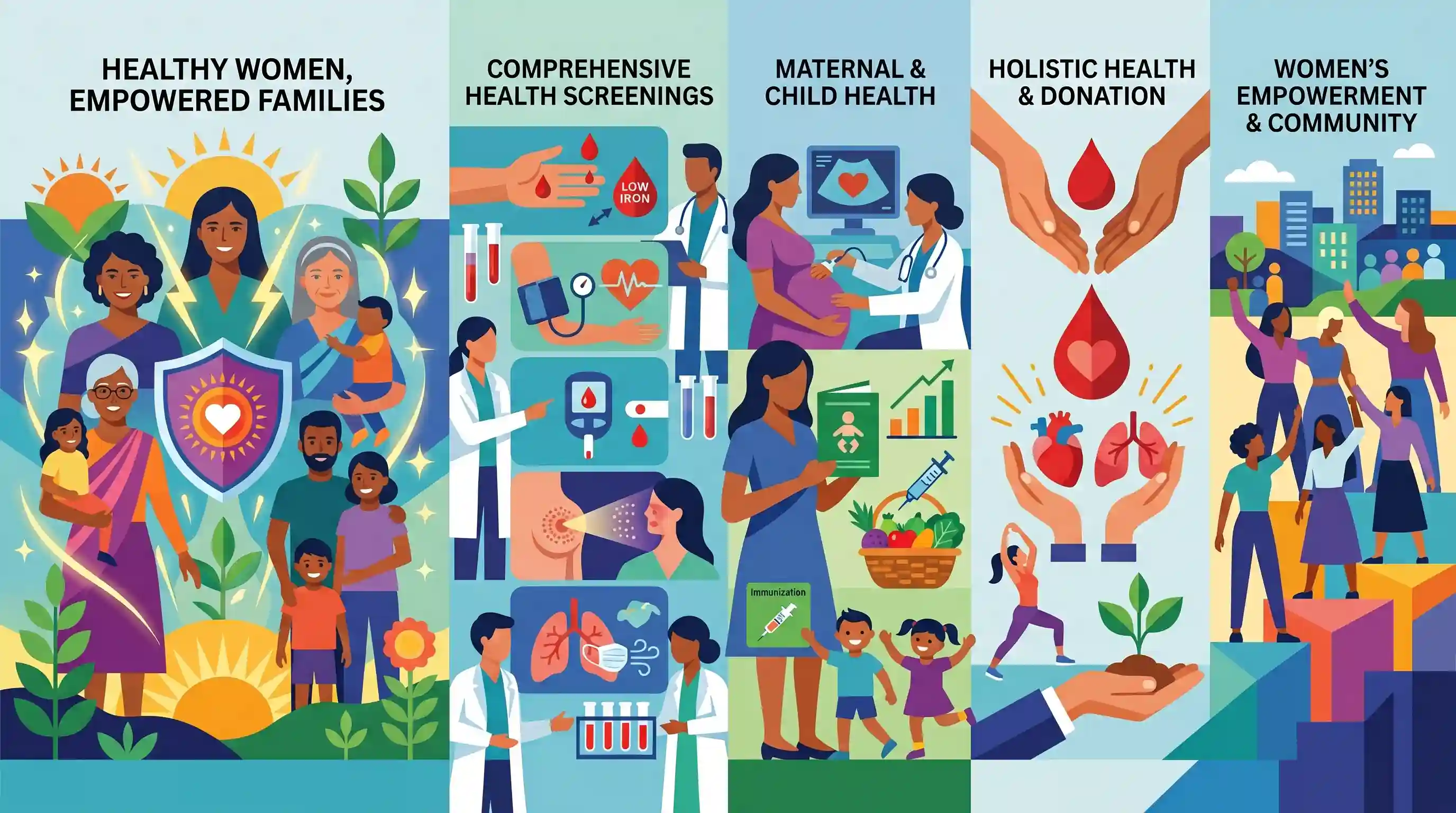
The 'Swasth Nari Sashakt Parivar' (SNSP) Abhiyan was launched in Mysuru to promote women's health and wellness. Inaugurated nationally by the Prime Minister in Dhar, Madhya Pradesh, the campaign runs until October 2. It offers comprehensive health screenings for anaemia, hypertension, diabetes, cancer, and tuberculosis, alongside support for immunisation and nutritional programmes to lower maternal and child mortality. The initiative encompasses antenatal checkups, Mother and Child Protection (MCP) cards distribution, and encourages blood and organ donation, representing a holistic approach to preventive healthcare for women.
Key Points
- The 'Swasth Nari Sashakt Parivar' (SNSP) Abhiyan is a nationwide campaign dedicated to women's health and wellness, running until October 2.
- It focuses on comprehensive screenings for non-communicable and communicable diseases including anaemia, hypertension, diabetes, cancer, and tuberculosis.
- The campaign aims to reduce maternal and child mortality rates through enhanced immunisation and nutritional programmes.
- Key interventions include providing antenatal care checkups, Mother and Child Protection (MCP) cards, and promoting organ and blood donation registration.
Important Terms
Swasth Nari Sashakt Parivar (SNSP) Abhiyan

A national health campaign (Sept-Oct 2025) launched by the Prime Minister to provide preventive healthcare, screenings for anemia and NCDs, and nutritional support for women and children.
UPSC context
GS Paper 2: Social Justice; government schemes for vulnerable sections; tests knowledge of integrated health-nutrition interventions.
Maternal Mortality Ratio (MMR)
The number of maternal deaths per 100,000 live births during pregnancy or within 42 days of termination from pregnancy-related causes.
UPSC context
GS Paper 2: Health/Social Justice; key indicator of healthcare quality and SDG 3.1 progress.
Anganwadis
Rural child-care centers established under the Integrated Child Development Services (ICDS) in 1975 to combat malnutrition and provide basic healthcare/pre-school education.
UPSC context
GS Paper 2: Social Sector/Health; primary locus for implementing grassroots nutritional and health schemes.
Mother and Child Protection (MCP) Card
A joint health-and-nutrition record for pregnant women and children (up to age 5) that tracks immunizations, checkups, and growth milestones to ensure a continuum of care.
UPSC context
GS Paper 2: Governance/Social Justice; tool for citizen-centric service delivery and tracking maternal-child health metrics.
Non-Communicable Diseases (NCDs)
Chronic, non-contagious medical conditions (e.g., diabetes, hypertension, cancer) caused by a combination of genetic, environmental, and lifestyle factors.
UPSC context
GS Paper 3: Science & Tech; GS Paper 2: Health; tests understanding of India's changing disease burden.
Antenatal Care (ANC)
Comprehensive healthcare provided to pregnant women, including screenings (minimum four visits recommended), to ensure safe pregnancy and reduce maternal and neonatal risks.
UPSC context
GS Paper 2: Health; critical component of preventive healthcare and reducing institutional delivery gaps.
Prelims Trap
SNSP Abhiyan is solely a maternal health scheme implemented exclusively by the Ministry of Women and Child Development.
SNSP is a joint initiative of MoHFW and MoWCD. It covers comprehensive non-communicable diseases (cancer, diabetes) and organ donation awareness for all women, not just maternal care for pregnant women.
Static Concepts Connected
What is the Mother and Child Protection (MCP) Card?
- Purpose: A joint initiative of MoHFW and MoWCD used as an entitlement card and tracking tool for maternal and child health services.
- Coverage: It tracks antenatal care (ANC), immunisation, growth monitoring, and identifies high-risk pregnancies to reduce Maternal and Infant Mortality Rates.
How is Maternal Mortality Ratio (MMR) defined and tracked?
- Definition: The number of maternal deaths during a given time period per 100,000 live births during the same period.
- SDG Target: UN Sustainable Development Goal 3.1 aims to reduce the global maternal mortality ratio to less than 70 per 100,000 live births by 2030.
Cross-Topic Patterns
SNSP + Anaemia Mukt Bharat + Bio-fortification
Screening for anaemia in SNSP connects to the broader Anaemia Mukt Bharat strategy (6x6x6) and GS3 topics like bio-fortified crops (zinc/iron-rich rice) to tackle hidden hunger in women.
Organ donation deficit + NOTTO regulations
Promoting organ donation in SNSP addresses India's low deceased donation rate (<1 per million). It links to GS4 bioethics and National Organ and Tissue Transplant Organization (NOTTO) regulations.

Expect a 2026 Prelims question mixing SNSP, Poshan 2.0, and Anaemia Mukt Bharat, specifically testing the overlap between MoHFW and MoWCD.
Linked PYQs · 4
Linked PYQs · 4
- 2024MainsGS2
In a crucial domain like the public healthcare system the Indian State should play a vital role to contain the adverse impact of marketisation of the system. Suggest some measures through which the State can enhance the reach of public healthcare at the grassroots level.
- 2020MainsGS2
In order to enhance the prospects of social development, sound and adequate health care policies are needed particularly in the fields of geriatric and maternal health care. Discuss.
- 2023PrelimsGS1
Consider the following statements in the context of interventions being undertaken under Anaemia Mukt Bharat Strategy: 1. It provides prophylactic calcium supplementation for pre-school children, adolescents and pregnant women. 2. It runs a campaign for delayed cord clamping at the time of child-birth. 3. It provides for periodic deworming to children and adolescents. 4. It addresses non-nutritional causes of anaemia in endemic pockets with special focus on malaria, hemoglobinopathies and fluorosis. How many of the statements given above are correct?
- 2024PrelimsGS1
With reference to the 'Pradhan Mantri Surakshit Matritva Abhiyan', consider the following statements : 1. This scheme guarantees a minimum package of antenatal care services to women in their second and third trimesters of pregnancy and six months post-delivery health care service in any government health facility. 2. Under this scheme, private sector health care providers of certain specialities can volunteer to provide services at nearby government health facilities. Which of the statements given above is/are correct?
