ব্যাঙ্ক অ্যাকাউন্ট জব্দের অভিযোগে বিএনএসএস আইনের সুরক্ষা নিয়ে হাইকোর্টের শুনানি
Source:livelaw ↗
কেন এটি গুরুত্বপূর্ণ
Understanding the procedural safeguards embedded in new criminal codes like the BNSS is vital for questions on Indian Polity. The interplay between investigative agencies' powers, the role of magistrates, and the protection of citizens' fundamental rights (such as Article 21) frequently features in civil services examinations.
সারসংক্ষেপ
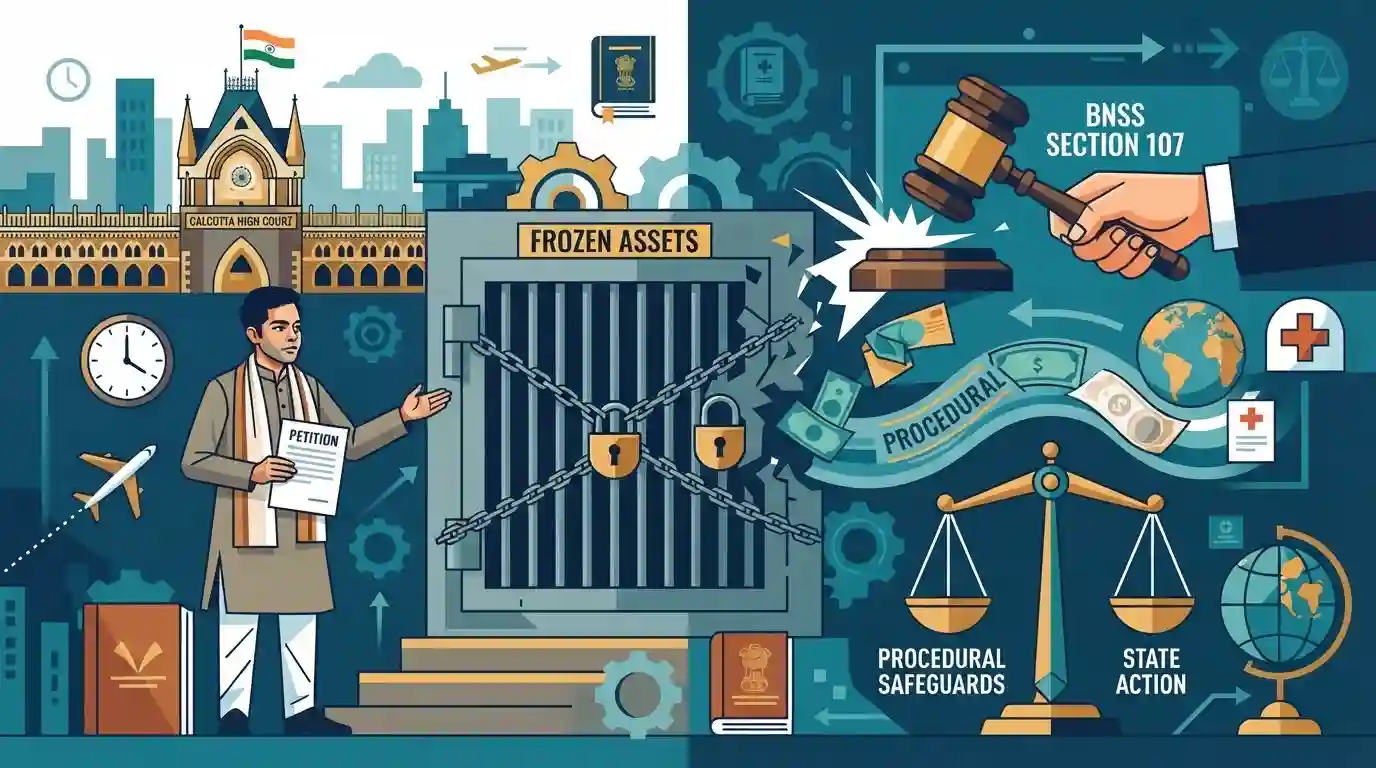
The Calcutta High Court has agreed to hear TMC MP Abhishek Banerjee's petition challenging the alleged arbitrary freezing of his personal bank account. Banerjee contends that the freezing bypasses Section 107 of the newly implemented Bharatiya Nagarik Suraksha Sanhita (BNSS), which mandates obtaining an order from a Magistrate before any property seizure or attachment. The case highlights procedural safeguards under India's new criminal laws and touches upon fundamental rights, as Banerjee seeks to use the account to facilitate travel abroad for medical treatment.
মূল বিষয়
- TMC MP Abhishek Banerjee has moved the Calcutta High Court challenging the freezing of his personal bank account without prior notice.
- The plea claims the action violates Section 107 of the Bharatiya Nagarik Suraksha Sanhita (BNSS), which requires police or investigating agencies to secure a Magistrate's order before seizing or attaching property.
- Banerjee also cited a lack of communication from the Enforcement Directorate (ED) regarding the freeze.
- The issue intertwines with his fundamental rights, as he intends to travel abroad for medical treatment, having previously obtained permission from the Supreme Court.
গুরুত্বপূর্ণ শব্দ
ভারতীয় নাগরিক সুরক্ষা সংহিতা (BNSS)

CrPC-এর স্থলাভিষিক্ত হওয়া সদ্য বাস্তবায়িত পদ্ধতিগত ফৌজদারি বিধি। ধারা 107 অনুযায়ী, অপরাধের সঙ্গে যুক্ত বলে সন্দেহভাজন কোনো সম্পত্তি ক্রোক বা বাজেয়াপ্ত করার আগে (যেমন ব্যাঙ্ক অ্যাকাউন্ট ফ্রিজ করা), আইন প্রয়োগকারী সংস্থাকে সংশ্লিষ্ট এক্তিয়ারভুক্ত ম্যাজিস্ট্রেটের নির্দেশ বা আদেশ নিতে হবে।
UPSC context
Crucial for Indian Polity (Paper V) regarding new criminal justice reforms, limits on police powers, and procedural safeguards.
Calcutta High Court
The highest judicial authority in West Bengal. It is currently examining a petition regarding the arbitrary freezing of a bank account to determine if statutory procedures were bypassed and constitutional protections were violated.
UPSC context
Important for Polity (Paper V), specifically testing writ jurisdiction (Article 226) and the High Court's role in checking administrative overreach.
ভারতের সুপ্রিম কোর্ট
India's apex judicial body. In this context, it recently granted an MP permission for overseas medical travel, overriding a High Court rejection and underscoring the fundamental right to personal liberty and travel.
UPSC context
Highly relevant for Polity (Paper V), focusing on Article 21 (right to travel abroad) and the Supreme Court's appellate jurisdiction.
Trinamool Congress (TMC)
A major political party and the current ruling party in West Bengal. Cases involving its leaders frequently highlight issues of procedural safeguards, federalism, and the powers of central investigative agencies.
UPSC context
Applicable to Paper V (Polity) under the topic of regional political parties, state electoral politics, and centre-state federal tensions.
প্রিলিমস ফাঁদ
"The Right to travel abroad is protected under Article 19 (Freedom of Movement)."
ভারতের অভ্যন্তরে অবাধে চলাফেরা করা ধারা 19(1)(d)-এর অধীনে একটি মৌলিক অধিকার, কিন্তু *বিদেশে* ভ্রমণের অধিকার ধারা 21 (জীবন ও ব্যক্তিগত স্বাধীনতার অধিকার)-এর অধীনে সুরক্ষিত।
সংযুক্ত স্থির ধারণা
হাইকোর্টের রিট এক্তিয়ার কীভাবে সুপ্রিম কোর্টের সাথে তুলনীয়?
- অধিক্ষেত্রের পরিধি: High Courts (Art 226) can issue writs for fundamental rights and legal rights. The Supreme Court (Art 32) is restricted only to fundamental rights.
- Territorial Limits: The Supreme Court can issue writs throughout India, whereas High Courts are generally restricted to their own territorial jurisdiction.
- Discretionary Nature: High Court writ jurisdiction is discretionary. The Supreme Court must exercise it, as the right to move the SC under Art 32 is a Fundamental Right itself.
What is the current constitutional status of the Right to Property in India?
- Constitutional Right: 1978 সালের 44th সংশোধনী আইনের মাধ্যমে এটিকে Part III (মৌলিক অধিকার) থেকে বাদ দেওয়া হয়েছিল এবং Article 300A-এর অধীনে Part XII-এ স্থানান্তরিত করা হয়েছিল।
- Authority of Law: Article 300A states that no person shall be deprived of their property (which includes bank accounts) except by authority of law.
- Legal Remedy: Violations can be challenged in High Courts under Article 226, but not directly in the Supreme Court under Article 32 since it is no longer a Fundamental Right.
আন্তঃবিষয় প্যাটার্ন
নতুন ফৌজদারি আইন ও ED-র ক্ষমতা
The transition from CrPC to BNSS (Section 107) creates new procedural checks on investigating agencies. Exams often blend these new statutory provisions with questions on ED/CBI powers and executive overreach.
ধারা ২১ ও পদ্ধতিগত যথাযথ প্রক্রিয়া
Arbitrary property seizures (bank accounts) are frequently challenged not just under Article 300A, but via Article 21 when they obstruct personal liberty, such as restricting travel for medical treatment.

ভ্রমণ সংক্রান্ত Art 19 বনাম 21-এর বৈসাদৃশ্য, এবং সেই সাথে আইনি অধিকারের ক্ষেত্রে হাইকোর্টের ব্যাপকতর Art 226 রিট ক্ষমতা সম্পর্কিত প্রশ্ন আশা করা যেতে পারে।
সংযুক্ত PYQ · 2
সংযুক্ত PYQ · 2
- 2021WBCS_PRELIMSGS1
Article 21 of the Indian Constitution ensues
- 2024WBCS_PRELIMSGS1
Which Fundamental Rights cannot be suspended during a National Emergency under Article 359?
