Geopolitical Pressures on Iranian Leadership in West Asia
Source:Indian Express ↗
Why It Matters
The stability of West Asia is crucial for India due to significant energy imports, a large expatriate diaspora, and crucial trade routes. Understanding the Iran-Israel conflict and internal dynamics of Middle Eastern powers is essential for GS Paper 2 (International Relations).
Summary
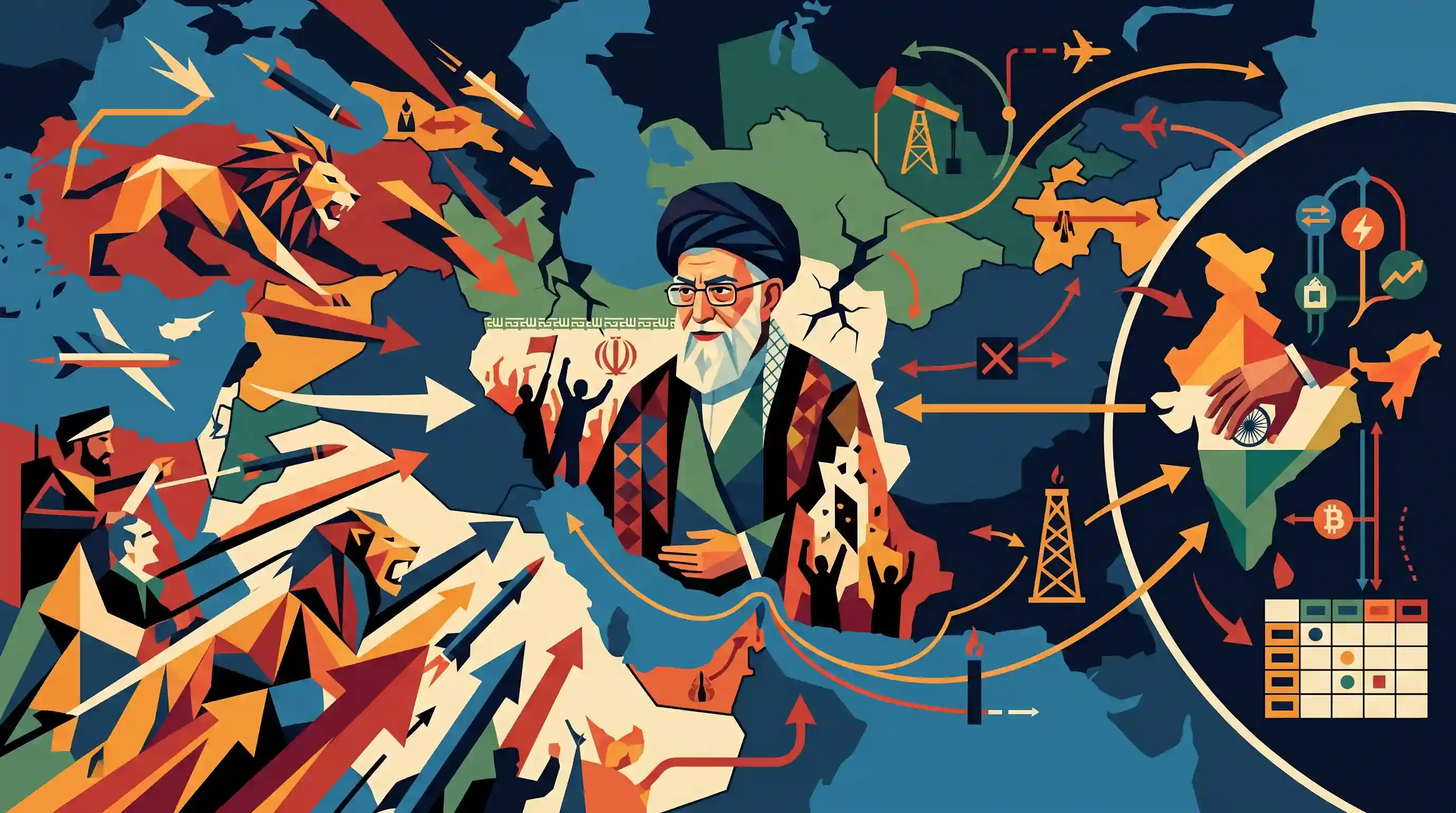
In this opinion piece, C. Raja Mohan examines the formidable challenges confronting Iran's Supreme Leader Ayatollah Ali Khamenei amidst escalating regional conflicts and specific strategic pressures denoted as 'Operation Rising Lion'. The article analyzes the convergence of external military and strategic threats—primarily from Israel—with Iran's internal domestic vulnerabilities, assessing whether the current clerical regime can survive the combined onslaught. It underscores how the shifting dynamics of the Iran-Israel conflict are reshaping the geopolitical landscape of West Asia, with profound implications for regional stability, global energy security, and the diplomatic strategies of key stakeholders like India.
Key Points
- The article evaluates the existential threats facing Ayatollah Ali Khamenei's regime in Iran amidst intensifying regional conflicts and strategic operations like 'Operation Rising Lion'.
- It highlights the dual challenge of external pressures from Israeli military maneuvers and deep-seated internal socio-political vulnerabilities challenging the Iranian clerical establishment.
- The evolving nature of the Iran-Israel conflict, transitioning from proxy wars to direct friction, poses significant risks of reshaping the Middle Eastern security architecture and balance of power.
- Broader geopolitical instability in West Asia holds profound consequences for global energy markets and necessitates careful diplomatic recalibration by major partners like India to protect energy and diaspora interests.
Important Terms
Operation Rising Lion

Israeli military offensive (June 2025) targeting Iran's nuclear facilities, missile infrastructure, and military leadership to neutralize perceived existential threats and shift the regional power balance.
UPSC context
GS Paper II (International Relations); tests understanding of West Asian military escalations and their impact on global security.
Islamic Republic of Iran
The theocratic Iranian state established after the 1979 Revolution, combining republican institutions with ultimate authority held by a clerical Supreme Leader (Rahbar).
UPSC context
GS Paper II; crucial for analyzing India-Iran relations, energy security, and the International North-South Transport Corridor (INSTC).
Israel Defense Forces (IDF)
The unified military force of Israel, responsible for national defense and executing strategic operations like 'Rising Lion' against regional adversaries and proxy networks.
UPSC context
GS Paper II; relevant for India’s strategic defense partnership with Israel and regional stability.
Ayatollah Ali Khamenei
The second Supreme Leader of Iran (since 1989), serving as the highest political and religious authority with final say on nuclear policy and regional strategy.
UPSC context
GS Paper II; essential for understanding Iranian internal power dynamics and their implications for West Asian diplomacy.
Axis of Resistance
An Iran-led geopolitical and military alliance including Hezbollah, Hamas, and the Syrian government, aimed at countering Israeli and Western influence in the Middle East.
UPSC context
GS Paper II; tests knowledge of regional proxy warfare and its impact on India's 'Link West' policy.
Strategic Autonomy
A foreign policy doctrine where a state makes independent decisions based on national interest, often seen in India’s balancing of ties between Israel and Iran.
UPSC context
GS Paper II; central theme in India's foreign policy and its navigation of major power conflicts.
Prelims Trap
The Strait of Hormuz connects the Red Sea to the Gulf of Aden.
Aspirants often confuse Middle Eastern chokepoints. The Strait of Hormuz connects the Persian Gulf to the Gulf of Oman, not the Red Sea.
Static Concepts Connected
Which sovereign nations share a land border with Israel?
- Lebanon (North): Israel's northern border is shared with Lebanon, a frequent zone of conflict.
- Syria & Jordan: Syria shares the northeastern border, while Jordan shares the extensive eastern boundary.
- Egypt (Southwest): Egypt shares the southwestern border with Israel along the Sinai Peninsula.
What are India's core strategic interests in West Asia?
- Energy Security: India imports a massive share of its crude oil from the Gulf, making it highly sensitive to disruptions in the Strait of Hormuz.
- Diaspora & Remittances: Over 8 million Indians live and work in the region, contributing billions in vital remittances that stabilize India's forex reserves.
- Trade Corridors: Regional stability is a prerequisite for executing major economic connectivity projects like the INSTC and IMEC.
Cross-Topic Patterns
Oil economics + Current Account Deficit
Geopolitical shocks in the Persian Gulf directly influence Brent crude prices, impacting India's Current Account Deficit (CAD), forex reserves, and imported inflation.
Cyber-kinetic warfare + GS3 Internal Security
The use of cognitive disruption and cyber-kinetic strikes in 'Operation Rising Lion' links directly to GS3 internal security, specifically the protection of critical information infrastructure.

Map questions pairing West Asian chokepoints (Hormuz) with bordering nations and conflict zones are highly likely in 2026 Prelims.
Linked PYQs · 4
Linked PYQs · 4
- 2018MainsGS2
“India’s relations with Israel have, of late, acquired a depth and diversity, which cannot be rolled back.” Discuss.
- 2025MainsGS2
"Energy security constitutes the dominant kingpin of India's foreign policy, and is linked with India's overarching influence in Middle Eastern countries.” How would you integrate energy security with India's foreign policy trajectories in the coming years?
- 2017MainsGS2
The question of India's Energy Security constitutes the most important part of India's economic progress. Analyze India's energy policy cooperation with West Asian countries.
- 2022PrelimsGS1
The term "Levant" often heard in the news roughly corresponds to which of the following regions?
