Cryptocurrency geopolitics and digital asset regulatory strategy
Source:Indian Express ↗
Why It Matters
Cryptocurrency frequently appears in both Prelims (conceptual questions on blockchain, CBDCs, NFTs) and Mains (implications for economy, internal security, money laundering, and global governance). Understanding the geopolitical dimensions of digital currencies provides a broader, multi-disciplinary perspective crucial for GS2 (IR) and GS3 (Economy/Tech).
Summary
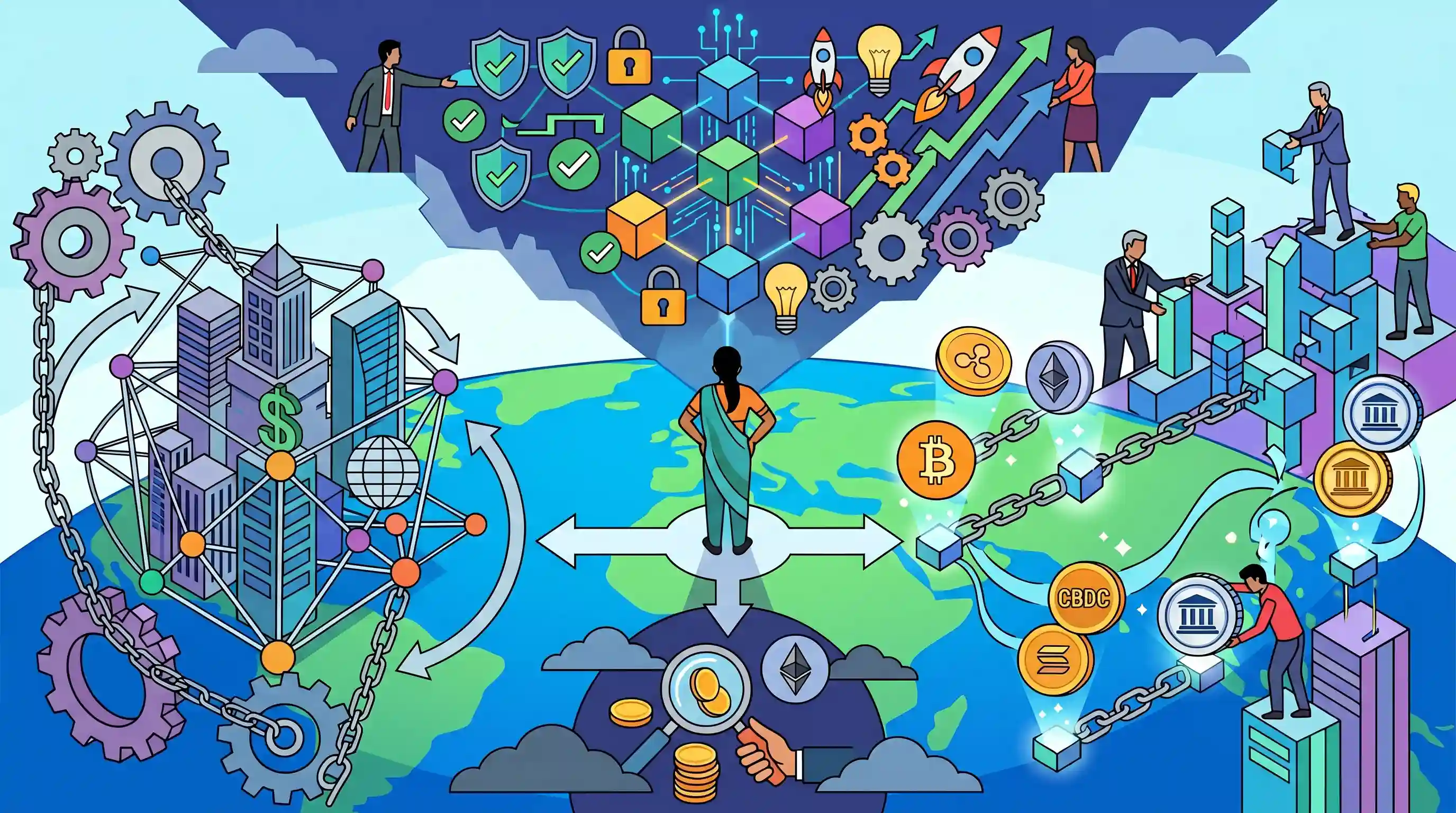
The article highlights the necessity for India to formulate a comprehensive and strategic approach toward cryptocurrencies and digital assets. Moving beyond narrow domestic regulatory debates—such as taxation or outright bans—it argues that digital currencies are becoming critical instruments in global geopolitical competition. Nations are exploring decentralized finance and Central Bank Digital Currencies (CBDCs) as mechanisms to bypass Western-dominated financial networks, including the US dollar and SWIFT. To safeguard its strategic and economic interests, India must engage proactively in the global governance of emerging technologies and harness the potential of blockchain, ensuring a balance between security and innovation.
Key Points
- India needs a comprehensive national strategy on cryptocurrency that transcends mere domestic taxation and financial regulation to include geopolitical considerations.
- Digital assets and blockchain technologies are increasingly being used by nations as strategic tools to challenge the dominance of the US dollar and traditional financial messaging systems like SWIFT.
- An overly restrictive approach or outright ban risks stifling domestic innovation and leaving India behind in the global competition for technological and financial sovereignty.
- India must proactively participate in setting global standards for technology governance, balancing the mitigation of risks like cybercrime and money laundering with the promotion of digital innovation.
Important Terms
Central Bank Digital Currency (CBDC)

A digital version of a country's sovereign fiat currency issued and regulated by the central bank. It serves as legal tender and a direct liability of the issuing authority.
UPSC context
GS Paper III (Economy). Tests digital innovation, financial inclusion, and the evolution of sovereign monetary systems.
Reserve Bank of India (RBI)
India's central bank, established in 1935, responsible for monetary policy, currency issuance, and regulating the banking sector to ensure financial stability and inflation control.
UPSC context
GS Paper III (Economy). Core to banking regulation, monetary policy committees, and fiscal-monetary coordination.
SWIFT
A global secure messaging network used by financial institutions to exchange instructions for international transactions. It facilitates trade but does not hold or transfer actual funds.
UPSC context
GS Paper II & III. Relevant for global financial architecture, international trade, and the use of financial sanctions.
Prelims Trap
Trading and mining of private cryptocurrencies are completely banned in India by the RBI.
The RBI's 2018 banking ban was struck down by the Supreme Court in 2020. Crypto trading is currently legal but heavily taxed and categorized under PMLA guidelines, not outright banned.
Static Concepts Connected
How does a CBDC differ from decentralized cryptocurrencies?
- Sovereign Backing: A CBDC is a sovereign-backed fiat currency issued by a central bank, whereas cryptocurrencies are private and lack a sovereign guarantor.
- Price Stability: CBDCs maintain a 1:1 value with the national fiat (e.g., the Rupee), eliminating the extreme price volatility associated with private crypto.
- Permissioned DLT: CBDCs typically run on permissioned distributed ledgers controlled by the state, while private cryptos rely on public, permissionless blockchains.
What is the SWIFT network and its strategic vulnerability?
- Messaging Only: SWIFT provides secure messaging for cross-border transactions, but does not move the actual funds itself.
- Weaponized Finance: Being headquartered in Belgium, it must comply with European sanctions, allowing Western powers to disconnect adversarial nations (e.g., Russia) from global trade.
- Emerging Alternatives: This vulnerability has accelerated rival state-backed alternatives like China's CIPS and Russia's SPFS to ensure financial sovereignty.
Cross-Topic Patterns
De-dollarization + Financial Weaponization
Sanctioned nations use crypto and state-backed digital currencies to bypass SWIFT, linking digital asset governance directly to de-dollarization and India's quest for strategic autonomy.
Internal Security + FATF Travel Rule
India’s inclusion of Virtual Digital Assets (VDAs) under the Prevention of Money Laundering Act (PMLA) directly mirrors the FATF's "Travel Rule" targeting terror financing networks.

Expect a 2026 mains question linking CBDC and crypto regulation directly to de-dollarization, SWIFT bypassing, and strategic autonomy.
Linked PYQs · 4
Linked PYQs · 4
- 2020PrelimsGS1
With reference to "Blockchain Technology", consider the following statements: 1. It is a public ledger that everyone can inspect, but which no single user controls. 2. The structure and design of blockchain is such that all the data in it are about cryptocurrency only. 3. Applications that depend on basic features of blockchain can be developed without anybody's permission. Which of the statements given above is/are correct?
- 2023PrelimsGS1
With reference to Central Bank digital currencies, consider the following statements: 1. It is possible to make payments in a digital currency without using US dollar or SWIFT system. 2. A digital currency can be distributed with a condition programmed into it such as a time-frame for spending it. Which of the statements given above is/are correct?
- 2021MainsGS3
Discuss how emerging technologies and globalisation contribute to money laundering. Elaborate measures to tackle the problem of money laundering both at national and international levels.
- 2023MainsGS3
What is the status of digitalization in the Indian economy? Examine the problems faced in this regard and suggest improvements.
