Buxa Tiger Reserve Tigress Relocation and Conservation Strategy
Source:Indian Express ↗
Why It Matters
It highlights ongoing wildlife conservation and species reintroduction strategies in India, specifically addressing regional ecological restoration challenges in tiger reserves like Buxa.
Summary
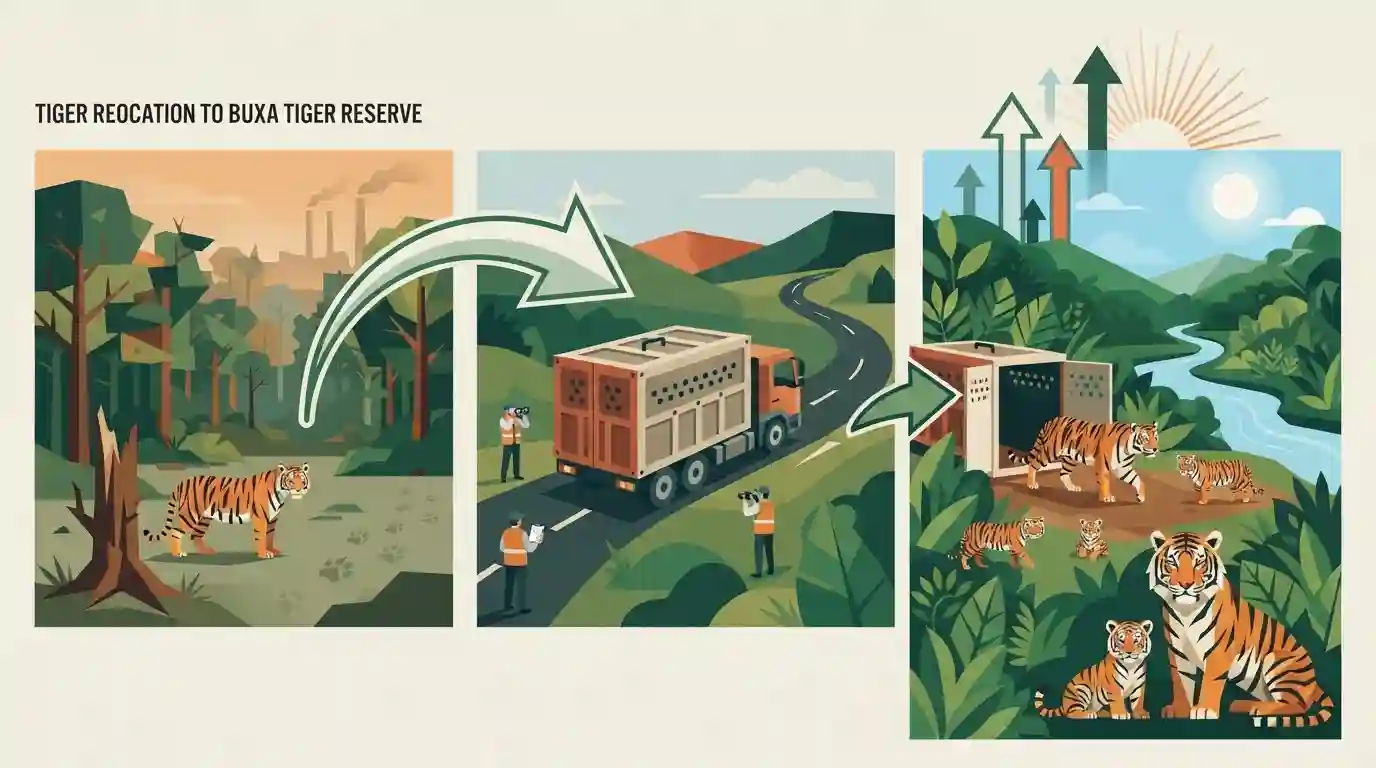
The article discusses the planned relocation of a tigress to the Buxa Tiger Reserve in West Bengal to rejuvenate the local tiger population, addressing historical low numbers and bolstering conservation efforts in the region.
Key Points
- A tigress is set to be relocated to Buxa Tiger Reserve in West Bengal to boost the local tiger population and revive the reserve's big cat numbers.
- Buxa Tiger Reserve, located in the Alipurduar district, has historically faced challenges with low tiger sightings and inadequate breeding core populations.
- The relocation initiative is part of broader wildlife management and species recovery strategies overseen by state forest authorities and national bodies like the NTCA.
- Such reintroduction programs require careful ecological monitoring, prey-base assessment, and mitigation of human-wildlife conflict.
Important Terms
National Tiger Conservation Authority (NTCA)

A statutory body under the Ministry of Environment, Forest and Climate Change established in 2006 under the Wildlife Protection Act, 1972, tasked with strengthening tiger conservation and managing Project Tiger.
UPSC context
GS Paper III (Environment & Conservation). Frequently tested for its statutory powers, composition, and role in tiger reserve management.
Project Tiger
A landmark central conservation program launched in 1973 to ensure a viable population of Bengal tigers in their natural habitats through designated core and buffer zones.
UPSC context
GS Paper III (Environment and Biodiversity). Tested for conservation milestones, wildlife management strategies, and anniversary updates.
Wild Life (Protection) Act 1972
Comprehensive Indian legislation enacted in 1972 that provides the legal framework for protecting wild animals, birds, and plants, and establishing sanctuaries and national parks.
UPSC context
GS Paper III (Environment). Crucial for questions on schedules, protected areas, and legal frameworks governing wildlife crimes and conservation.
Static Concepts Connected
What are the statutory powers and composition of the National Tiger Conservation Authority (NTCA)?
- Statutory Origin: Statutory Body established under the Wildlife (Protection) Act, 1972, following the tiger task force recommendations in 2005.
- Composition: Chaired by the Minister for Environment, Forest and Climate Change, with a Vice-Chairperson (Minister of State) and experts.
- Key Functions: Approves tiger conservation plans, lays down normative standards, and provides statutory backing for the tiger reserve framework.
Cross-Topic Patterns
Tiger Reintroduction + Trans-boundary Conservation Corridors
Buxa's strategic location along the Bhutan border links wildlife corridor management with India's broader security and bilateral ecological diplomacy in the Eastern Himalayas.

NTCA statutory powers, tiger reintroduction prerequisites (prey base, core-buffer dynamics), and Buxa's Bhutan linkage fit Prelims statements.
Linked PYQs · 3
Linked PYQs · 3
- 2026PrelimsGS1
With reference to Madhav National Park, which of the following statements is/are correct ? 1. It was declared a Tiger Reserve in India in 2025. 2. Sakhya Sagar, which is designated as a Ramsar Site, is situated within this National Park. 3. Its area is shared between Madhya Pradesh and Rajasthan. Select the answer using the code given below :
- 2019PrelimsGS1
Which of the following are in Agasthyamala Biosphere Reserve?
- 2020PrelimsGS1
Among the following Tiger Reserves, which one has the largest area under "Critical Tiger Habitat"?
