Sunil Amrith on elite emissions and the global climate debate
Source:Indian Express ↗
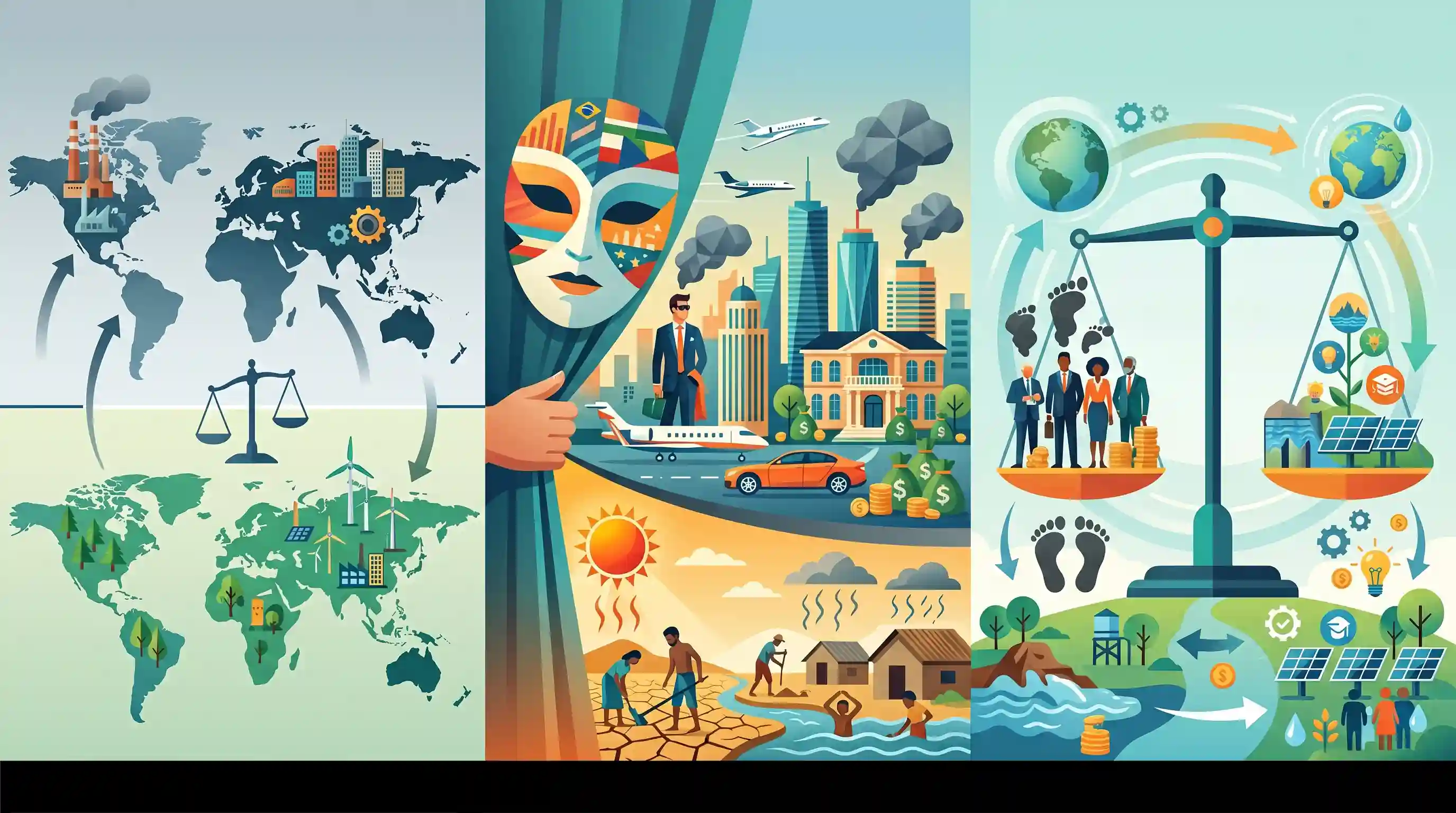
Why It Matters
This provides a critical, nuanced perspective for Mains GS3 (Environment) and GS4 (Environmental Ethics) answers. Students can use Amrith's argument to critique the traditional CBDR framework and emphasize the need for intra-generational equity and accountability of high net-worth individuals in the climate crisis.
Summary
In discussions surrounding his British Academy Book Prize-winning work, historian Sunil Amrith critiques the conventional framing of climate justice, which predominantly pits developed nations (Global North) against developing nations (Global South). He argues that this nation-centric approach obscures glaring intra-national inequalities, allowing the 'super-rich' in developing countries to avoid accountability for their disproportionately high carbon emissions. By hiding behind the historical development deficit of their home countries, these affluent elites are let off the hook, while the poorest populations continue to bear the brunt of environmental degradation. Amrith's insights call for an urgent re-evaluation of climate negotiations to include intra-generational equity and address class-based carbon disparities across the globe.
Key Points
- Historian Sunil Amrith argues that the prevailing Global North vs. Global South framing of climate justice fails to account for extreme wealth and emission disparities within developing nations.
- The affluent elite (the 'super-rich') in developing countries often hide behind their nation's 'developing' status to evade accountability for their massive individual carbon footprints.
- The current discourse risks letting major polluters in the Global South off the hook while the poorest and most marginalized communities suffer the worst impacts of climate change.
- Achieving true climate justice requires a shift towards intra-generational equity, focusing on the carbon consumption of the wealthy globally rather than treating nations as uniform blocs in climate negotiations.
Important Terms
Common But Differentiated Responsibilities (CBDR)

Principle of international law stating all nations share responsibility for the environment, but developed nations bear more due to historical emissions and greater capacity.
UPSC context
GS Paper 3: Environment/Ecology and GS Paper 2: International Relations; tests understanding of global climate treaties and equity.
Climate Justice
A framework that views global warming as an ethical and political issue, advocating for fair distribution of climate burdens based on historical responsibility.
UPSC context
GS Paper 3 and GS Paper 4; tests ability to analyze environment issues through the lens of social and moral justice.
Intra-generational Equity
The principle of ensuring fair and equitable distribution of resources, opportunities, and environmental quality among different social groups within the same generation.
UPSC context
GS Paper 4: Ethics and GS Paper 3: Sustainable Development; tests understanding of class-based inequality and social justice.
Global North vs Global South
A socio-economic and political categorization distinguishing wealthier, industrialized nations (North) from poorer, developing nations (South), rooted in histories of colonialism.
UPSC context
GS Paper 2: International Relations; tests knowledge of geopolitical divides, historical responsibilities, and contemporary global trade/climate negotiations.
Inter-generational Equity
The concept of fairness and responsibility between current and future generations regarding resource use and environmental protection to ensure future survival.
UPSC context
GS Paper 3 and GS Paper 4; central to definitions of 'Sustainable Development' (Brundtland Report).
Environmental Ethics
A branch of philosophy that studies the moral relationship between humans and the environment, often debating human-centered (anthropocentric) versus nature-centered views.
UPSC context
GS Paper 4: Ethics; tests the application of ethical theories to contemporary environmental crises and policy decisions.
Prelims Trap
Intra-generational equity ensures fair environmental resource distribution between current and future generations.
False. This defines inter-generational equity. Intra-generational equity focuses on fairness among people living today, such as addressing the rich-poor divide within a single country.
Static Concepts Connected
What is the CBDR-RC principle under the UNFCCC?
- Origin: Formalized at the 1992 Earth Summit (Rio Declaration) as a foundational guiding principle for global environmental governance and climate action.
- Core premise: Acknowledges all states share an obligation to protect the environment, but hold varying levels of responsibility based on their historical greenhouse gas emissions.
- Practical application: Allows developing nations longer timelines and less stringent targets for emission reductions compared to developed nations, accommodating their developmental imperatives.
How do inter-generational and intra-generational equity differ?
- Inter-generational: The moral obligation to leave a healthy, sustainable planet and sufficient natural resources for future, unborn generations (the basis of sustainable development).
- Intra-generational: The ethical demand for fair distribution of environmental benefits and burdens among people living today, specifically addressing rich-poor disparities across and within borders.
Cross-Topic Patterns
Inequality and climate vulnerability
Skewed wealth in developing nations creates massive 'luxury carbon' emissions for elites, while the bottom 50% face severe climate displacement. This links GS1 poverty directly to GS3 climate impacts.
GS4: Ethics of climate negotiations
Amrith's thesis is an excellent framework for GS4 answers, exploring how nationalistic defenses in multilateral forums (like UNFCCC) can mask domestic moral failures and elite capture.

Expect a GS3 or GS4 Mains question in 2026 challenging traditional CBDR by highlighting intra-national wealth and carbon disparities.
Linked PYQs · 2
Linked PYQs · 2
- 2020MainsGS3
Explain intra-generational and inter-generational issues of equity from the perspective of inclusive growth and sustainable development.
- 2015MainsGS4
What is meant by 'environmental ethics'? Why is it important to study? Discuss any one environmental issue from the viewpoint of environmental ethics.
