Media Ethics and Journalistic Neutrality Challenges in Broadcasting
Source:Indian Express ↗
Why It Matters
The incident serves as a prominent case study in media ethics, demonstrating the severe institutional consequences of biased reporting and the manipulation of information. It is highly relevant for GS-IV (Ethics in Journalism, Professional Probity) and Essay topics concerning the role of a free and fair media in a democracy.
Summary
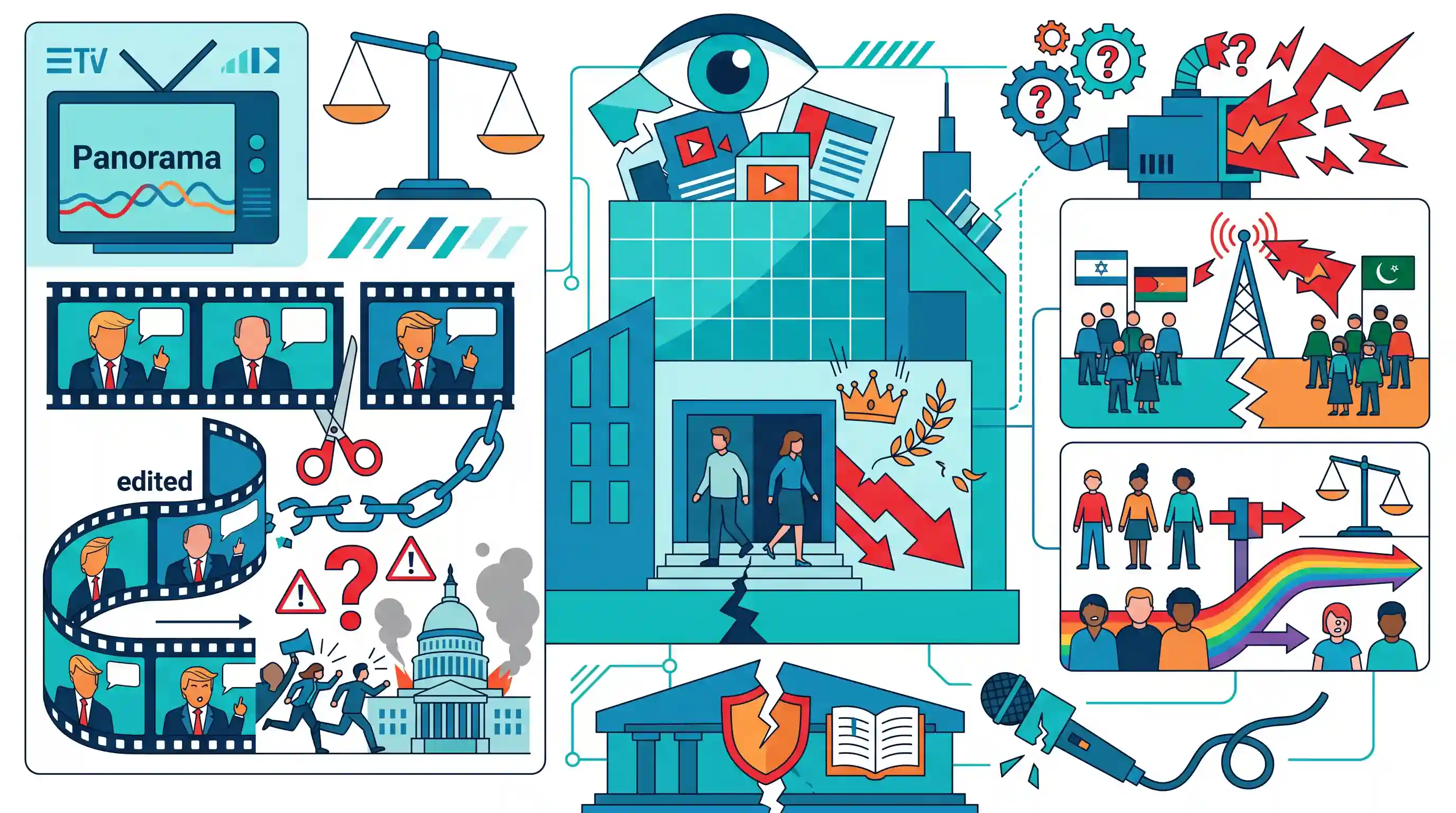
BBC Director General Tim Davie and Chief Executive of News Deborah Turness have resigned amidst mounting criticism over the corporation's failure to maintain political neutrality. The resignations were precipitated by revelations that the flagship BBC programme Panorama misleadingly edited a January 2021 speech by Donald Trump, selectively combining clips to falsely imply he incited the Capitol Hill riots. The corporation has also faced scrutiny over its allegedly biased coverage of the Israel-Hamas war and trans issues, underscoring broader concerns about journalistic integrity and media ethics in modern broadcasting.
Key Points
- BBC Director General Tim Davie and Chief Executive of News Deborah Turness have resigned following allegations of political bias.
- The immediate trigger for the resignations was an internal document revealing that the BBC programme Panorama misleadingly edited a January 2021 speech by US President Donald Trump regarding the Capitol Hill riots.
- The BBC has also faced persistent criticism for failing to maintain political neutrality in its coverage of other sensitive topics, including the Israel-Hamas war and trans issues.
- The controversy highlights critical issues of media ethics, the dangers of selective editing (misinformation), and the challenge of maintaining journalistic objectivity in politically polarized environments.
Important Terms
British Broadcasting Corporation (BBC)

The UK's public service broadcaster, funded by license fees, tasked with informing, educating, and entertaining while maintaining strict editorial impartiality.
UPSC context
Relevant for GS Paper IV (Ethics) regarding public service values and GS Paper II (Governance) concerning media's role in a democracy.
Panorama
The BBC's flagship current affairs documentary program, known for investigative journalism; recently criticized for deceptive editing of a political speech, compromising its integrity.
UPSC context
GS Paper IV case study on media ethics, specifically the "essence, determinants and consequences of ethics in human actions."
The Daily Telegraph
A major British daily broadsheet that broke the story of the BBC's internal whistleblowing memo, leading to high-profile resignations.
UPSC context
Illustrates the role of the "Fourth Estate" in holding public institutions accountable, relevant for GS Paper II.
Public Service Broadcasting (PSB)
Broadcasting intended for public benefit rather than commercial profit, often mandated to provide impartial news and diverse cultural content.
UPSC context
Concepts of "Public Service" and "Probity in Governance" under GS Paper IV and institutional frameworks in GS Paper II.
Media Ethics
A subset of ethics regarding the specific moral obligations of media professionals, including truthfulness, accuracy, objectivity, impartiality, and accountability.
UPSC context
Directly mentioned in GS Paper IV under "Ethical concerns and dilemmas in government and private institutions."
Political Neutrality
The ethical requirement for journalists and public institutions to report news without bias or favoring any particular political party or ideology.
UPSC context
A foundational value for civil services and public institutions tested in GS Paper IV (Integrity and Impartiality).
Static Concepts Connected
What are the core ethical principles governing professional journalism?
- Truth and Accuracy: Ensuring facts are verified and context is not distorted through selective editing or omission.
- Independence: Remaining free from political, corporate, or personal biases that could influence reporting.
- Impartiality: Providing balanced coverage of diverse perspectives, especially critical for publicly funded institutions.
- Accountability: Taking prompt responsibility for errors and demonstrating leadership integrity when organizational standards fail.
How does India legally address broadcasting media misinformation and fake news?
- Cable TV Networks Act: Regulates linear TV content via a Programme Code to ensure it doesn't promote disharmony or offend public decency.
- IT Rules 2021: Mandates digital news publishers and intermediaries to observe a Code of Ethics and establish a robust grievance redressal mechanism.
- Bharatiya Nyaya Sanhita: Penalizes the creation or spread of false information that causes public mischief, panic, or threatens state security.
Cross-Topic Patterns
Public Broadcaster Accountability
The BBC's crisis mirrors debates around India's Prasar Bharati, highlighting the intense scrutiny public broadcasters face regarding their statutory mandate to maintain absolute political neutrality.
Selective Editing as Misinformation
Cheapfakes (selective editing) pose as much threat to democratic discourse as AI deepfakes, directly connecting to the Election Commission of India's recent guidelines on digital campaigning.

Expect a GS4 question in 2026 on the ethical responsibilities of media heads in combating 'cheapfakes' and polarized broadcasting.
Linked PYQs · 3
Linked PYQs · 3
- 2019MainsEssay
Biased media is a real threat to Indian democracy
- 2025MainsGS4
In the present digital age, social media has revolutionised our way of communication and interaction. However, it has raised several ethical issues and challenges. Describe the key ethical dilemmas in this regard.
- 2024MainsGS4
“Ethics encompasses several key dimensions that are crucial in guiding individuals and organizations towards morally responsible behaviour.” Explain the key dimensions of ethics that influence human actions. Discuss how these dimensions shape ethical decision-making in the professional context.
