Drug Combination Therapy Reversing Diabetes in Animal Models
Source:Indian Express ↗
কেন এটি গুরুত্বপূর্ণ
This development represents a major shift from managing diabetes symptoms to potentially curing the disease through internal cellular regeneration. It is highly relevant to the Science & Technology syllabus regarding advancements in applied biotechnology, regenerative medicine, and non-communicable diseases.
সারসংক্ষেপ
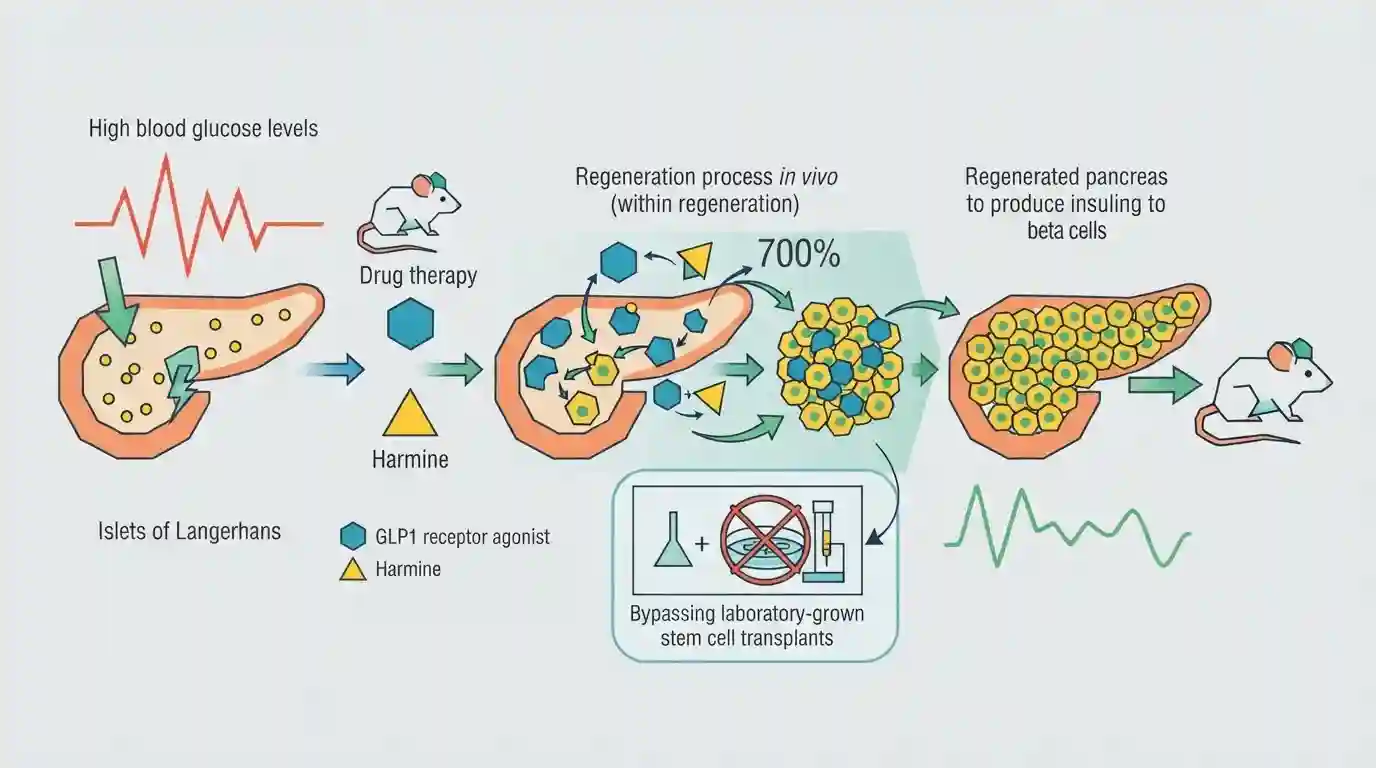
A breakthrough drug therapy combining harmine and GLP1 receptor agonists has demonstrated the ability to rapidly regenerate insulin-producing beta cells directly within the body, reversing diabetes in mouse models. By achieving a 700% increase in beta cells, this in vivo method bypasses the complexities of laboratory-grown stem cell transplants, offering a potential pathway toward a functional cure for both Type 1 and Type 2 diabetes.
মূল বিষয়
- A novel drug combination of harmine and GLP1 receptor agonists (such as Ozempic) successfully increased insulin-producing beta cells by 700% in mice.
- The therapy effectively reversed both type 1 and type 2 diabetes in the animal models within a span of three months.
- Unlike current experimental therapies that rely on cultivating stem cells in a laboratory before transplantation, this new approach regenerates beta cells directly within the living body (in vivo).
- Harmine works by inhibiting the DYRK1A enzyme found in beta cells, while GLP1 receptor agonists are a class of medications commonly used to manage blood sugar levels.
- The next crucial phase of research involves clinical trials in humans and developing strategies to prevent the immune system from destroying the newly regenerated beta cells.
গুরুত্বপূর্ণ শব্দ
Harmine

A natural plant-derived compound that inhibits the DYRK1A enzyme, removing cellular 'brakes' to allow insulin-producing adult human beta cells to rapidly proliferate and regenerate.
UPSC context
GS Paper 3 (Science & Tech). Tests awareness of naturally-derived biochemical compounds and their therapeutic applications in modern medicine.
GLP-1 Receptor Agonists
A class of medications for diabetes and weight loss that stimulate insulin secretion. They work synergistically with specific compounds to significantly boost beta cell proliferation.
UPSC context
GS Paper 3 (Science & Tech). Relevant for questions on pharmaceutical breakthroughs, lifestyle disease management, and metabolic treatments.
Pancreatic Beta Cells
Specialized endocrine cells in the pancreas that produce, store, and release insulin to regulate blood glucose. Their destruction or severe dysfunction is the primary cause of diabetes.
UPSC context
GS Paper 3 (Science & Tech). Foundational biology concept for understanding human physiology, endocrinology, and the mechanics of metabolic disorders.
In vivo Regeneration
The growth, repair, or proliferation of cells directly inside a living organism's body, offering an alternative to the complexities of external, lab-grown tissue transplants.
UPSC context
GS Paper 3 (Biotechnology). Crucial for comparing traditional laboratory-based stem cell therapies (in vitro) with internal cellular repair methods.
Regenerative Medicine
A branch of medical research focused on replacing or regenerating human cells and tissues to establish normal function, offering potential functional cures for chronic diseases.
UPSC context
GS Paper 3 (Science & Tech). Frequently tested regarding stem cell therapies, organ regeneration, and advanced biotechnological cures for chronic conditions.
প্রিলিমস ফাঁদ
The new breakthrough therapy relies on laboratory-grown stem cells transplanted into the pancreas.
This therapy explicitly bypasses laboratory-grown stem cell transplants (in vitro) by regenerating beta cells directly within the body (in vivo) using a drug combination.
সংযুক্ত স্থির ধারণা
What is the fundamental difference between Type 1 and Type 2 diabetes?
- Type 1 (Autoimmune): The immune system mistakenly targets and destroys pancreatic beta cells, leading to an absolute deficiency of insulin. It is typically early-onset.
- Type 2 (Metabolic): The body develops insulin resistance and cannot effectively use the insulin it produces. It is a metabolic disorder often linked to lifestyle factors.
How do in vivo and in vitro therapies differ in regenerative medicine?
- In vivo (Inside): Biological processes or therapeutic cell regeneration are stimulated directly inside the living organism (e.g., this new drug therapy).
- In vitro (Outside): Cells or tissues are cultivated outside the body in a laboratory setting before being transplanted into the patient.
আন্তঃবিষয় প্যাটার্ন
GLP-1 drugs & India's NCD burden
GLP-1 agonists like Ozempic have dual utility for diabetes management and weight loss, addressing India's rising non-communicable disease (NCD) burden linked to sedentary lifestyles and obesity.
Autoimmunity and Regenerative Medicine
Even with successful in vivo beta cell regeneration, the underlying autoimmune response in Type 1 diabetes requires management through immuno-engineering or immunosuppressants to prevent repeated cellular destruction.

Expect a multi-statement question contrasting Type 1/2 diabetes mechanisms with the role of pancreatic beta cells and GLP-1 drugs.
সংযুক্ত PYQ · 3
সংযুক্ত PYQ · 3
- 2017MainsGS3
Stem cell therapy is gaining popularity in India to treat a wide variety of medical conditions including Leukaemia, Thalassemia, damaged cornea and severe burns. Describe briefly what stem cell therapy is and what advantages it has over other treatments?
- 2021MainsGS3
What are the research and developmental achievements in applied biotechnology? How will these achievements help to uplift the poorer sections of the society?
- 2022PrelimsGS1
Which one of the following statements best describes the role of B cells and T cells in the human body?
