SIRT6 Enzyme Discovery and Neurodegenerative Disease Treatment
Source:The Hindu ↗
Why It Matters
Provides foundational understanding of enzyme functions and metabolic pathways related to tryptophan, serotonin, and melatonin, which are relevant to Prelims General Science. It highlights potential new treatments and biomarkers for conditions like Alzheimer's and Parkinson's diseases.
Summary
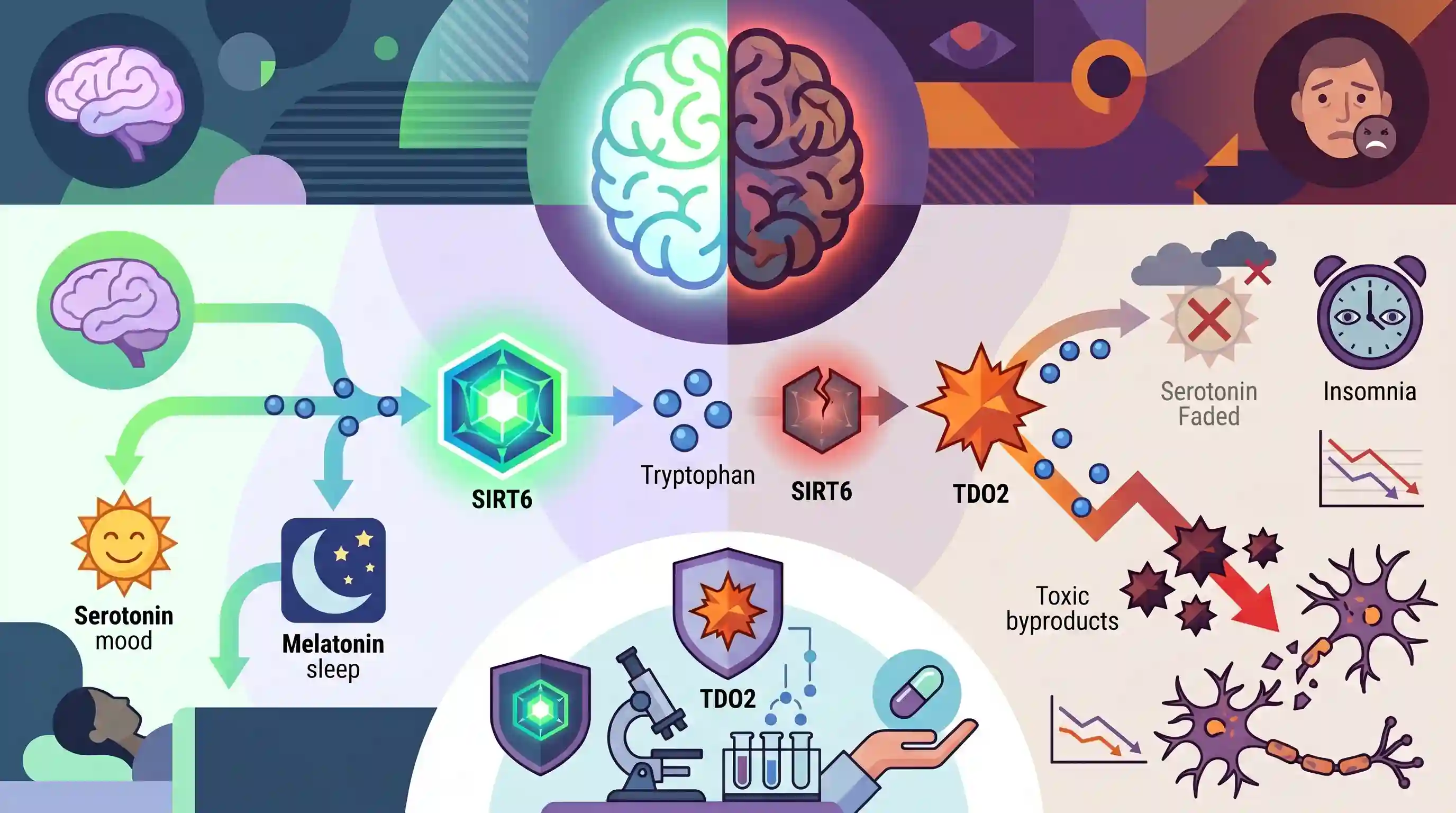
Researchers at Ben-Gurion University have discovered that the enzyme SIRT6 (sirtuin 6) plays a critical role in regulating tryptophan metabolism, explaining why aging and neurodegenerative diseases are often accompanied by sleep and mood disturbances. Tryptophan, an essential amino acid, is necessary to produce serotonin and melatonin. In a healthy brain, SIRT6 ensures tryptophan is utilized correctly. However, in aging or diseased brains, dropping SIRT6 levels divert tryptophan into the kynurenine pathway. This pathway generates toxic byproducts that damage nerve cells and deplete serotonin and melatonin. Researchers found that inhibiting TDO2, an enzyme that pushes tryptophan into the kynurenine pathway, could prevent neuromotor deterioration in experimental models. This discovery paves the way for using SIRT6 activity or tryptophan metabolites as early biomarkers, and TDO2 inhibitors as potential treatments for neurodegenerative diseases.
Key Points
- The enzyme SIRT6 (sirtuin 6) regulates the metabolism of tryptophan, an essential amino acid crucial for producing the neurotransmitters serotonin and melatonin.
- In aging brains and those with neurodegenerative diseases, declining SIRT6 levels divert tryptophan into the kynurenine pathway.
- The kynurenine pathway produces toxic compounds that damage nerve cells and reduce serotonin and melatonin, explaining the mood and sleep disorders associated with aging.
- Inhibiting the TDO2 enzyme, which facilitates the diversion into the kynurenine pathway, successfully prevented neuromotor decline in experimental models.
- Alterations in tryptophan metabolites or reduced SIRT6 activity could act as early blood or cerebrospinal fluid biomarkers for neurodegenerative conditions.
Important Terms
SIRT6 (Sirtuin 6)

A longevity-linked enzyme and protein that regulates DNA repair and metabolism. Its deficiency is linked to age-related brain decline and the rerouting of tryptophan toward neurotoxic pathways.
UPSC context
Relevant for GS Paper III (Science & Technology) under Biotechnology and Health; tests knowledge of molecular mechanisms in aging and disease.
Tryptophan
An essential amino acid that serves as a precursor for serotonin and melatonin. Its improper breakdown can lead to neurotoxic byproducts instead of protective neurotransmitters.
UPSC context
GS Paper III (General Science/Health); tests understanding of essential nutrients and their metabolic roles in human health.
Kynurenine Pathway
The primary metabolic route for tryptophan degradation. Dysregulation in this pathway produces toxic metabolites like quinolinic acid, contributing to neurodegeneration and mood disorders.
UPSC context
GS Paper III (Science & Technology/Biotechnology); tests awareness of biochemical pathways linked to major neurological conditions.
TDO2 (Tryptophan 2,3-dioxygenase)
A rate-limiting enzyme that initiates the kynurenine pathway. Inhibiting this enzyme is a potential therapeutic strategy to prevent the formation of neurotoxic metabolites in the brain.
UPSC context
GS Paper III (Health and Diseases); relates to "recent developments in medicine" and potential drug targets for aging.
Neurodegenerative Diseases
A group of conditions, such as Alzheimer's and Parkinson's, characterized by the progressive loss of structure or function of neurons, often linked to metabolic imbalances.
UPSC context
GS Paper II (Health) and GS Paper III (S&T); essential for discussing public health challenges and medical breakthroughs.
Biomarkers
Measurable biological indicators of a disease state. In this context, SIRT6 levels or tryptophan metabolites could serve as early warning signs for brain-related decline.
UPSC context
GS Paper III (Science & Technology); tests concepts of early diagnosis and personalized medicine in biotechnology.
Prelims Trap
"Tryptophan is a non-essential amino acid synthesized natively by the human brain to regulate sleep."
Tryptophan is an 'essential' amino acid. The human body cannot synthesize it naturally; it must be acquired entirely through dietary sources.
Static Concepts Connected
What is the difference between essential and non-essential amino acids?
- Essential amino acids: Cannot be synthesized by the human body and must be obtained strictly from dietary sources (e.g., Tryptophan, Histidine, Leucine).
- Non-essential amino acids: Can be synthesized natively by the human body even if we do not get them from the food we eat (e.g., Alanine, Serine).
What are the physiological roles of Serotonin and Melatonin?
- Serotonin: A neurotransmitter primarily found in the central nervous system and gut, crucial for regulating mood, cognition, reward, and digestion.
- Melatonin: A hormone produced by the pineal gland in the brain that regulates the circadian rhythm (sleep-wake cycle) in response to darkness.
Cross-Topic Patterns
Disease Biomarkers in Prelims
UPSC frequently tests specific enzymes or biomarkers (like ACE2 for COVID-19). SIRT6 and tryptophan metabolites join this pattern as diagnostic markers for early-stage neurodegenerative tracking.
Geriatric Healthcare Burden
Linking biochemical enzyme degradation to mood and sleep disorders provides the biological basis for India's growing geriatric mental health crisis, highly relevant to GS2 vulnerable populations.

Expect a 2026 Prelims matching-pair question linking amino acids to their derivatives (e.g., Tryptophan - Melatonin/Serotonin).
Linked PYQs · 2
Linked PYQs · 2
- 2021PrelimsGS1
Magnetite particles, suspected to cause neurodegenerative problems, are generated as environmental pollutants from which of the following? 1. Brakes of motor vehicles 2. Engines of motor vehicles 3. Microwave stoves within homes 4. Power plants 5. Telephone lines Select the correct answer using the code given below.
- 2010PrelimsGS1
Which one of the following processes in the bodies of living organisms is a digestive process?
