Juvenile Justice Act: Bombay High Court Directs State Aid for NGOs
Source:Indian Express ↗
Why It Matters
This ruling is a critical case study for GS Paper 2, illustrating judicial review of executive resource allocation under Article 14 (Right to Equality/Reasonableness). It also highlights the statutory obligations of the State towards child welfare under the Juvenile Justice Act and the indispensable role of Civil Society Organizations (NGOs) in executing public service delivery for vulnerable populations.
Summary
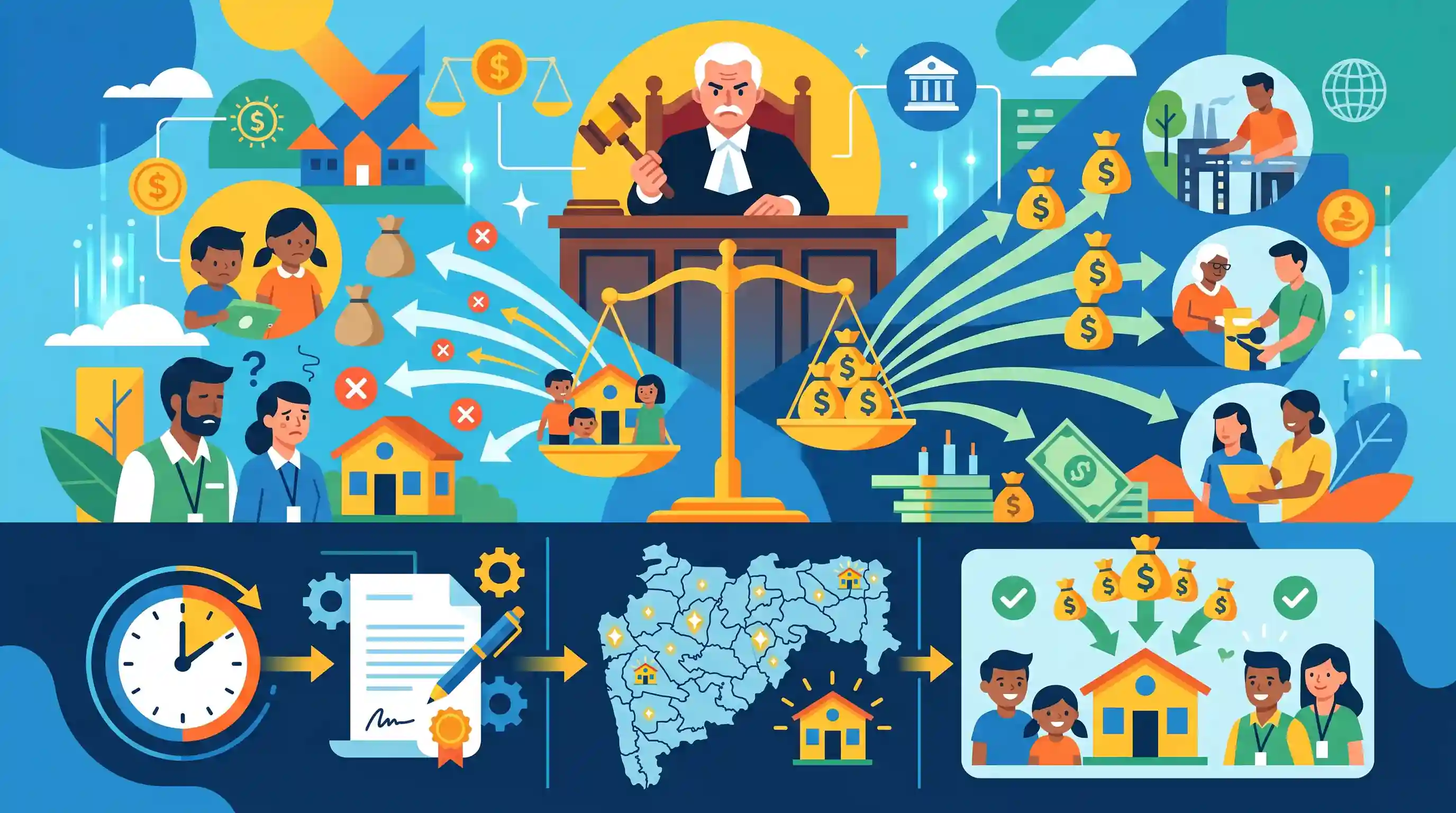
The Bombay High Court has reprimanded the Maharashtra government for withholding salary grants to NGO-run children's homes under the Juvenile Justice (JJ) Act while simultaneously funding other schemes like the 'Ladki Bahin Yojana'. Invoking Article 14 of the Constitution, the court asserted that the denial of financial aid fails the test of reasonableness and undermines the state's constitutional obligation to prioritize vulnerable children. Quoting Nelson Mandela on child safety, the bench directed the state to frame a salary-grant policy within six months and identify at least one eligible NGO-run children's home per district to receive the necessary funding.
Key Points
- The Bombay High Court directed the Maharashtra government to frame a salary-grant policy for NGO-run children's homes under the Juvenile Justice (JJ) Act within six months.
- The court ruled that denying aid to institutions catering to vulnerable children while funding schemes like 'Ladki Bahin Yojana' violates the test of reasonableness under Article 14 of the Constitution.
- Under Section 34 of the JJ Act, the state is mandated to establish and manage children's homes in association with NGOs to ensure the care, education, and rehabilitation of children.
- The court ordered the state to identify at least one competent children's home run by a voluntary organization in each district to receive salary grants, emphasizing the state's constitutional obligation to child welfare.
Important Terms
Juvenile Justice (Care and Protection of Children) Act, 2015

Primary Indian legislation for child welfare, distinguishing between "children in conflict with law" and "children in need of care." It mandates institutional standards and streamlines adoption through CARA.
UPSC context
GS Paper II: Social Justice. Tests knowledge of statutory bodies like CWC/JJB and legal provisions for protecting vulnerable children.
Majhi Ladki Bahin Yojana
A Maharashtra cash-transfer scheme launched in 2024 providing ₹1,500 monthly to eligible low-income women. It aims at economic empowerment, health improvement, and financial independence for women.
UPSC context
GS Paper II: Welfare Schemes. Exemplifies Direct Benefit Transfer (DBT) mechanisms and judicial benchmarking of state resource allocation.
Article 14
Fundamental Right ensuring equality before the law and equal protection of the laws. It strikes at arbitrariness, requiring state actions to be based on reasonable classification and rational nexus.
UPSC context
GS Paper II: Constitution. Tests core concepts like the Rule of Law and the "reasonable classification" test in state actions.
Societies Registration Act, 1860
Central law providing legal standing to groups formed for charitable, literary, or scientific purposes. It is the primary framework for the formation and governance of NGOs in India.
UPSC context
GS Paper II: Governance. Tests the role of NGOs and the development industry in implementing social welfare and state-funded programs.
Maharashtra Public Trusts Act, 1950
State legislation (formerly Bombay Public Trusts Act) governing public charitable institutions. In Maharashtra, NGOs must register here to come under the supervision of the Charity Commissioner.
UPSC context
GS Paper II: Statutory/Regulatory Bodies. Relevant for questions on the state-level regulation of civil society organizations and institutional accountability.
Prelims Trap
Establishment of children's homes under the JJ Act is discretionary based on state budget availability.
Section 34 of the JJ Act makes the establishment of children's homes a mandatory statutory obligation for states, not a discretionary one tied to available budget.
Static Concepts Connected
What is the 'test of reasonableness' under Article 14?
- Intelligible differentia: The classification must clearly distinguish persons or things that are grouped together from those left out of the group.
- Rational nexus: The classification must have a logical, direct relation to the objective sought to be achieved by the executive act or statute.
- Non-arbitrariness: Executive action, including financial allocation, must not be whimsical. Arbitrary denial of statutory grants to vulnerable groups violates equality.
How does the Juvenile Justice Act, 2015 integrate NGOs?
- Joint establishment: Section 34 mandates state governments to establish and manage Children’s Homes either directly or in association with voluntary organizations (NGOs).
- Mandatory registration: Every Child Care Institution (CCI), even those exclusively run and funded by private NGOs, must be registered under the JJ Act.
Cross-Topic Patterns
Populism vs Institutional Welfare
Tension between highly visible voter-centric direct cash transfers (like Ladki Bahin) and legally mandated but politically invisible institutional infrastructure for vulnerable populations.
Judicial review of budget allocations
Courts traditionally avoid dictating financial policy but will intervene when arbitrary executive budget choices violate Article 14 or ignore statutory mandates like the JJ Act.

Expect a GS-2 Mains question analyzing the constitutional friction between discretionary populist cash schemes and statutory welfare duties.
Linked PYQs · 4
Linked PYQs · 4
- 2025MainsGS2
The National Commission for Protection of Child Rights has to address the challenges faced by children in the digital era. Examine the existing policies and suggest measures the Commission can initiate to tackle the issue.
- 2021MainsGS2
Can Civil Society and Non-Governmental Organizations present an alternative model of public service delivery to benefit the common citizen? Discuss the challenges of this alternative model.
- 2023MainsGS2
“Development and welfare schemes for the vulnerable, by its nature, are discriminatory in approach.” Do you agree? Give reasons for your answer.
- 2025MainsGS2
Civil Society Organizations are often perceived as being anti-State actors than non-State actors. Do you agree? Justify.
