US FDA blood test approval for early Alzheimer disease diagnosis
Source:Indian Express ↗
Why It Matters
UPSC frequently examines advances in medical technology and biotechnology. Furthermore, with rising life expectancy in India, non-communicable diseases and age-related neurological disorders like Alzheimer's represent a growing public health challenge requiring robust geriatric care policies.
Summary
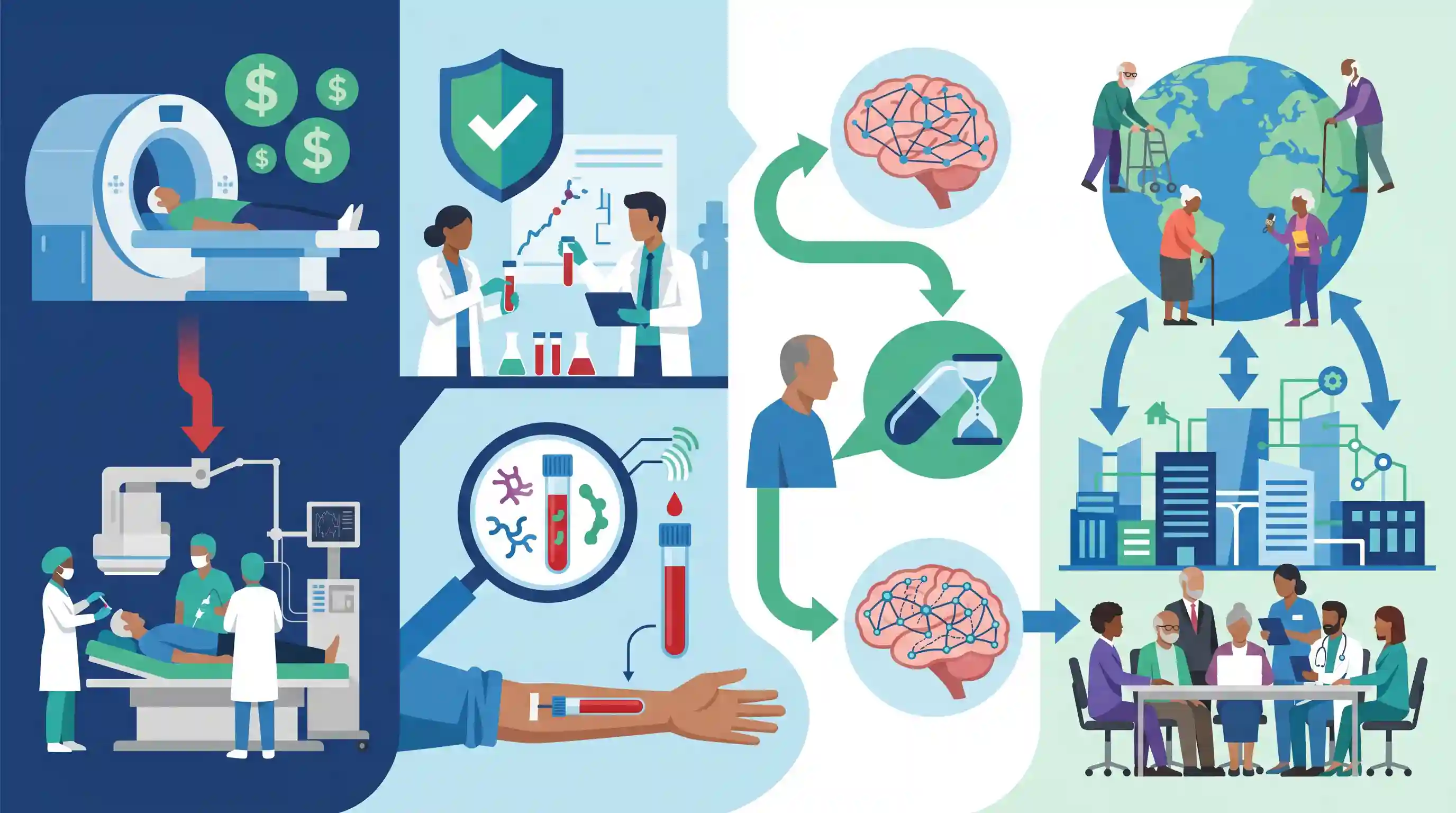
The US Food and Drug Administration (FDA) has approved a novel blood test for diagnosing Alzheimer's disease, a condition that previously required expensive PET scans or invasive lumbar punctures for confirmation. By detecting specific biomarker proteins in the blood, this test paves the way for accessible, early-stage diagnosis. Early detection is crucial for the effective use of new, disease-modifying treatments that can slow the progression of dementia. This technological advancement in medical diagnostics has broader implications for global health policy, particularly in developing sound geriatric care frameworks to address the rising prevalence of age-related neurological disorders in aging populations.
Key Points
- The US FDA has approved a blood test to help diagnose Alzheimer's disease, marking a major breakthrough in medical diagnostics.
- Traditional diagnostic methods for Alzheimer's, such as PET scans and lumbar punctures for cerebrospinal fluid, are expensive, invasive, and often inaccessible to many patients.
- The new blood test looks for specific biomarker proteins, such as amyloid or tau, allowing for earlier and easier detection of the disease.
- Early diagnosis is critical because emerging therapies for Alzheimer's are most effective when administered in the early stages of cognitive decline.
- For India, the development points to the future of managing geriatric health challenges—as life expectancy rises, affordable screening for neurological disorders will become a key healthcare priority.
Important Terms
Alzheimer’s Disease

A progressive neurodegenerative brain disorder causing amyloid plaque buildup, leading to cognitive decline and memory loss. It is the leading cause of dementia globally.
UPSC context
GS II (Health) and GS III (S&T). Tests awareness of neurodegenerative diseases and public health challenges in an aging society.
Biomarkers
Measurable biological indicators (like proteins) found in blood or tissue used to objectively identify physiological states, diagnose diseases, and monitor treatment responses accurately.
UPSC context
GS III (Biotechnology). Essential for understanding precision medicine, clinical trials, and innovations in medical diagnostics.
Geriatric Care
Specialized medical and social care addressing the multidimensional health, psychological, and functional needs of the elderly population (60+ years in India).
UPSC context
GS II (Welfare for Vulnerable Sections). Relevant for India’s demographic transition and health infrastructure planning for senior citizens.
US FDA (Food and Drug Administration)
The US federal agency responsible for drug and food safety. Its approvals serve as a global benchmark, often influencing international regulatory standards and pathways.
UPSC context
GS II (Global Governance). Important for understanding international pharmaceutical standards and India's "Global Reliance Pathway" for drug approvals.
Blood-based Biomarkers (BBMs)
Molecular indicators in blood that enable non-invasive, affordable, and early diagnosis of diseases, reducing the need for invasive lumbar punctures or expensive PET scans.
UPSC context
GS III (S&T). Tests understanding of medical biotechnology and innovations aimed at improving diagnostic accessibility in primary care.
Dementia
An umbrella term describing a range of symptoms—cognitive, functional, and behavioral—caused by various diseases that interfere with daily functioning and independence.
UPSC context
GS II (Health). Tests knowledge of public health burdens and the distinction between normal aging and progressive neurodegenerative syndromes.
Disease-Modifying Treatments (DMTs)
Therapies that target the underlying biological cause of a disease to slow its clinical progression, rather than merely treating its outward symptoms.
UPSC context
GS III (Science & Tech). Relevant for tracking advancements in life sciences, drug discovery, and management of chronic illnesses.
Prelims Trap
The new FDA-approved blood test diagnoses Alzheimer's by detecting the APOE4 genetic mutation.
The new test detects specific biomarker proteins (amyloid and tau) that indicate the disease is present. It is not a genetic test looking for hereditary susceptibility (like the APOE gene).
Static Concepts Connected
What biologically characterizes Alzheimer's disease?
- Amyloid plaques: The abnormal accumulation of amyloid-beta proteins outside brain neurons, which form plaques and disrupt cell-to-cell communication.
- Tau tangles: Twisted fibers of tau protein that build up inside cells, leading to the collapse of the neuron's internal transport system.
- Irreversible degeneration: It causes progressive, irreversible death of brain cells, making it the most common cause of the broader condition known as dementia.
What are Monoclonal Antibodies (mAbs) used in emerging Alzheimer's treatments?
- Lab-made proteins: Engineered molecules created in a laboratory that act as substitute antibodies to restore, enhance, or mimic the immune system's attack on cells.
- Targeted action: They are designed to bind to highly specific antigens. In Alzheimer's therapies (like Lecanemab), they target and clear amyloid plaques from the brain.
Cross-Topic Patterns
Biomarkers democratizing disease diagnostics
Moving from infrastructure-heavy PET scans to simple blood biomarkers mirrors the shift seen in TB (TrueNat) and Covid diagnostics, reducing costs and increasing access in resource-constrained settings.
Demographic dividend shifting to geriatric burden
As India's life expectancy rises, the epidemiological transition demands expanding focus from maternal/child health to geriatric non-communicable diseases, stressing initiatives like the National Programme for Health Care of the Elderly.

Expect a Prelims S&T matching question pairing diseases (Alzheimer's, Parkinson's) with their specific mechanisms (Amyloid/Tau vs Dopamine).
Linked PYQs · 2
Linked PYQs · 2
- 2020MainsGS2
In order to enhance the prospects of social development, sound and adequate health care policies are needed particularly in the fields of geriatric and maternal health care. Discuss.
- 2022MainsGS3
The increase in life expectancy in the country has led to newer health challenges in the community. What are those challenges and what steps need to be taken to meet them?
