Drug Pricing Regulation and Public Health Access
Source:The Hindu ↗
ఇది ఎందుకు ముఖ్యం
It addresses the intersection of judicial activism, pharmaceutical regulation, and public health access, which is core to governance and welfare rights in India.
సారాంశం
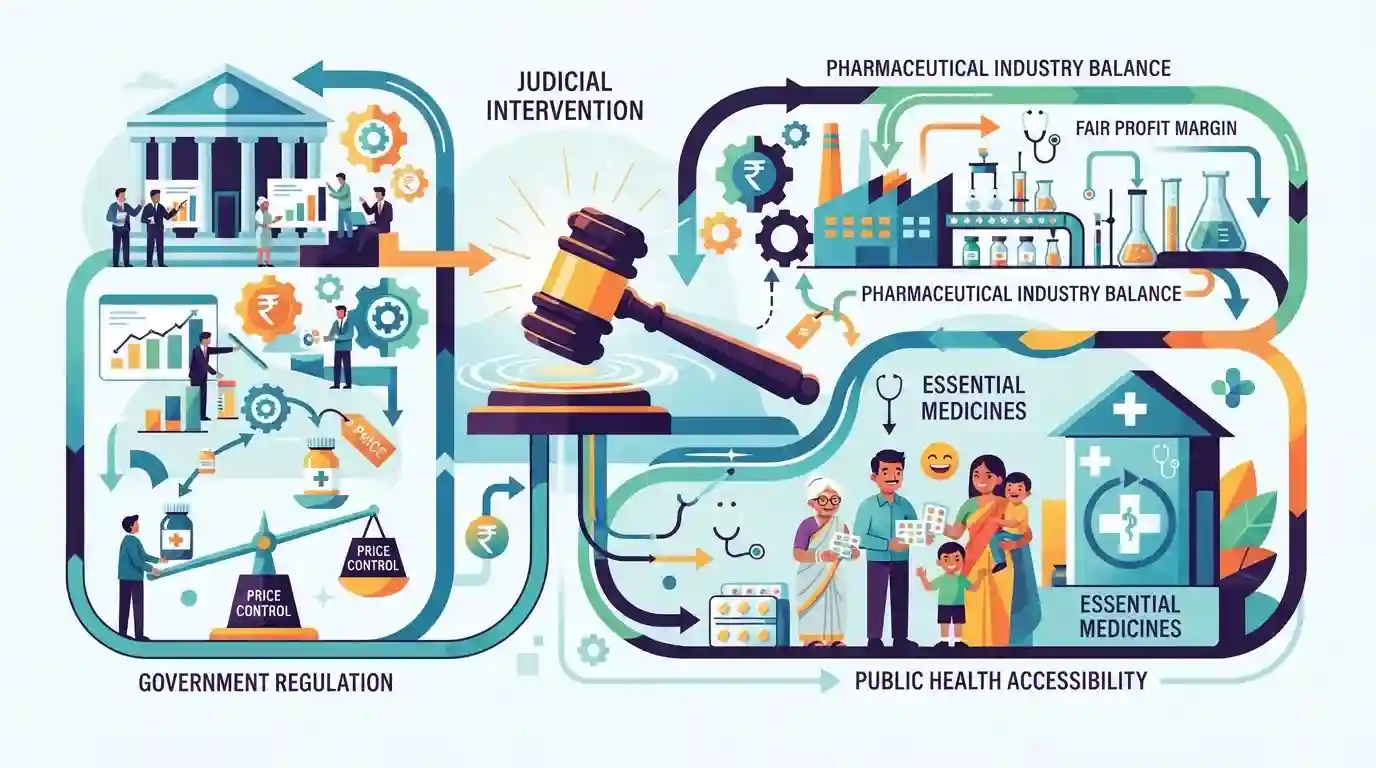
The editorial discusses judicial interventions on drug pricing, focusing on the critical balance between public health accessibility, affordability of essential medicines, and regulatory mechanisms governing the pharmaceutical sector in India.
ముఖ్య అంశాలు
- Judicial intervention regarding drug pricing highlights systemic gaps in how the government regulates essential medicines and balances corporate interests with public health.
- Affordability and accessibility of medicines remain critical components of public healthcare, preventing catastrophic out-of-pocket health expenditures.
- The National Pharmaceutical Pricing Authority (NPPA) faces challenges in monitoring market dynamics, preventing overpricing, and ensuring compliance across the pharmaceutical sector.
- Balancing a thriving domestic pharmaceutical industry with ensuring cheap, accessible drugs for vulnerable populations requires robust administrative enforcement rather than ad-hoc judicial oversight alone.
ముఖ్యమైన పదాలు
Drugs (Prices Control) Order (DPCO)

An order issued under the Essential Commodities Act, 1955, empowering the government to fix prices of essential medicines and regulate pharmaceutical pricing to ensure public affordability.
UPSC context
Crucial for GS Paper II (Government Policies & Interventions, Health); tests understanding of regulatory frameworks ensuring access to affordable healthcare.
National List of Essential Medicines (NLEM)
A curated catalog of essential medicines compiled by the Ministry of Health and Family Welfare, incorporating drugs considered indispensable for public health needs.
UPSC context
Important for GS Paper II (Health Sector & Public Welfare); tests knowledge of essential health interventions and drug price regulation.
National Pharmaceutical Pricing Authority (NPPA)
An expert regulatory body under the Department of Pharmaceuticals, Government of India, tasked with implementing the DPCO and monitoring drug prices.
UPSC context
Relevant for GS Paper II (Statutory Bodies, Government Policies); tests the role of regulatory mechanisms in balancing pharma industry growth and consumer affordability.
Supreme Court of India
The highest constitutional court of India, which exercises judicial review and intervenes in matters concerning fundamental rights, public health, and socio-economic justice.
UPSC context
Essential for GS Paper II (Indian Constitution, Judicial Intervention); tests the scope of judicial activism in public health policy.
ప్రిలిమ్స్ ఉచ్చు
The National Pharmaceutical Pricing Authority is a statutory body established under a dedicated Act of Parliament.
Aspirants often assume the NPPA is a statutory body created by an act of Parliament, when it was actually established via an executive resolution.
అనుసంధానమైన స్థిర భావనలు
What are the key mandates and legal instruments governing drug price control in India?
- NPPA Mandate: Established in 1997 under the Ministry of Chemicals and Fertilizers as an expert body to fix/revise prices of essential medicines.
- DPCO, 2013: Promulgated under Section 3 of the Essential Commodities Act, 1955, empowering the government to regulate prices of scheduled formulations.
- NLEM Classification: A curated catalog of medicines deemed essential for primary healthcare; drugs listed here automatically fall under price-ceiling regulation.
అంతర-అంశ నమూనాలు
Judicial Activism vs Executive Policy Implementation
Judicial overreach into executive price-capping exposes structural weaknesses in administrative enforcement and regulatory capacity.
Health Economics & Out-of-Pocket Impoverishment
Out-of-pocket health expenditure is the single largest driver of impoverishment, linking healthcare regulation directly to poverty alleviation and social justice themes.

Expect a statement-based prelims question on NPPA vs DPCO jurisdiction, or mains Q on judicial intervention vs administrative enforcement.
అనుసంధాన PYQలు · 1
అనుసంధాన PYQలు · 1
- 2024MainsGS2
In a crucial domain like the public healthcare system the Indian State should play a vital role to contain the adverse impact of marketisation of the system. Suggest some measures through which the State can enhance the reach of public healthcare at the grassroots level.
