FSSAI Draft Regulations on Added Sugars in Infant Foods
Source:The Hindu ↗
हे का महत्त्वाचे आहे
It relates directly to food safety governance in India, public health outcomes, and the regulatory role of FSSAI in protecting child nutrition against commercial interests.
सारांश
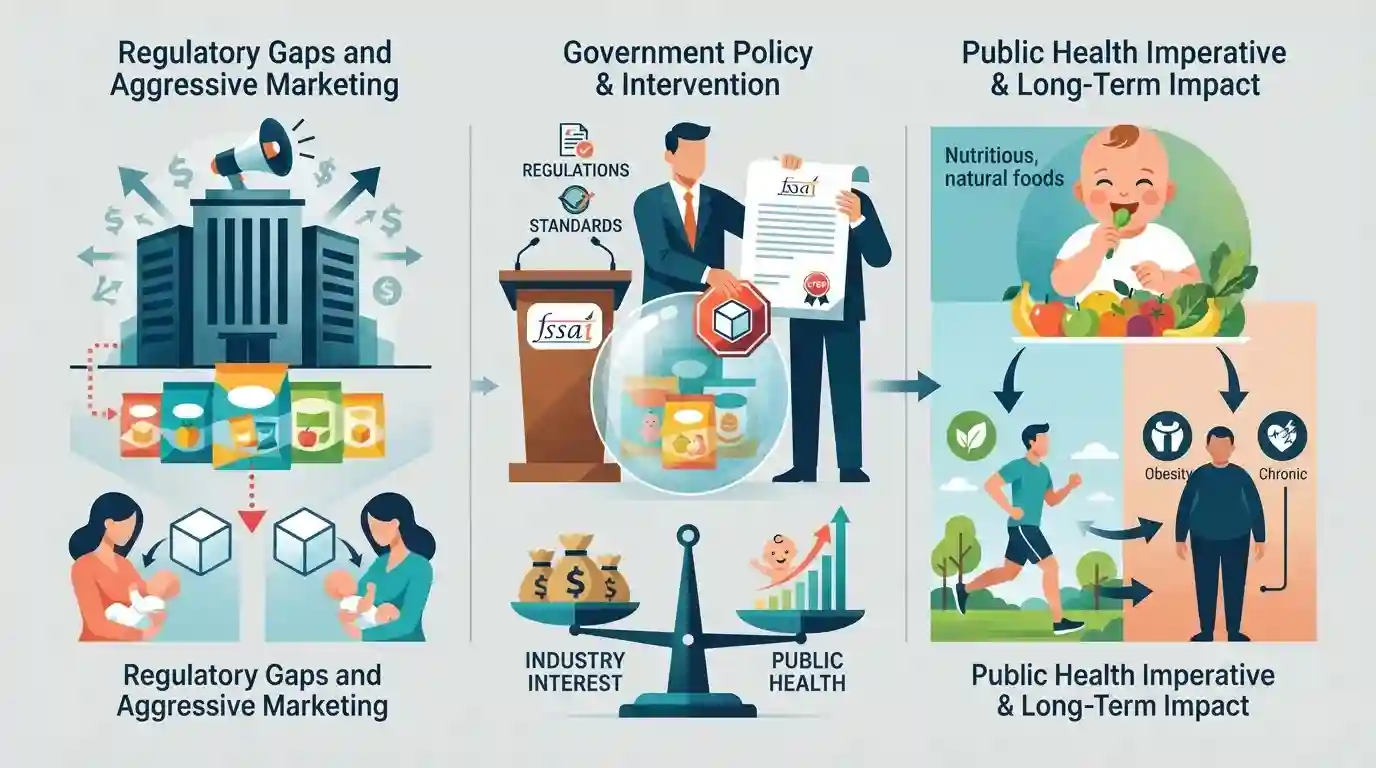
The editorial discusses the FSSAI's draft regulations concerning added sugars in infant foods. It highlights the public health imperative of protecting infants from early exposure to high sugar levels, which contribute to lifelong health complications like obesity and chronic diseases, while emphasizing the need to plug regulatory gaps against aggressive marketing by food corporations.
मुख्य मुद्दे
- The FSSAI has proposed draft restrictions regarding the inclusion of added sugars in infant foods and milk substitute products.
- High intake of added sugars in early childhood poses long-term health risks, including childhood obesity, non-communicable diseases (NCDs), and metabolic disorders.
- Regulatory loopholes and commercial lobbying by baby food manufacturers often challenge stringent public health regulations.
- Strengthening food safety standards for infants is crucial for tackling malnutrition, stunting, and protecting vulnerable consumer groups.
महत्त्वाच्या संज्ञा
Food Safety and Standards Authority of India (FSSAI)

The apex statutory food regulator in India, established under the Ministry of Health & Family Welfare to lay down science-based standards for food items and regulate their manufacturing, storage, distribution, sale, and import.
UPSC context
Important for GS Paper II (Health, Governance) and GS Paper III (Food Processing, Consumer Rights), testing regulatory frameworks and public health interventions.
Food Safety and Standards Act, 2006
The comprehensive legislation enacted in 2006 that consolidated multiple pre-existing food laws in India into a single framework to regulate food safety standards and establish the FSSAI.
UPSC context
Important for GS Paper II/III under statutory bodies, public health, consumer protection, and food security regulations.
पूर्वपरीक्षा सापळा
FSSAI treats infant foods under the same general additives threshold as adult processed foods.
FSSAI regulations apply uniformly to all processed food categories without distinguishing between infant foods and general products, whereas infant nutrition has specialized, stricter statutory restrictions under the FSS Act.
संबंधित स्थिर संकल्पना
What is the statutory framework and mandate of the FSSAI under the Food Safety and Standards Act, 2006?
- Statutory Basis: Statutory Basis: Established under the Food Safety and Standards Act, 2006, which amalgamated several older laws like the Prevention of Food Adulteration Act, 1954.
- Administrative Control: Administrative Control: Operates under the aegis of the Ministry of Health and Family Welfare, Government of India.
- Core Mandate: Core Mandate: Lays down science-based standards for food articles and regulates their manufacture, storage, distribution, sale, and import to ensure safety.
आंतर-विषय नमुने
Infant Nutrition vs. WHO Code
Infant food marketing regulations intersect with the World Health Organization's International Code of Marketing of Breast-milk Substitutes, testing India's compliance with global nutritional standards.
Processed Foods and NCD Epidemic
The battle against added sugars in processed foods links consumer protection standards directly to India's rising burden of non-communicable diseases.

FSSAI mandate + infant nutrition + statutory framework under the Food Safety and Standards Act, 2006 often featured in prelims statements.
संबंधित PYQ · 3
संबंधित PYQ · 3
- 2018PrelimsGS1
Consider the following statements: 1. The Food Safety and Standards Act, 2006 replaced the Prevention of Food Adulteration Act, 1954. 2. The Food Safety and Standards Authority of India (FSSAI) is under the charge of Director General of Health Services in the Union Ministry of Health and Family Welfare. Which of the statements given above is/are correct?
- 2016PrelimsGS1
With reference to pre-packaged items in India, it is mandatory to the manufacturer to put which of the following information on the main label, as per the Food Safety and Standards (Packaging and Labelling) Regulations, 2011? 1. List of ingredients including additives 2. Nutrition information 3. Recommendations, if any, made by the medical profession about the possibility of any allergic reactions 4. Vegetarian/non-vegetarian Select the correct answer using the code given below.
- 2022MainsGS3
Elaborate the scope and significance of the food processing industry in India.
