UP Leopard Sterilisation Proposal to Curb Wildlife Conflicts
Source:timesofindia-indiatimes ↗
Why It Matters
It highlights novel wildlife management and birth control strategies adopted by state authorities to address escalating human-wildlife conflict while complying with the strict legal protections afforded to endangered species like leopards under the Wildlife (Protection) Act.
Summary
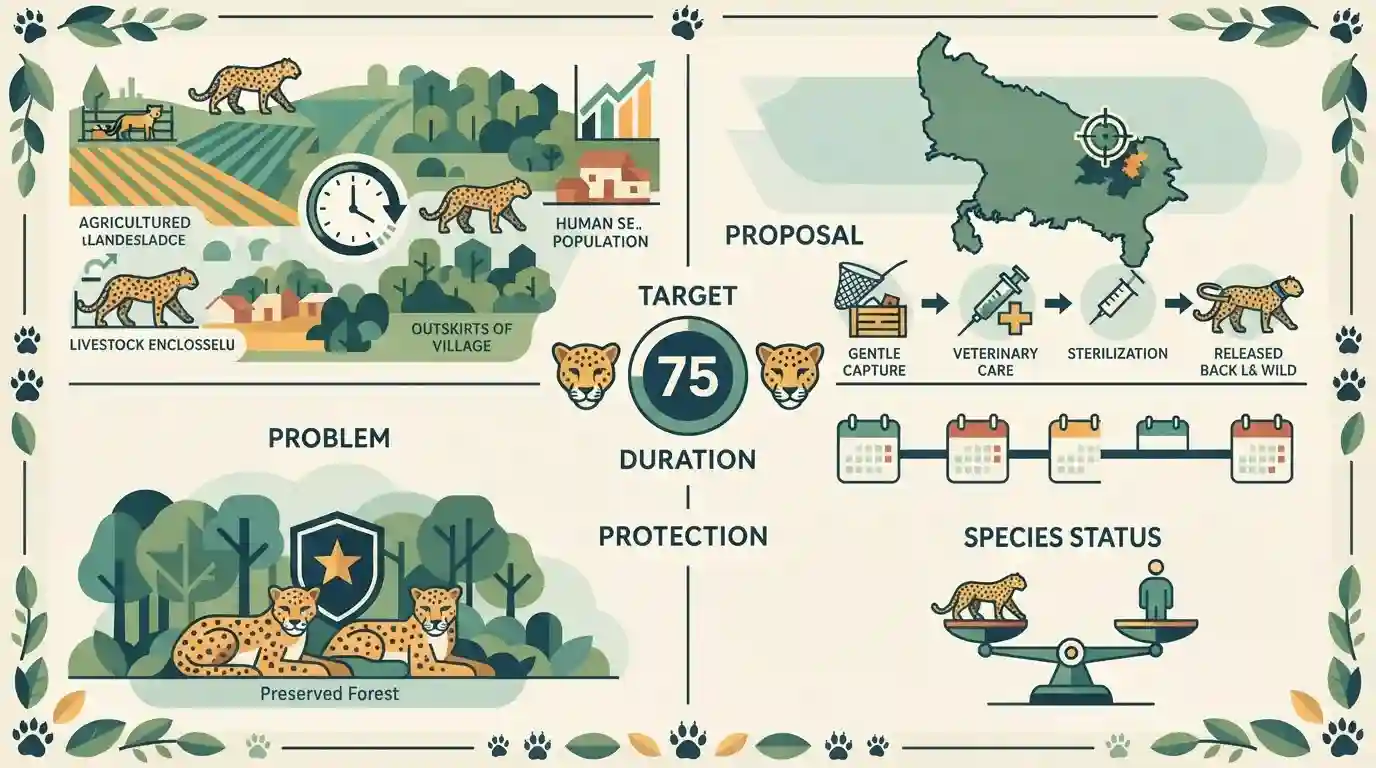
The Uttar Pradesh forest department has proposed a birth control and sterilisation program targeting 75 'problem' leopards over a span of five years to address the growing human-leopard conflict in the state. This innovative management approach aims to control population pressure in conflict-prone zones while protecting the big cat, which is a Schedule I species under the Wildlife (Protection) Act, 1972.
Key Points
- Uttar Pradesh has proposed a novel strategy of birth control / sterilisation for 75 problem leopards over 5 years to curb rising human-wildlife conflicts.
- The initiative targets areas facing high human-leopard encounters and aims to manage population dynamics without lethal intervention.
- Leopards are protected under Schedule I of the Wildlife (Protection) Act, 1972, making wildlife management strategies legally and ecologically sensitive.
Important Terms
Wildlife (Protection) Act, 1972

A landmark Indian legislation enacted to protect wild animals, birds, and plants, providing absolute legal protection to endangered species listed under its Schedule I, including the Indian leopard.
UPSC context
General Studies Paper III (Environment and Biodiversity); tests knowledge of statutory conservation frameworks, protected species, and legal safeguards for wildlife in India.
Uttar Pradesh Forest Department
The nodal state government agency responsible for forest conservation, wildlife management, and the implementation of anti-poaching and conflict mitigation strategies across Uttar Pradesh.
UPSC context
General Studies Paper III (Environment and Conservation); tests understanding of state-level administrative bodies and innovative policy measures in managing human-wildlife conflicts.
Prelims Trap
birth control and sterilisation program targeting 75 'problem' leopards
Aspirants often assume that sterilization or fertility control of Schedule I wild animals is routinely authorized under the Wildlife Act, whereas it requires stringent scientific backing and Chief Wildlife Warden/Central approvals.
Static Concepts Connected
What are the key schedules and protection levels under the Wildlife (Protection) Act, 1972?
- Rationalised Schedules:: The 2022 amendment rationalised the schedules from six to four, with Schedule I providing absolute protection and highest penalties.
- Leopard Status:: Leopards (Panthera pardus) are listed under Schedule I, affording them the same strict legal protection as tigers and lions.
- CWD Permissions:: Section 11 of the Act permits hunting or capture of certain wild animals only under specific permissions by the Chief Wildlife Warden.
Cross-Topic Patterns
Wildlife Management & State Fiscal Autonomy
While Project Tiger and Project Elephant receive central funding, state-led initiatives like UP's leopard sterilisation highlight the fiscal and administrative burden borne by state forest departments under the Concurrent List of the Constitution.
Ethical Conservation & Welfare Jurisprudence
Shifting from translocation or culling to immuno-contraception or surgical sterilisation marks a paradigm shift in wildlife veterinary science and welfare-centric conservation jurisprudence in India.

UP's leopard sterilisation initiative blends Wildlife Act (Sch I) provisions with population management—watch for matching statement questions.
Linked PYQs · 1
Linked PYQs · 1
- 2024GPSC_PRELIMSGS1
Which of the following are legal provisions for the implementation of the Fundamental Duties? 1. The Protection of Civil Rights Act. 2. The Unlawful Activities (Prevention) Act. 3. The Representation of Peoples Act. 4. The Wildlife (Protection) Act Select the correct answer code:
