Biotechnology Sector Drives India Green Growth Targets
Source:The Hindu ↗
Why It Matters
It provides concrete data points on India's bio-economy growth (targeting $300 billion by 2030) and illustrates the intersection of biotechnology with environmental sustainability (zero-waste, green processes). This is directly useful for GS-3 answers on Science & Technology applications and inclusive/sustainable economic growth.
Summary
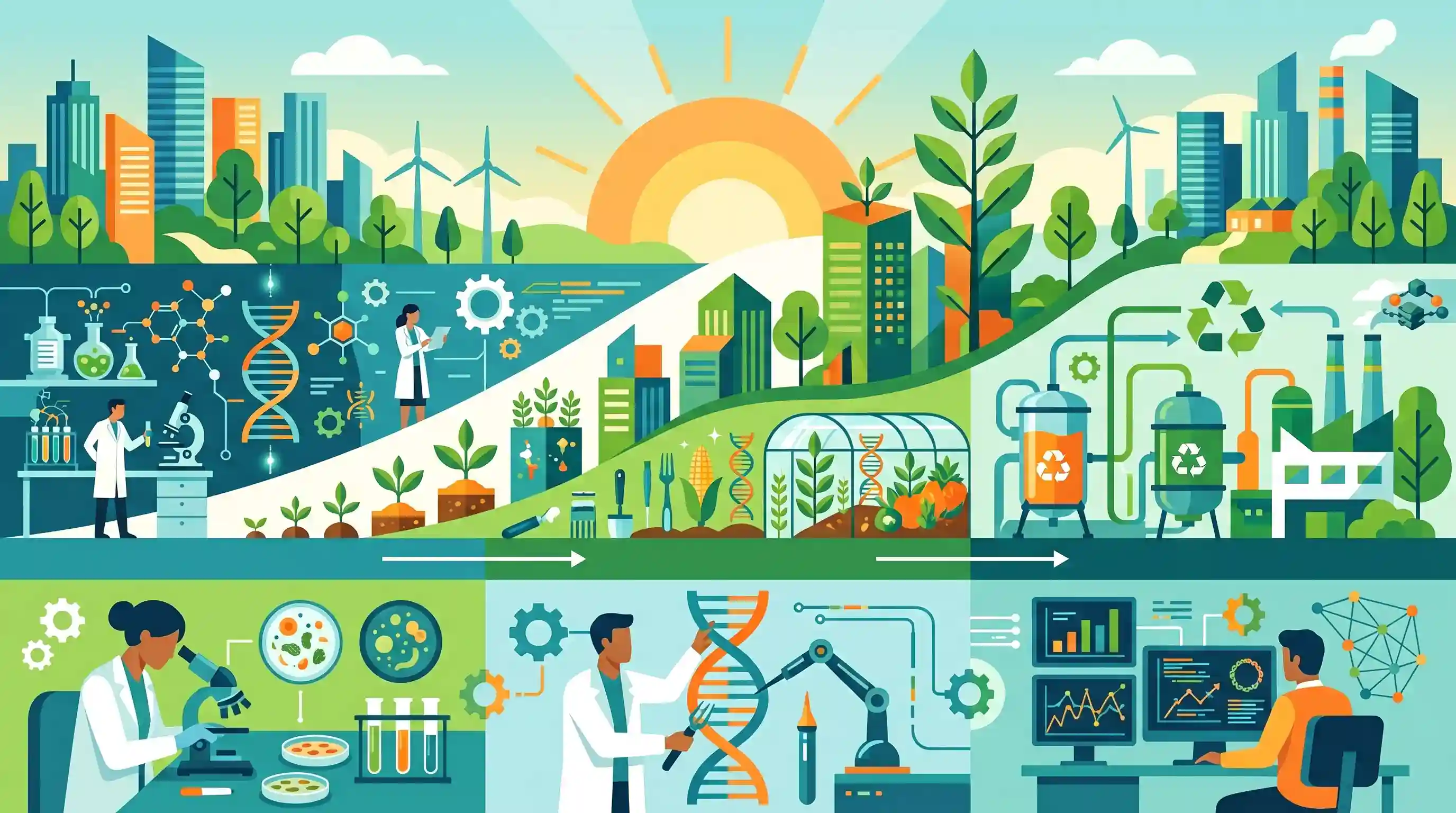
Experts at a VIT-The Hindu webinar highlighted biotechnology as India's "sunrise sector," pivotal for driving accelerated green growth, Industry 5.0, and a sustainable future. India's bio-economy has surged from $10 billion in 2014 to $165 billion in 2024, with a target of reaching $300 billion by 2030. This growth is largely fueled by advancements in bio-pharma, agriculture, and industrial biotech. The transition emphasizes environmentally suitable and economically viable technologies that enable zero-waste management and green processes. Additionally, future employment in the bio-enabled economy will heavily demand specialized skills in microbial culture, gene manipulation, and data analysis.
Key Points
- Biotechnology is recognized as a 'sunrise sector' in India, driving green processes, zero-waste management, and Industry 5.0.
- India's bio-economy has grown 16 times from $10 billion in 2014 to $165 billion in 2024, with a future target of $300 billion by 2030.
- Major contributors to bio-economy growth include bio-pharma, agriculture, services, IT, and industrial sectors.
- Sustainability in biotechnology relies on three pillars: environmental suitability, economic viability, and social utility.
- Emerging career prospects in the bio-enabled economy will heavily demand skills in microbial culture techniques, gene manipulation, and data analysis.
Important Terms
Bio-economy

An economic model utilizing renewable biological resources (plants, microbes) to produce food, energy, and goods; India targets reaching a $300 billion bio-economy by 2030.
UPSC context
GS3: Economy and S&T; tests sustainable development strategies and sectoral growth targets.
Green Growth
Economic growth that ensures natural assets provide resources and environmental services sustainably, a core theme of the Union Budget 2023-24's 'Saptarishi' priorities.
UPSC context
GS3: Environment and Economy; relevant for questions on net-zero commitments and circular economy.
BioE3 Policy
A 2024 policy (Biotechnology for Economy, Environment and Employment) aimed at fostering bio-manufacturing, climate-resilient agriculture, and R&D to drive high-performance sustainable development.
UPSC context
GS3: S&T; tests knowledge of government interventions to promote biotechnology as a national growth pillar.
Industry 5.0
A human-centric industrial revolution focused on human-machine collaboration, sustainability, and resilience, shifting from automation-only efficiency to societal well-being and industrial agility.
UPSC context
GS3: Industry and Economy; tests understanding of future manufacturing trends and workforce skilling.
Sunrise Sector
A burgeoning industry with high growth potential and innovation, expected to be a major future economic driver; currently used to describe India's biotechnology sector.
UPSC context
GS3: Economy; common classification for emerging industries like green tech and biotechnology.
Biopharmaceuticals (Bio-pharma)
A sub-sector of the bio-economy involving drugs, vaccines, and therapies derived from living organisms; it constitutes a significant portion of India's biotech market.
UPSC context
GS3: Science and Health; focuses on India's role as a global medical hub and innovation leader.
Prelims Trap
Industry 5.0 focuses purely on replacing human labor with artificial intelligence and fully autonomous manufacturing.
Aspirants confuse this with Industry 4.0. Industry 5.0 actually shifts back to a human-centric, sustainable, and resilient model that integrates green processes and biotechnology.
Static Concepts Connected
What are the core segments of India's bio-economy?
- Bio-pharma: The largest segment, encompassing vaccines, therapeutics, and recombinant diagnostics.
- Bio-agri: Includes genetically modified crops, bio-pesticides, and bio-fertilizers aiming at sustainable crop yields.
- Bio-industrial: Involves bio-plastics, biofuels, and enzymes that drive green, zero-waste manufacturing.
What are the primary objectives of the BioE3 Policy?
- Core Vision: Stands for Biotechnology for Economy, Environment, and Employment; targets a shift from chemical-based to sustainable bio-based manufacturing.
- Key Pillars: Focuses on high-performance biomanufacturing, smart proteins, marine bio-resources, and climate-resilient agriculture.
Cross-Topic Patterns
Biomanufacturing + Circular Economy
The transition to zero-waste bio-industrial processes directly supports India's Circular Economy action plans and its Panchamrit net-zero emission targets.
Gene editing + Regulatory frameworks
The push for advanced gene manipulation and microbial culture links directly to the regulatory role of GEAC, biosafety protocols, and ethical debates around synthetic biology.

A multi-statement question contrasting Industry 4.0 (automation) with Industry 5.0 (human-centric/bio-integrated) is highly probable.
Linked PYQs · 5
Linked PYQs · 5
- 2021MainsGS3
What are the research and developmental achievements in applied biotechnology? How will these achievements help to uplift the poorer sections of the society?
- 2019MainsGS3
Define the concept of carrying capacity of an ecosystem as relevant to an environment. Explain how understanding this concept is vital while planning for sustainable development of a region.
- 2020MainsGS3
Explain intra-generational and inter-generational issues of equity from the perspective of inclusive growth and sustainable development.
- 2024PrelimsGS1
"Membrane Bioreactors" are often discussed in the context of:
- 2021PrelimsGS1
Bollgard I and Bollgard II technologies are mentioned in the context of
