Bikaner Delhi Vande Bharat Express Boosts Regional Connectivity
Source:Indian Express ↗
Why It Matters
Modernization of the Indian Railways and indigenous manufacturing of transport infrastructure (like the Vande Bharat trains) are highly relevant to the GS-3 syllabus on Infrastructure and Economic Development. It showcases the practical outcomes of the 'Make in India' initiative and efforts toward regional connectivity.
Summary
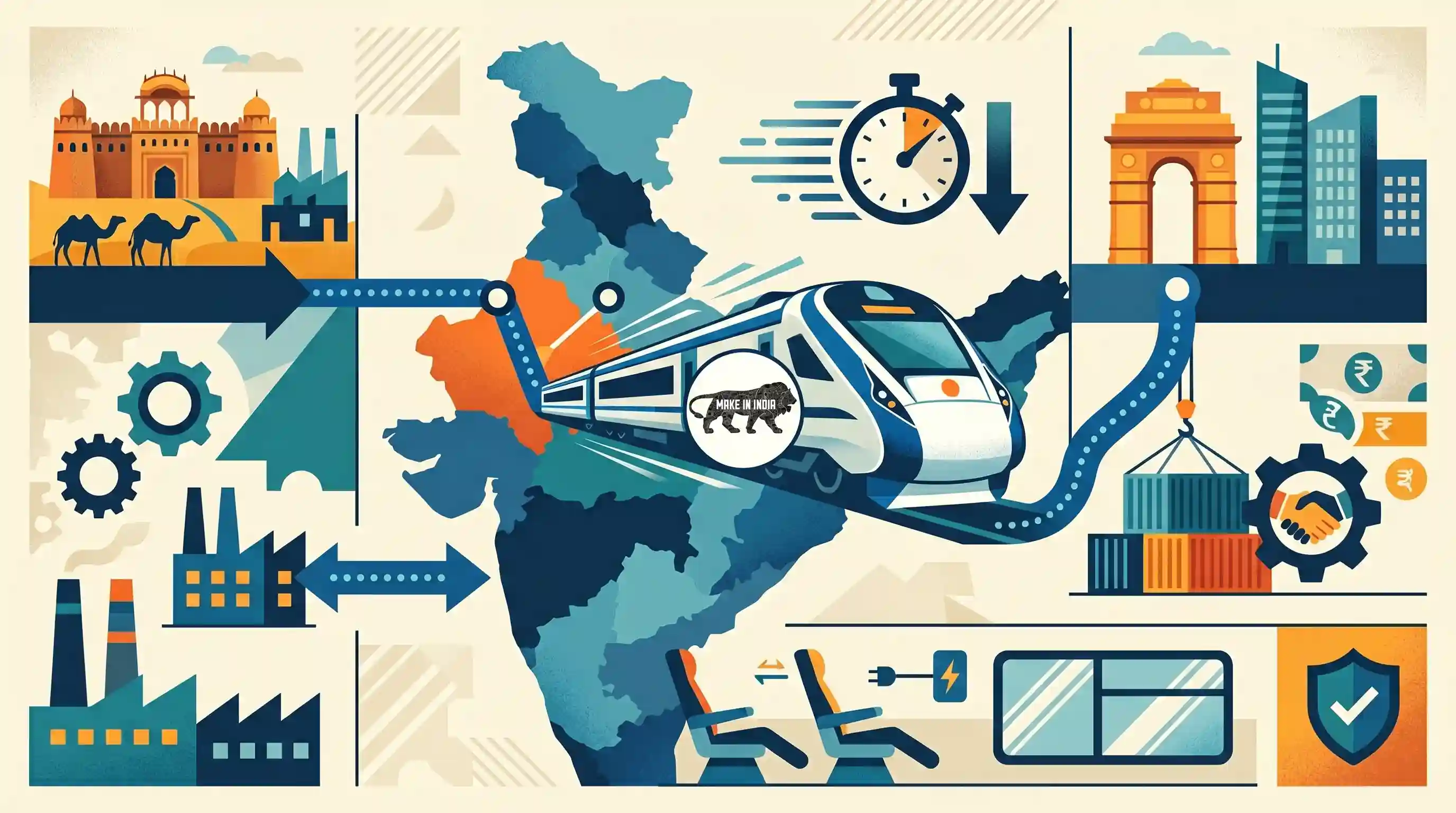
Indian Railways has launched the Bikaner-Delhi Vande Bharat Express, enhancing the rail connectivity between Rajasthan and the National Capital Region (NCR). As an indigenous semi-high-speed train developed under the 'Make in India' initiative, it aims to significantly reduce travel time while offering upgraded passenger amenities and safety features. The introduction of this route highlights the government's ongoing push to modernize railway infrastructure, which is expected to boost regional tourism, economic integration, and trade.
Key Points
- The Bikaner-Delhi Vande Bharat Express provides semi-high-speed connectivity between Western Rajasthan and the National Capital Region, significantly reducing travel time.
- Designed under the 'Make in India' initiative, the train features modern passenger amenities and advanced safety systems.
- The launch represents a continuing effort by Indian Railways to modernize transport infrastructure and upgrade passenger experiences across key regional corridors.
- Faster connectivity is anticipated to stimulate local economies, boost tourism in Rajasthan, and facilitate smoother trade and commuter movement.
Important Terms
Vande Bharat Express

India's first indigenous semi-high-speed, self-propelled train set, developed by Integral Coach Factory (ICF) under the 'Make in India' initiative.
UPSC context
GS Paper III (Infrastructure); tests knowledge of indigenous manufacturing, transport modernization, and 'Make in India' success.
Make in India
A national program launched in 2014 to transform India into a global manufacturing hub by encouraging domestic production and attracting foreign investment.
UPSC context
GS Paper III (Economy); core concept for manufacturing, self-reliance (Atmanirbhar Bharat), and industrial policy.
Indian Railways
The national railway system of India, serving as a critical infrastructure backbone for passenger movement and freight logistics.
UPSC context
GS Paper III (Infrastructure); focuses on modernization, logistics efficiency, and its role in national economic integration.
PM Gati Shakti
A transformative approach for integrated planning and synchronized implementation of infrastructure projects across 7 engines of growth, including railways.
UPSC context
GS Paper III (Infrastructure); tests understanding of multi-modal connectivity and reduction of logistics costs.
Kavach
An indigenous Automatic Train Protection (ATP) system developed to prevent collisions and enhance the safety of high-speed train operations.
UPSC context
GS Paper III (Infrastructure/Safety); relevant for technological interventions in rail safety and indigenous R&D.
Semi-high-speed Rail
Rail services operating at speeds between 160-200 km/h, bridging the gap between conventional express trains and high-speed 'bullet' trains.
UPSC context
GS Paper III (Infrastructure); concerns efficiency, travel time reduction, and global competitiveness of Indian transit.
Amrit Bharat Station Scheme
A policy initiative aimed at the holistic modernization of 1,275 railway stations to improve passenger amenities, accessibility, and local trade.
UPSC context
GS Paper III (Infrastructure); focuses on urban redevelopment and enhancing social infrastructure through railways.
Prelims Trap
Vande Bharat trains are powered by high-speed, centralized electric locomotives designed specifically for rapid acceleration.
Vande Bharat trains do not have separate engines. They are 'locomotive-less' trainsets that use distributed traction power technology, developed indigenously at ICF Chennai.
Static Concepts Connected
How does the KAVACH Automatic Train Protection (ATP) system function?
- Indigenous design: Developed by the Research Designs and Standards Organisation (RDSO) to automatically apply brakes and prevent train collisions if the loco pilot fails to act.
- Working mechanism: Uses track-installed RFID tags, ultra-high-frequency radio communication, and GPS tracking for real-time monitoring and 'fail-safe' signal protection.
- SIL-4 Certification: Possesses Safety Integrity Level 4 (SIL-4) certification, denoting the highest standard of safety and minimizing the probability of error.
How does distributed traction technology differ from traditional train locomotives?
- Engine-less design: There is no separate pulling locomotive at the front. Instead, traction equipment (motors) is distributed and mounted under the passenger coaches.
- Performance benefit: Provides faster acceleration and deceleration, reduces turnaround time, and decreases track damage due to a more evenly distributed axle load.
Cross-Topic Patterns
Passenger Speed vs Freight Efficiency
The deployment of Vande Bharat for passengers runs parallel to Dedicated Freight Corridors (DFCs), reflecting a dual strategy to de-congest tracks and lower logistics costs to 8% of GDP.
Make in India: Tech Export Potential
Indigenously developed rail tech (ICF's Train-18 and RDSO's KAVACH) shifts India from an importer to a potential exporter of affordable semi-high-speed rail systems to developing nations.

Expect a 2026 prelims question pairing the technical basis of Vande Bharat (distributed traction) with the working mechanism of KAVACH.
Linked PYQs · 2
Linked PYQs · 2
- 2022MainsGS3
Why is Public Private Partnership (PPP) required in infrastructural projects ? Examine the role of PPP model in the redevelopment of Railway Stations in India.
- 2021MainsGS3
“Investment in infrastructure is essential for more rapid and inclusive economic growth.” Discuss in the light of India's experience.
