Bihar Bureaucratic Reshuffle of IAS and IPS Officers
Source:theprint ↗
Why It Matters
Highlights state-level bureaucratic management and administrative shifts relevant to governance structure in Bihar.
Summary
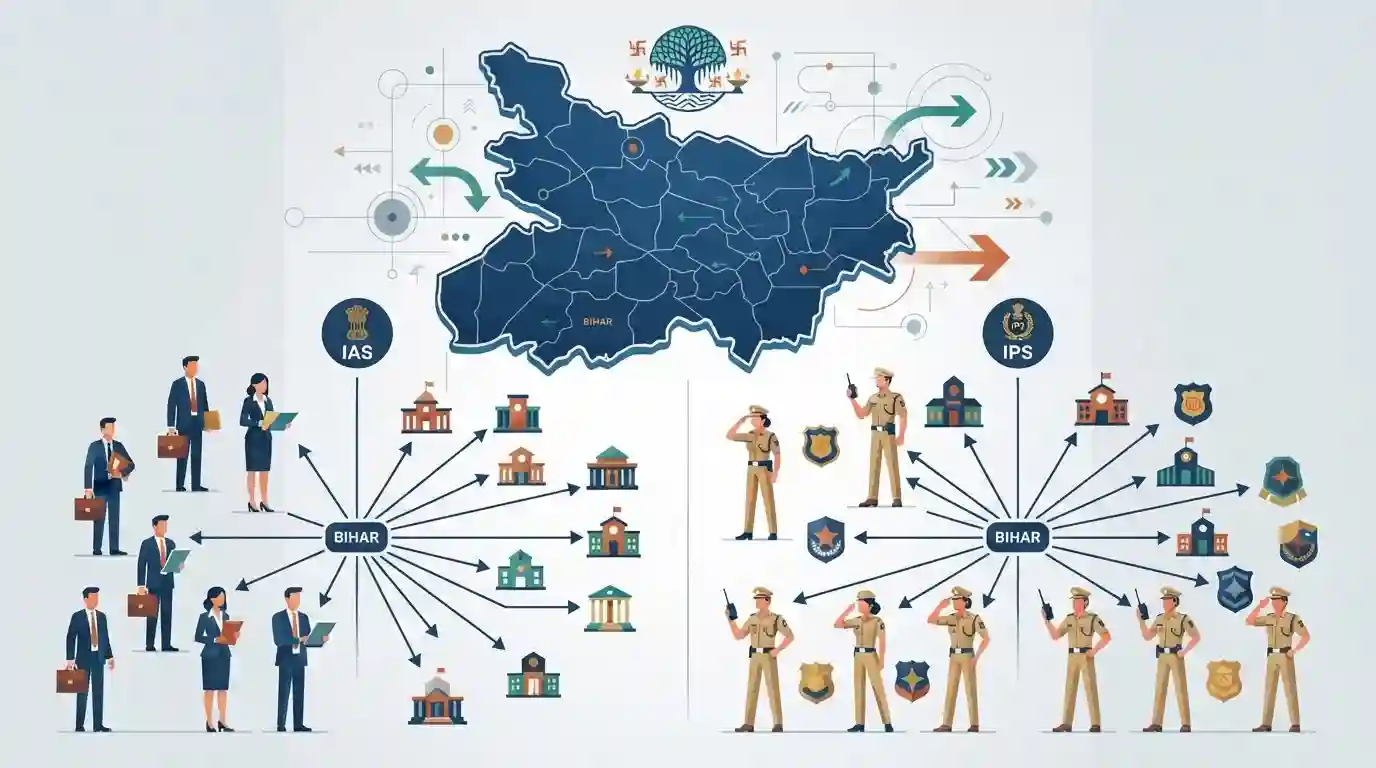
The Bihar government executed a major bureaucratic reshuffle involving the transfer of 11 Indian Administrative Service (IAS) and 16 Indian Police Service (IPS) officers across various districts and departments within the state to streamline governance.
Key Points
- The Bihar government carried out a major bureaucratic reshuffle, transferring 11 IAS and 16 IPS officers across the state.
- Such administrative reassignments are standard governance practices aimed at streamlining law and order and state-level policy implementation.
- Bureaucratic reshuffles form an essential component of state administrative control, personnel management, and district governance oversight.
Important Terms
Indian Administrative Service (IAS)

The premier all-India civil service responsible for executive administration, policy implementation, and bureaucratic governance across central and state departments in India.
UPSC context
BPSC Paper II (Polity/Governance) and Civil Services framework; tests understanding of public administration and executive machinery in state governance.
Indian Police Service (IPS)
The premier all-India police service responsible for maintaining law and order, preventing and investigating crimes, and directing police forces in state and central setups.
UPSC context
BPSC Paper II (Governance and Internal Security); tests the role of law enforcement agencies and police administration in state governance.
Bureaucratic Reshuffle
A frequent administrative exercise conducted by the state executive to transfer and reassign civil servants and police officers across districts and portfolios to improve governance efficiency.
UPSC context
BPSC Polity & Administration; tests current affairs knowledge regarding state administrative dynamics, bureaucratic control, and governance reforms.
Prelims Trap
Routine transfers of IAS and IPS officers require formal departmental inquiries and Article 311 constitutional safeguards.
Aspirants often confuse transfer and removal powers, assuming executive transfers require the same constitutional safeguards as dismissal or reduction in rank under Article 311.
Static Concepts Connected
What are the constitutional provisions and control mechanisms for All India Services in India?
- Article 312: Created under Article 312 by a Rajya Sabha resolution passed by a two-thirds majority.
- Service Rules: The Parliament regulates their service conditions, but ultimate disciplinary control is shared between the Centre and States.
- Cadre System: IAS and IPS officers belong to joint cadres but are allotted to specific state cadres for field implementation.
Cross-Topic Patterns
Civil Services + Constitutional Safeguards (Article 311)
BPSC frequently links the constitutional protections of civil servants under Article 311 with executive powers of transfer and posting under state administrative rules.

Expect direct questions on All India Services cadre allocation rules, control mechanisms, or Article 312 provisions in BPSC Prelims.
Linked PYQs · 2
Linked PYQs · 2
- 2024-IBPSC_PRELIMSGS1
What is the system of governance in the Panchayat Raj set-up?
- 2022BPSC_PRELIMSGS1
The new ministry proposed in the Bihar Budget for the year 2021-22 focuses on
