State Regulatory Policy for Private Coaching Institutions
Source:patnapress ↗
Why It Matters
This regulation highlights a growing national trend where state governments are stepping in to actively regulate the private coaching industry due to safety, psychological stress, and law-and-order concerns. For BPSC Prelims, understanding Bihar's educational initiatives, regulatory governance, and recent administrative developments is crucial.
Summary
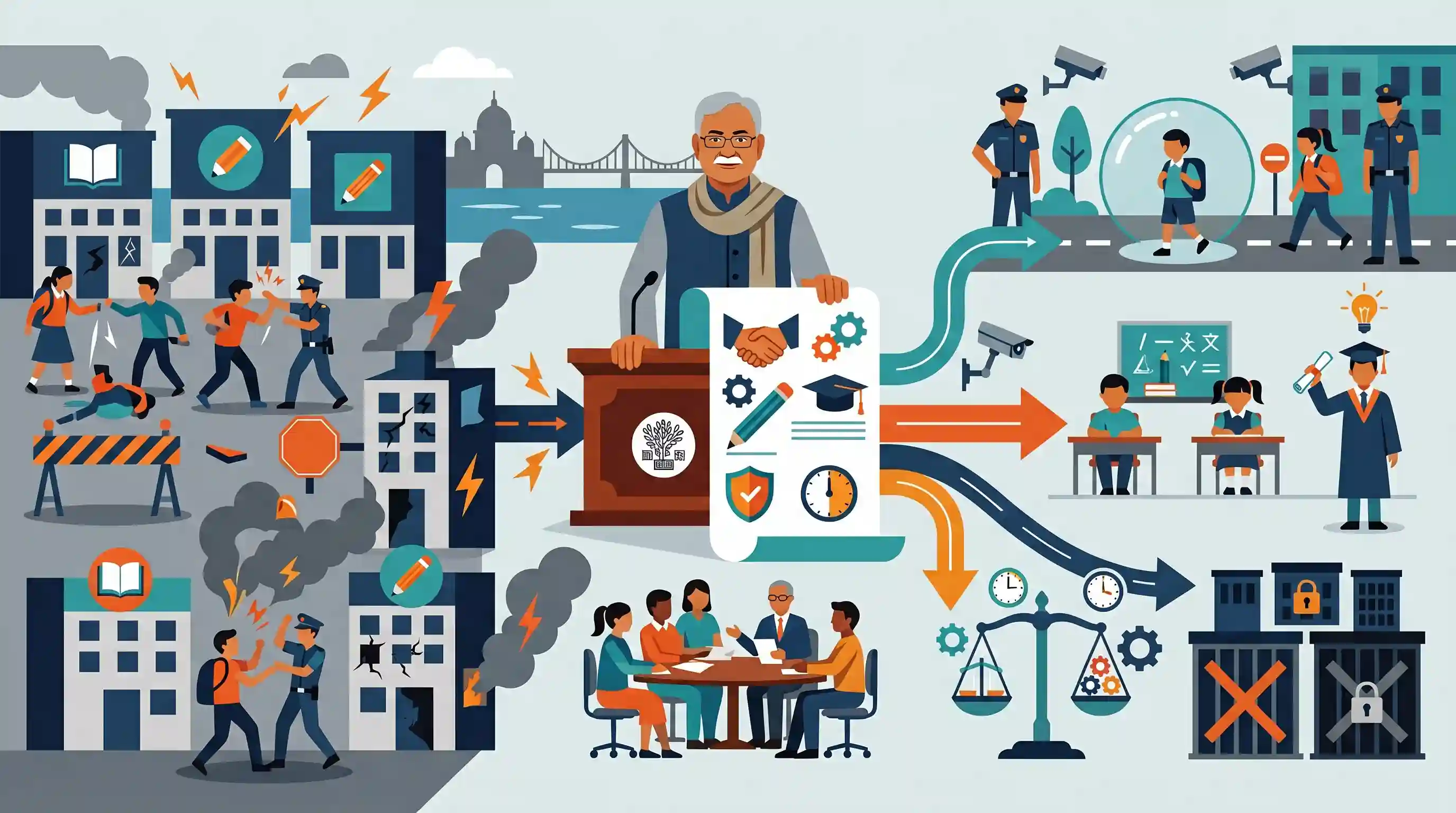
In response to recent violent clashes and security incidents at coaching centers in Patna, Bihar's Education Minister Mithilesh Tiwari announced that the state will introduce its first comprehensive Coaching Institute Policy within three months. The regulation aims to govern competition, protect students' academic interests, ensure security, and maintain public order. The policy drafting will involve multi-stakeholder consultations and introduce strict penal measures, including bans for non-compliant institutes.
Key Points
- The Bihar government has announced the formulation of a comprehensive 'Coaching Institute Policy' to regulate private coaching centers, aimed at resolving within three months.
- The policy comes in response to rising safety and security concerns following a violent attack on the Patna-based coaching center Khan Global Studies (headed by Khan Sir), leading to the arrest of three individuals including a coaching director.
- The state government will model the drafting process on stakeholder consultations, similar to the process followed for the state's teacher transfer policy.
- The policy will outline strict penalties for violations, including severe restrictions and complete bans on coaching institutes that spark toxic commercial disputes or disrupt public order.
- Students have been warned against being exploited for political motives and taking the law into their own hands, with key rioters already identified by local police.
Important Terms
Bihar Coaching Institute Policy

A proposed state policy in Bihar aimed at regulating competition, safety, and operational standards of coaching centers, preventing public order disruptions, and safeguarding student interests through strict penal provisions.
UPSC context
GS Paper II: Governance, educational services management, and social sector policies affecting student welfare.
Bihar Teacher Transfer Policy
The portal-based "Bihar State Teacher Transfer Rules, 2026" that digitizes teacher postings and transfers, prioritizing female, differently-abled, and seriously ill educators after completing five years of minimum service.
UPSC context
GS Paper II: State-level educational governance, human resource administration, and public service transparency.
Bihar Education Department
The provincial administrative department responsible for formulating policies, administering schools, overseeing teacher transfers, and regulating private coaching centers to ensure educational quality and order in Bihar.
UPSC context
GS Paper II: Structure and functioning of the Executive, state governance, and management of educational services.
Khan Global Studies
A leading Patna-based competitive exam coaching institute, founded by popular educator Khan Sir, whose vandalism in 2026 sparked the Bihar government’s regulatory initiative for private coaching centers.
UPSC context
GS Paper II: Public order administration, commercialized education challenges, and social sector governance.
Prelims Trap
Under the Union Government's Guidelines for Regulation of Coaching Centers 2024, coaching institutes can enroll students who have completed 14 years of age.
The guidelines explicitly bar enrolling students below 16 years of age or prior to completing Class 10 exams, preventing parallel schooling overlaps.
Static Concepts Connected
Which constitutional provisions govern education regulation in India?
- Concurrent List: Education was shifted to List III by the 42nd Amendment, allowing both Centre and States to legislate on it.
- Article 21A: Guarantees free and compulsory education to ages 6-14, which indirectly aligns with restricting commercial coaching under age 16.
What is 'shadow education' and its key regulatory challenges?
- Parallel Schooling: Supplementary private tutoring that mirrors formal education, often draining student attendance and resources from regular schools.
- NEP 2020 Alignment: Focuses on shifting from rote-learning assessment styles to competency-based models to naturally reduce coaching dependence.
Cross-Topic Patterns
Shadow education vs social equity
The expansion of unregulated coaching cartels worsens educational inequality, undermining the egalitarian goals of Article 21A and the Right to Education.
Public order and student cartels
Commercial friction in coaching hubs frequently escalates into localized security crises, requiring district administrations to deploy strict law-and-order frameworks.

Mains 2026 may evaluate federal guidelines vs state laws in regulating the shadow education system and protecting student mental health.
Linked PYQs · 2
Linked PYQs · 2
- 2024-IBPSC_PRELIMSGS1
In April, 2020 the Bihar Education Department started the following program through DD Bihar
- 2025BPSC_PRELIMSGS1
What is the primary objective of Bihar’s Mission Daksh?
