Role of Ethics and Emotions in International Relations
Source:The Hindu ↗
આ શા માટે મહત્વનું છે
This article provides deep conceptual inputs for GS Paper 4 (Ethics, Integrity, and Aptitude), particularly regarding ethical dilemmas in international relations, human action dimensions, and the intersection of morality and statecraft.
સારાંશ
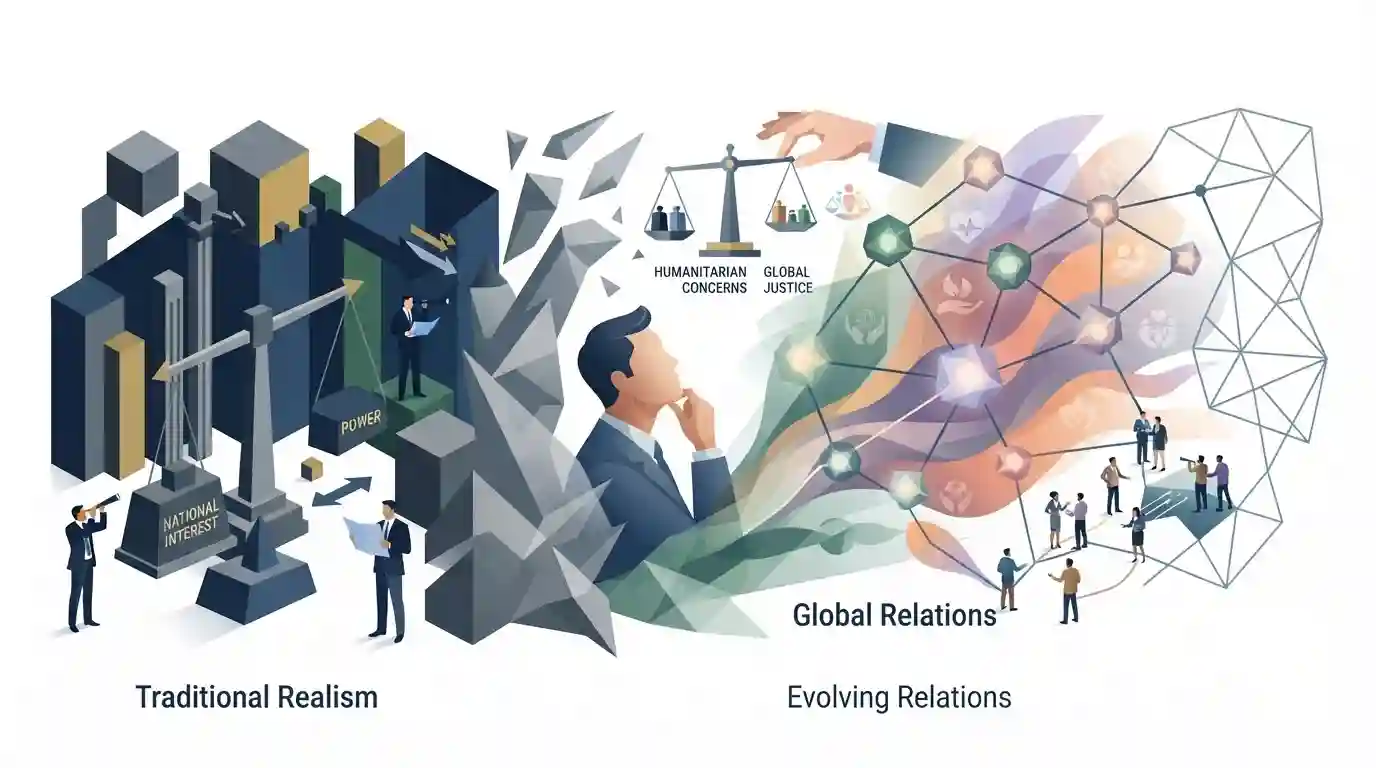
The article discusses the evolving dynamics of world politics, moving beyond the strict confines of traditional national interest and realism to examine the critical, often overlooked roles that ethics and human emotions play in shaping international relations and foreign policy decisions.
મુખ્ય મુદ્દા
- International relations are traditionally dominated by the realist perspective emphasizing power and national interest, but ethics and emotions play a critical underlying role.
- Emotions such as empathy, fear, humiliation, and pride strongly influence state behavior, leadership choices, and public reactions to global crises.
- Ethical considerations, including human rights, global justice, and moral duty, challenge purely transactional foreign policies.
- Integrating ethics and emotional intelligence into global politics can foster better conflict resolution and sustainable international cooperation.
પ્રિલિમ્સ ટ્રેપ
Realism in international relations completely excludes ethics and moral considerations from state decision-making.
Realist theory does not completely ignore ethics; rather, it subordinate moral values to national interest and power preservation, treating ethical discourse primarily as an instrument of statecraft.
સંલગ્ન સ્થિર ખ્યાલો
How do realism and idealism differ in their approach to ethics in international relations?
- Realist Perspective: Power focus, prioritizes national security, survival, and power accumulation in an anarchic international system over universal moral codes.
- Idealist Approach: Moral duty, emphasizes international law, human rights, collective security, and the application of universal ethical principles to statecraft.
- Ethical Legitimacy: Soft power, recognizes that moral legitimacy and ethical foreign policies can enhance a state's long-term influence and credibility.
આંતર-વિષય પેટર્ન
IR Realism vs GS-4 Ethical Foreign Policy
While GS-2 International Relations focuses on realist power balances, GS-4 Ethics requires candidates to analyze foreign policy through moral duties, universal human rights, and global distributive justice beyond pure transactionalism.
State Psychology and Emotional Intelligence in Governance
Emotions like historical humiliation or pride often drive aggressive state postures, mirroring psychological factors studied in public administration governance and civil service aptitude tests.

GS-4 case study on foreign policy: balancing realpolitik national interest with ethical humanitarian obligations during crises.
સંલગ્ન PYQ · 3
સંલગ્ન PYQ · 3
- 2020MainsGS4
‘The will to power exists, but it can be tamed and be guided by rationality and principles of moral duty.’ Examine this statement in the context of international relations.
- 2022MainsGS4
Russia and Ukraine war has been going on for the last seven months. Different countries have taken independent stands and actions keeping in view their own national interests. We are all aware that war has its own impact on the different aspects of society, including human tragedy. What are those ethical issues that are crucial to be considered while launching the war and its continuation so far? Illustrate with justification the ethical issues involved in the given state of affair.
- 2024MainsGS4
“Ethics encompasses several key dimensions that are crucial in guiding individuals and organizations towards morally responsible behaviour.” Explain the key dimensions of ethics that influence human actions. Discuss how these dimensions shape ethical decision-making in the professional context.
