Natural Disasters in India and Economic Costs of Extreme Weather
Source:The Hindu ↗
Why It Matters
It addresses the mounting economic and human costs of natural disasters in India, aligning directly with GS3 syllabus requirements on Disaster and Disaster Management.
Summary
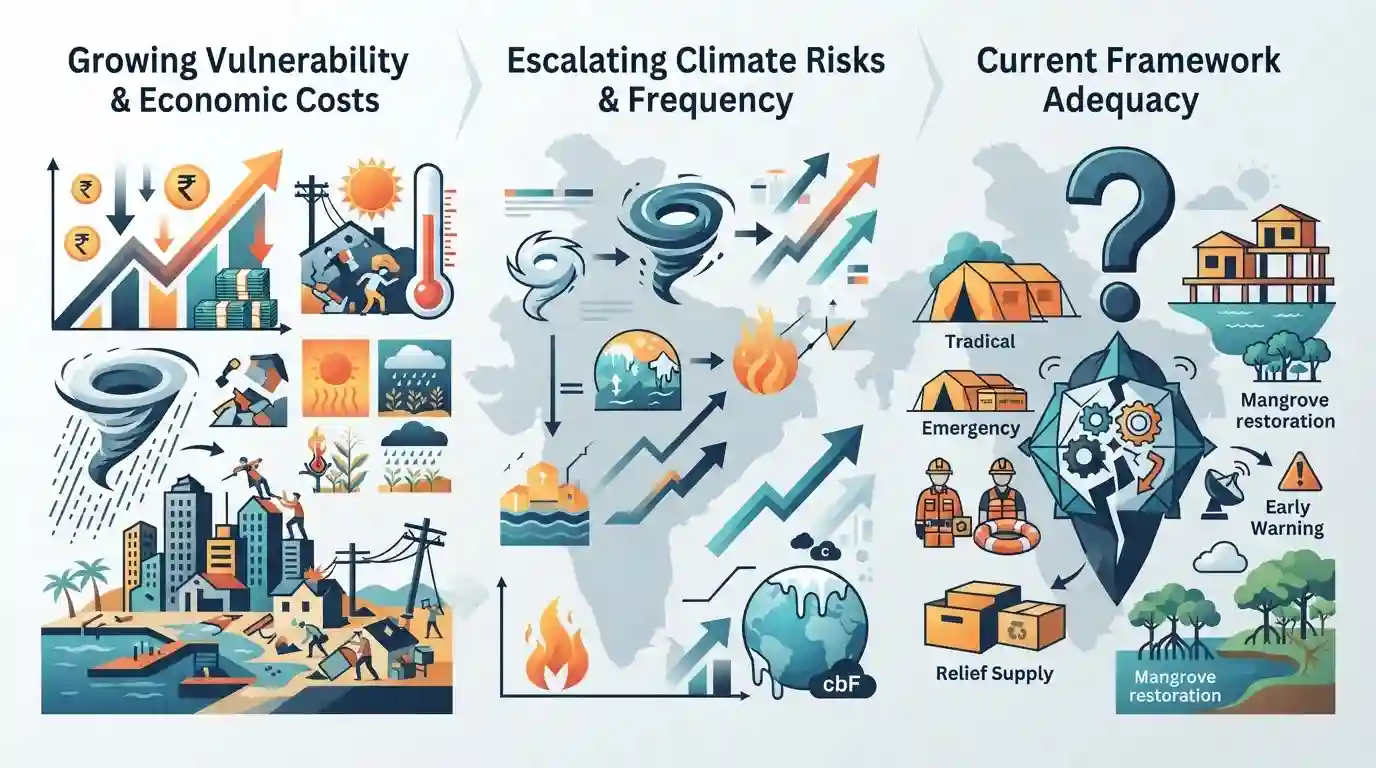
The article examines India's growing vulnerability and economic costs associated with natural disasters like cyclones, questioning whether current disaster management frameworks are adequate to address escalating climate risks.
Key Points
- Natural disasters like cyclones inflict massive economic, social, and structural costs on India.
- Growing frequency and intensity of extreme weather events necessitate shifting focus from post-disaster relief to pre-disaster resilience and risk mitigation.
- Financial mechanisms, insurance, and robust local infrastructure are crucial to absorb mounting climate-induced shocks.
Important Terms
Sendai Framework

A 15-year global UN agreement (2015-2030) aiming to prevent new disaster risks, reduce existing ones, and enhance resilience through four priority areas and concrete global targets.
UPSC context
GS Paper III (Disaster Management) - tests global commitments, targets, and strategies for disaster risk reduction and building climate resilience.
NDMA
India's apex statutory body for disaster management, established under the Disaster Management Act 2005 and chaired by the Prime Minister, responsible for framing policies and guidelines.
UPSC context
GS Paper III (Disaster Management) - tests institutional frameworks, governance structures, and administrative mechanisms for handling natural disasters in India.
Prelims Trap
The legally binding Sendai Framework mandates member states to achieve specific disaster-related targets by 2030.
Aspirants often believe the Sendai Framework is legally binding, whereas it is a voluntary, non-binding international agreement focused on risk reduction.
Static Concepts Connected
What is the three-tier institutional framework established under the Disaster Management Act, 2005?
- NDMA:: National level body chaired by the Prime Minister for laying down policies and guidelines.
- SDMAs:: State level bodies headed by respective Chief Ministers to coordinate disaster management plans.
- DDMAs:: District level authorities headed by District Collectors/Magistrates for grassroots execution and planning.
Cross-Topic Patterns
Climate Disasters + Fiscal Deficit Sustainability
Escalating extreme weather events directly threaten India's fiscal deficit targets through massive unbudgeted disaster relief expenditures and infrastructure reconstruction costs.
Extreme Weather + Urban Local Governance Failures
Urban flooding and cyclone vulnerabilities underscore the critical failure of municipal governance and unscientific master planning in Indian megacities.

Disaster Management Act 2005 + Sendai Framework shift from relief to resilience is a high-yield Prelims statement-matching zone.
Linked PYQs · 3
Linked PYQs · 3
- 2024MainsGS3
What is disaster resilience? How is it determined? Describe various elements of a resilience framework. Also mention the global targets of Sendai Framework for Disaster Risk Reduction (2015–2030).
- 2018MainsGS3
Describe various measures taken in India for Disaster Risk Reduction (DRR) before and after signing 'Sendai Framework for DRR (2015-2030)'. How is this framework different from Hyogo Framework for Action, 2005?
- 2021MainsGS3
Discuss about the vulnerability of India to earthquake related hazards. Give examples including the salient features of major disasters caused by earthquakes in different parts of India during the last three decades.
