India economy requires second-generation structural reforms
Source:Indian Express ↗
Why It Matters
This article touches on a core theme of GS3: the divergence between headline economic growth and underlying structural realities (like employment and private investment). It stresses the importance of next-generation reforms to sustain India's growth trajectory.
Summary
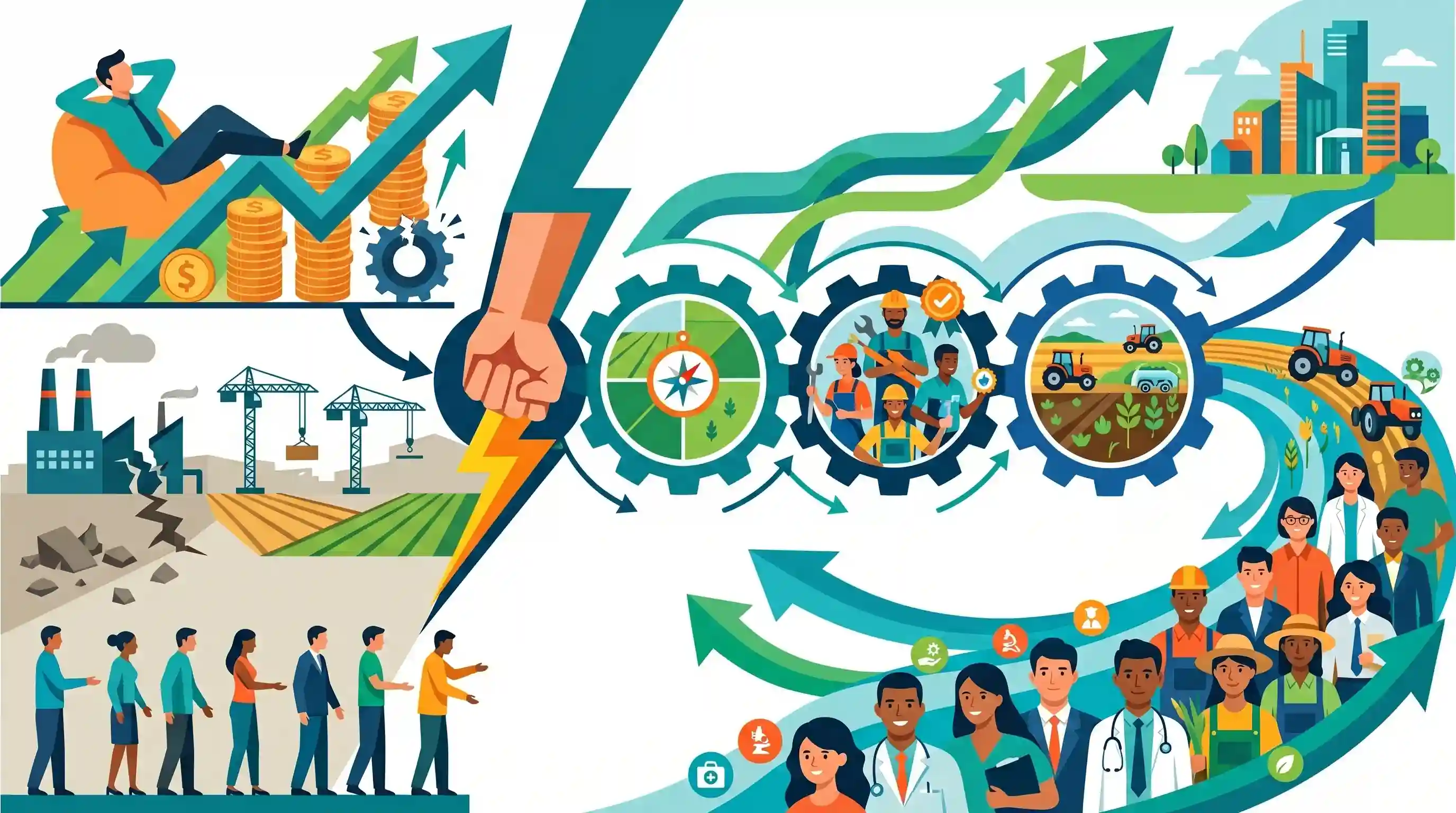
In this opinion piece, economist Surjit Bhalla cautions Indian policymakers against slipping into a "comfort zone" driven by strong headline GDP growth rates. While India is among the fastest-growing major economies, underlying structural vulnerabilities—such as sluggish private sector investment, job creation challenges, and lagging manufacturing growth—demand urgent attention. The article argues that the political and economic leadership needs a "jolt" to initiate difficult, second-generation structural reforms in areas like land, labor, and agriculture. Without these bold reforms, India risks underutilizing its demographic dividend and struggling to achieve its long-term developmental goals.
Key Points
- Despite impressive headline GDP numbers, India's leadership must avoid complacency regarding the economy's structural weaknesses.
- The lack of broad-based private investment (CapEx) and persistent employment challenges require urgent policy attention.
- India needs a policy "jolt" in the form of second-generation economic reforms spanning labor, land, and agriculture to sustain long-term high growth.
- Fostering the manufacturing sector and enhancing labour productivity are critical to fully utilizing the demographic dividend and preventing the economy from stalling in the middle-income trap.
Important Terms
Second-generation Structural Reforms

Deeper, sector-specific reforms (e.g., land, labor, agriculture) following 1991's macro-liberalization. They focus on institutional efficiency, factor markets, and removing micro-level bottlenecks to sustain long-term growth.
UPSC context
GS Paper III (Indian Economy). Tests understanding of structural constraints and the evolution of economic policy post-liberalization.
Demographic Dividend
The economic growth potential resulting from shifts in a population's age structure, specifically when the working-age population (15–64) is larger than the non-working-age dependent population.
UPSC context
GS Paper III (Growth/Development/Employment). Tests the ability to analyze population dynamics as an economic asset versus burden.
MSMEs
Enterprises classified by investment and turnover (per MSMED Act 2020 revision). They contribute ~30% of India's GDP and are the second-largest employment providers after agriculture.
UPSC context
GS Paper III (Industrial Policy). Crucial for questions on inclusive growth, manufacturing, and self-reliance (Atmanirbhar Bharat).
Viksit Bharat
The government's roadmap to transform India into a developed nation by 2047. It focuses on four pillars: Yuva (Youth), Garib (Poor), Mahilayen (Women), and Annadata (Farmers).
UPSC context
GS Paper III (Planning/Growth). Relevant for discussing long-term developmental goals and the "India @ 100" strategy.
Factor Market Reforms
Policy changes targeting the 'factors of production'—land, labor, and capital. These reforms aim to reduce market rigidities and improve the ease of doing business for manufacturers.
UPSC context
GS Paper III (Industrial Growth). Key to understanding why headline GDP growth might not translate to manufacturing jobs.
Private Sector Investment
Capital expenditure by non-government entities in productive assets. It is a critical driver for sustainable growth, though currently trailing government spending in India's recovery phase.
UPSC context
GS Paper III (Investment Models). Tests knowledge of "crowding-in" effects and the sustainability of high GDP growth.
Prelims Trap
Second-generation economic reforms in India primarily focus on product market liberalization, such as industrial de-licensing.
De-licensing and trade liberalization were First-generation (1991) reforms. Second-generation reforms focus on factor markets (land, labor), agriculture, and institutional capacity.
Static Concepts Connected
What is the Middle-Income Trap and what causes it?
- Definition: An economy stagnates at a middle-income level, losing its competitive edge before graduating to high-income status.
- Key Causes: Rising wages erode export competitiveness while a failure to upgrade labor skills and technology prevents higher-value production.
- Escape Strategy: Transitioning from resource-driven growth to innovation-driven growth through deep institutional and structural reforms.
How does government Capital Expenditure (CapEx) impact private investment?
- Crowding In: Public spending on infrastructure reduces logistical costs, increasing profitability and thereby stimulating private sector investment.
- Crowding Out: Heavy government borrowing drives up interest rates, making credit expensive and deterring private capital expenditure.
Cross-Topic Patterns
Demographic Dividend vs Skill Deficit
High GDP growth without adequate job creation links directly to GS2/GS3 themes of educated unemployment, the ILO India Employment Report, and the paradox of a skill deficit.
Factor Markets & Political Economy
The difficulty of implementing second-generation reforms (land, labor, agriculture) connects directly to the stalled rollout of the four Labour Codes and the repeal of the 2020 Farm Laws.

Expect a GS3 Mains question evaluating if India’s reliance on public CapEx over factor-market reforms risks a middle-income trap by 2040.
Linked PYQs · 5
Linked PYQs · 5
- 2023MainsGS3
Faster economic growth requires increased share of the manufacturing sector in GDP, particularly of MSMEs. Comment on the present policies of the Government in this regard.
- 2017MainsGS3
Industrial growth rate has lagged-behind in the overall growth of Gross-Domestic-Product (GDP) in the post-reform period." Give reasons. How far the recent changes in Industrial-Policy are capable of increasing the industrial growth rate?
- 2021MainsGS3
“Investment in infrastructure is essential for more rapid and inclusive economic growth.” Discuss in the light of India's experience.
- 2022MainsGS3
Economic growth in the recent past has been led by increase in labour productivity." Explain this statement. Suggest the growth pattern that will lead to creation of more jobs without compromising labour productivity.
- 2014MainsGS3
While we flaunt India's demographic dividend, we ignore the dropping rates of employability. What are we missing while doing so? Where will the jobs that India desperately needs come from? Explain.
