Bihar electricity grid code 2026 proposed to modernize power framework
Source:solar-quarter ↗
Why It Matters
Modernizing grid codes at the state level is crucial to ensure power stability as the share of intermittent renewable energy sources increases. For Bihar, upgrading the framework means better energy security, regulatory alignment with national guidelines, and improved operational efficiency across distribution and transmission networks.
Summary
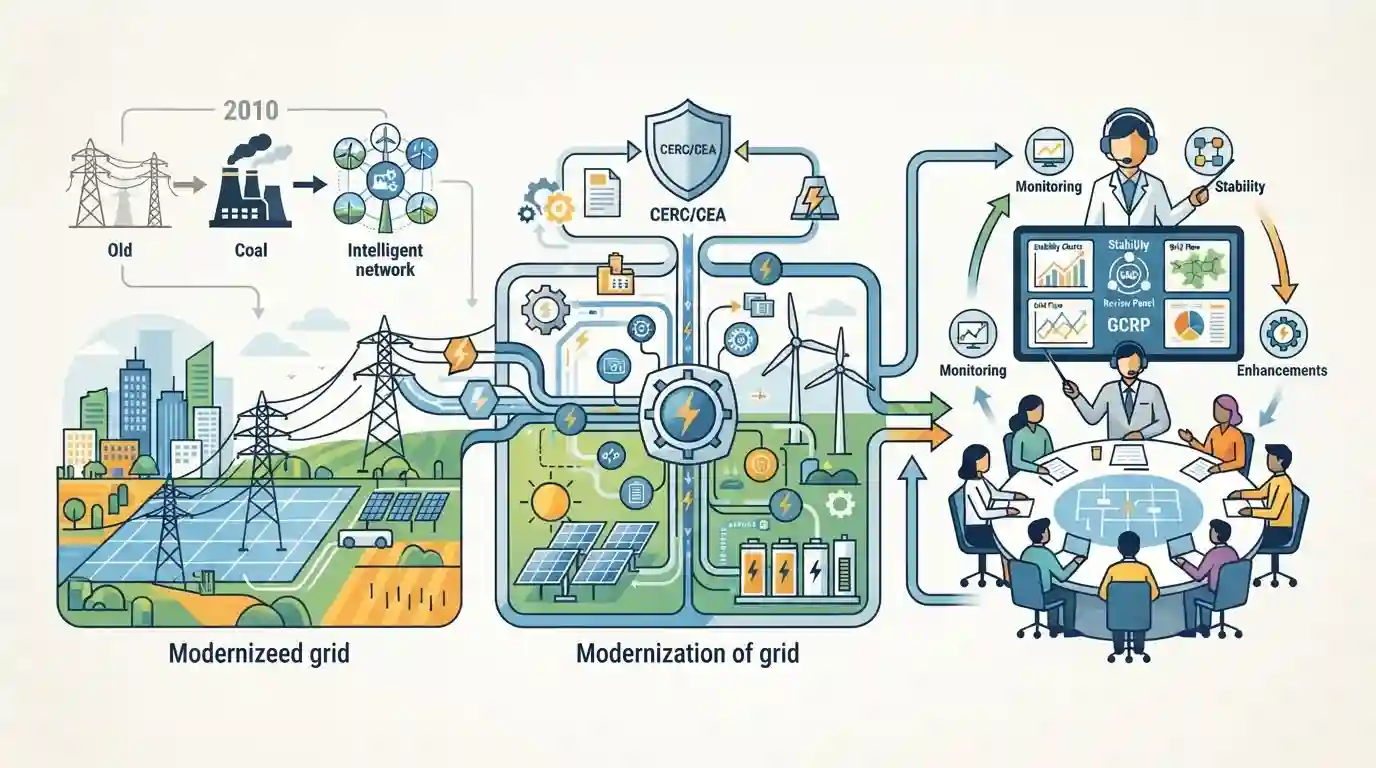
The Bihar Electricity Regulatory Commission (BERC) has introduced the draft 'Bihar Electricity Grid Code 2026', aiming to replace the state's existing 2010 framework. The new grid code is designed to modernize the state power grid, facilitating the seamless integration of renewable energy and energy storage technologies. It ensures compliance with recent Central Electricity Regulatory Commission (CERC) and Central Electricity Authority (CEA) guidelines. The draft proposes the creation of a Grid Code Review Panel (GCRP), chaired by the State Transmission Utility's Director of Operations, to monitor grid stability and propose ongoing enhancements.
Key Points
- The Bihar Electricity Regulatory Commission (BERC) has initiated proceedings for the 'Bihar Electricity Grid Code 2026' to replace the outdated 2010 grid code.
- The primary aim of the draft grid code is to modernize the state's power grid framework, focusing particularly on integrating renewable energy and energy storage technologies.
- The regulations align the state's operations with the latest standards set by the Central Electricity Regulatory Commission (CERC) and Central Electricity Authority (CEA).
- A Grid Code Review Panel (GCRP) will be established, chaired by the Director (Operation) of the State Transmission Utility, to continually monitor and recommend revisions to the code.
Important Terms
Bihar Electricity Grid Code 2026

A draft regulatory framework proposed by the Bihar Electricity Regulatory Commission to replace 2010 rules, focusing on grid modernization, cybersecurity, and integrating renewable energy and storage technologies.
UPSC context
Important for GS Paper 3 (Infrastructure/Energy) for understanding state-level power sector reforms and renewable energy integration.
Grid Code Review Panel (GCRP)
An apex monitoring body, chaired by the State Transmission Utility's Operations Director, responsible for reviewing grid stability, addressing operational issues, and recommending amendments to the state's grid code.
UPSC context
Tests knowledge of institutional frameworks ensuring grid security and regulatory compliance under GS Paper 3 (Infrastructure).
State Transmission Utility (STU)
A state government-notified entity under the Electricity Act 2003 tasked with building, maintaining, and operating an efficient intra-state transmission network. It is strictly prohibited from trading electricity.
UPSC context
Relevant for GS Paper 3 (Energy) regarding the unbundled institutional architecture of India's power sector.
State Load Despatch Centre (SLDC)
The statutory apex body under the Electricity Act 2003 that ensures the integrated, secure, and economic operation of a state's power system through real-time grid control and optimum scheduling.
UPSC context
Highlights grid management and stability mechanisms, vital for GS Paper 3 topics on infrastructure and energy security.
Central Electricity Authority (CEA)
A statutory organization established under the Electricity Act 2003 that advises the government on electricity policy, specifies technical standards, and oversees national power sector planning.
UPSC context
Crucial for GS Paper 2 (Statutory Bodies) and GS Paper 3 (Energy), testing knowledge of national technical regulators.
Prelims Trap
CERC and CEA directly regulate intra-state grid codes and local electricity tariffs.
Inter-state tariffs and national codes fall under CERC, but intra-state grids and tariffs are strictly regulated by State Electricity Regulatory Commissions (like BERC).
Static Concepts Connected
What is the statutory basis and role of CERC vs CEA?
- CERC: A statutory body under the Electricity Act 2003, responsible for regulating inter-state tariffs and national grid standards.
- CEA: Also constituted under the Electricity Act 2003, it acts as a technical advisory body on national electricity policy, safety, and infrastructure standards.
- SERCs: Established at the state level to regulate intra-state tariffs, adjudicate disputes, and frame state-specific grid codes (e.g., BERC).
Why do power grids require specific upgrades for renewable energy?
- Intermittency: Solar and wind power fluctuate; traditional grids need rapid balancing mechanisms to prevent dangerous frequency deviations and grid collapse.
- Energy Storage: Modern grid codes mandate Battery Energy Storage Systems (BESS) integration to absorb excess peak generation and release it during non-generation hours.
- Smart Management: Requires digital communication and forecasting algorithms to manage two-way electricity flow from decentralized sources like rooftop solar.
Cross-Topic Patterns
Grid Modernization & PM-KUSUM linkage
Updating state grid codes is essential for absorbing decentralized solar power generated by farmers under PM-KUSUM, ensuring grid stability while promoting rural energy independence.
Critical Minerals & Grid Storage
Mandates for energy storage integration in modern grid codes directly tie state-level energy security to global supply chains for lithium, vanadium, and critical minerals.

Expect a GS3 question linking RE capacity targets with grid stability challenges (intermittency/storage) and statutory regulatory bodies.
Linked PYQs · 4
Linked PYQs · 4
- 2024-IBPSC_PRELIMSGS1
Renewable Energy means 1. Electricity produced from solar 2. Electricity produced from thermal plants 3. Electricity produced from coal 4. Electricity produced from wind Choose the correct answer from the options given below:
- 2023BPSC_PRELIMSGS1
'Net Metering' is sometimes seen in the news in the context of promoting
- 2016BPSC_PRELIMSGS1
Per capita energy consumption in the state of Bihar is:
- 2017BPSC_PRELIMSGS1
The latest annual per capita consumption of electricity in Bihar is
