RG Kar Case Investigation: State Orders Fresh Probe Into Lapses
Source:newindianexpress ↗
Why It Matters
The interplay and friction between state law enforcement and central investigative agencies (like the CBI) is a recurring theme in federal relations. It highlights the functional constraints, jurisdictional limits, and political implications surrounding sensitive criminal investigations, which is relevant for the Polity and Governance sections.
Summary
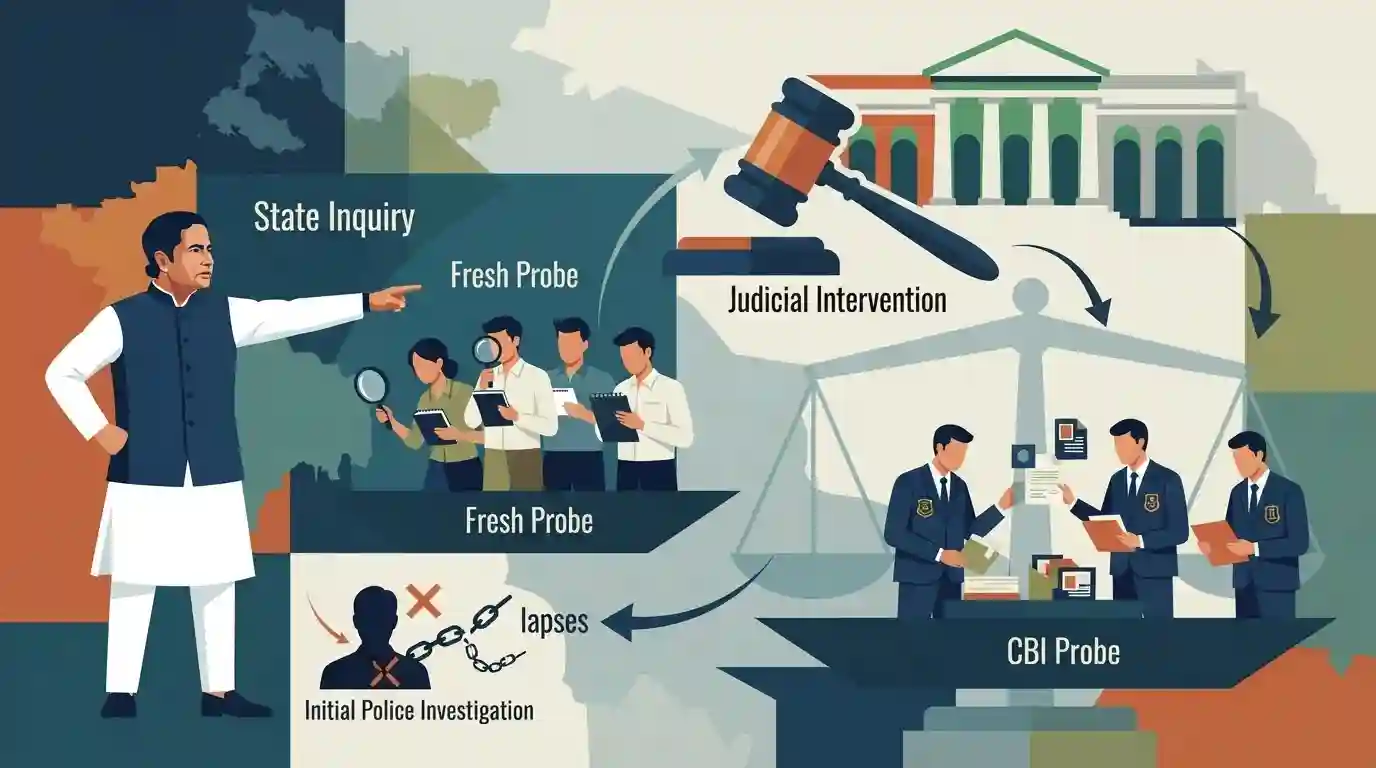
West Bengal Chief Minister Suvendu Adhikari has ordered a fresh probe into the RG Kar Medical College and Hospital rape-murder case, citing lapses in the initial police investigation. The case, which involves the tragic death of a trainee doctor, has seen interventions from the Calcutta High Court and the Central Bureau of Investigation (CBI). The renewed state-level inquiry underscores ongoing tensions and jurisdictional questions regarding the efficacy of state versus central investigative bodies in handling sensitive cases.
Key Points
- West Bengal Chief Minister Suvendu Adhikari ordered a fresh probe into the RG Kar Medical College and Hospital rape-murder case.
- The CM flagged lapses in the initial police investigation of the incident.
- The Central Bureau of Investigation (CBI) has also been involved in the investigation under the Calcutta High Court's jurisdiction, but faced criticism over delays.
- The establishment of a new probe touches upon the jurisdictional interplay between state investigative agencies and central agencies like the CBI.
Important Terms
Central Bureau of Investigation (CBI)

India's premier investigating police agency, operating under the DSPE Act, 1946. It probes major corruption, economic crimes, and serious criminal cases, though state consent is often required for jurisdiction.
UPSC context
GS Paper 2 (Statutory/Regulatory Bodies). Tests knowledge of CBI's mandate, structural limitations, and Centre-State jurisdiction friction.
Commissions of Inquiry Act
A 1952 law allowing Central and State governments to form panels to probe issues of public importance. These commissions hold quasi-judicial powers to summon witnesses and gather evidence.
UPSC context
GS Paper 2 (Governance & Polity). Tests understanding of inquiry mechanisms, federal aspects of parallel probes, and accountability.
Calcutta High Court
India's oldest High Court, established in 1862. It holds jurisdiction over West Bengal and the Andaman and Nicobar Islands, wielding original, appellate, and writ powers.
UPSC context
GS Paper 2 (Judiciary). Tests knowledge of judicial history, territorial jurisdictions, and the constitutional role of High Courts.
RG Kar Medical College and Hospital
A state-run medical college in Kolkata, West Bengal, recently central to a major controversy involving a tragic trainee doctor's death, triggering legal and investigative interventions.
UPSC context
GS Paper 2/3 (Internal Security, Governance). Relevant as a case study for law enforcement lapses and medical institutional safety.
Prelims Trap
The CBI requires prior state consent for investigations even if the probe is directed by a High Court or the Supreme Court.
Constitutional courts (Supreme Court under Art 32 and High Courts under Art 226) can direct the CBI to investigate cases in any state without requiring that State Government's consent.
Static Concepts Connected
What governs the Central Bureau of Investigation's (CBI) jurisdiction in states?
- Source of power: CBI is not a statutory body; it derives its investigative powers from the Delhi Special Police Establishment (DSPE) Act, 1946.
- State consent: Under Section 6 of the DSPE Act, the CBI requires prior consent (general or case-specific) from the State Government to exercise jurisdiction in its territory.
- Judicial override: The Supreme Court and High Courts can bypass the DSPE Act and mandate a CBI investigation in any state without requiring state consent.
Where are policing and public order placed in the Indian Constitution?
- State List: Both 'Public Order' and 'Police' are classified as State subjects under List II (State List) of the Seventh Schedule.
- Primary jurisdiction: Consequently, state governments hold the primary constitutional mandate and jurisdiction over criminal investigations and maintaining local law and order.
Cross-Topic Patterns
CBI general consent & Centre-State friction
States withdrawing general consent to the CBI is a recurring GS-2 federalism theme, highlighting friction between state policing powers and central executive overreach.
Constitutional courts & fair trials
High Courts invoking Article 226 to transfer sensitive state investigations to the CBI showcases judicial intervention to ensure fair trials when local police face institutional mistrust.

Expect a multi-statement prelims question testing the DSPE Act, CBI's non-statutory nature, and state consent exemptions via High Courts.
Linked PYQs · 2
Linked PYQs · 2
- 2020WBCS_PRELIMSGS1
The Supreme Court of India upheld that RTI was applicable to the
- 2022WBCS_PRELIMSGS1
Which of the following taxes is within the Jurisdiction of the Central Government?
