Israeli Minister Al Aqsa Mosque Visit Violating Status Quo Agreement
Source:Indian Express ↗
Why It Matters
The Al-Aqsa Mosque is a major geopolitical and religious flashpoint. Violations of the status quo arrangement routinely spark regional violence and complicate diplomatic normalization efforts in the Middle East, directly tying into UPSC's focus on International Relations and Geography (Places in News).
Summary
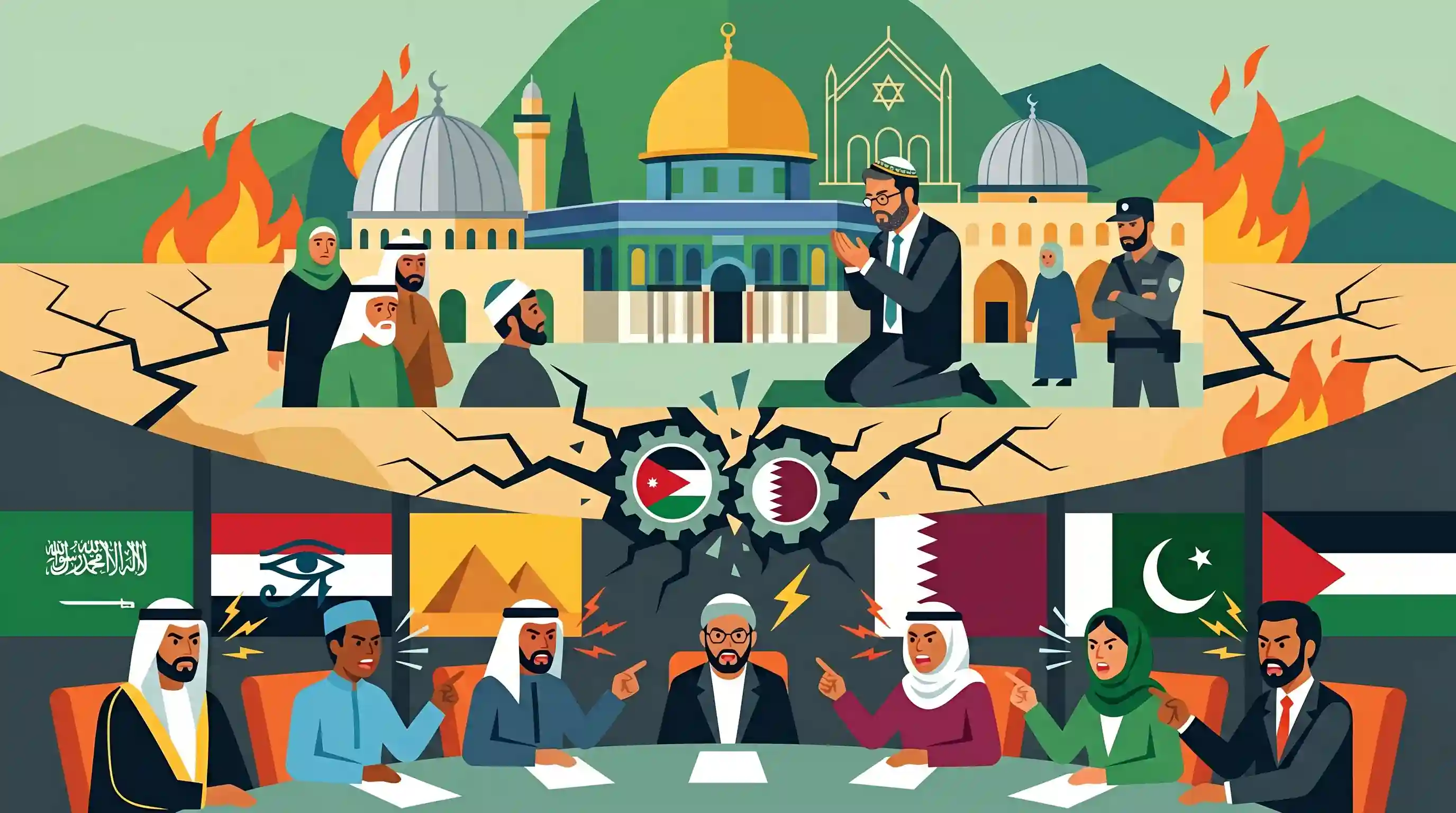
Israeli far-right National Security Minister Itamar Ben-Gvir's recent visit to the Al-Aqsa Mosque compound in Jerusalem, where he prayed and suggested building a synagogue, has triggered severe diplomatic backlash. The act violates a delicate, decades-old 'status quo' agreement that permits Jewish visitation but bans Jewish prayer at the site, which is administered by Jordan. Several nations, including Saudi Arabia, Egypt, Qatar, and Pakistan, alongside the Palestinian Authority, strongly condemned the provocation, warning that such moves escalate religious and political tensions in the volatile Middle East.
Key Points
- Israeli National Security Minister Itamar Ben-Gvir prayed at the Al-Aqsa Mosque compound and floated the idea of building a Jewish synagogue there.
- The site, known to Jews as the Temple Mount, is governed by a long-standing 'status quo' arrangement administered by a Jordanian religious trust, which allows non-Muslims to visit but restricts prayer strictly to Muslims.
- The move drew immediate condemnation from the Palestinian Presidency, Jordan, Saudi Arabia, Qatar, Egypt, and Pakistan, labeling it a dangerous provocation and a violation of international law.
- The unilateral breach of the status quo risks further inflaming regional hostilities amid the ongoing war in Gaza and stalling peace prospects in the Middle East.
Important Terms
Status Quo Arrangement (Jerusalem)

A delicate historical agreement governing Jerusalem's holy sites. Since 1967, it mandates Jordanian Waqf management of the Al-Aqsa compound, allowing non-Muslims to visit while restricting prayer exclusively to Muslims.
UPSC context
GS Paper II: International Relations; essential for understanding West Asian geopolitics and the fragile religious-political balance in regional diplomacy.
Al-Aqsa Mosque
The third holiest site in Islam, located in Jerusalem's Old City. Built on the Temple Mount—Judaism's holiest site—it is a central religious and political flashpoint in the Israel-Palestine conflict.
UPSC context
GS Paper I: Places in News; GS Paper II: International Relations. It remains a core issue for Middle East stability.
Jordanian Waqf
A Jordanian-appointed administrative body responsible for overseeing Islamic holy sites in Jerusalem. It implements the "Hashemite Custodianship," a role recognized by international treaties and the 1994 Israel-Jordan peace treaty.
UPSC context
GS Paper II: International Relations; illustrates Jordan’s unique diplomatic role and administrative authority within the contested territory of East Jerusalem.
Palestinian Presidency
The executive leadership of the Palestinian Authority (PA), which exercises limited self-rule in the West Bank. It is the internationally recognized representative of the Palestinian people in diplomatic negotiations.
UPSC context
GS Paper II: International Relations; central to the "Two-State Solution" framework and India’s long-standing diplomatic engagement with Palestine.
Hamas
A Palestinian Sunni-Islamic militant and political organization that has governed the Gaza Strip since 2007. It rejects the Oslo Accords and maintains an armed resistance stance against Israel.
UPSC context
GS Paper II: International Relations; impacts regional security dynamics and India’s strategic interests in the West Asian region.
Prelims Trap
"The Al-Aqsa Mosque compound is directly administered by the Palestinian Authority."
Aspirants often assume the Palestinian Authority manages the site. Under the historic 'Status Quo', daily administration falls to the Jerusalem Islamic Waqf, which is controlled and funded by Jordan.
Static Concepts Connected
What is the "Status Quo" arrangement for Jerusalem's holy sites?
- Ottoman Origins: The framework originated during the Ottoman Empire to manage competing religious claims and maintain peace over Jerusalem's shared holy sites.
- Jordanian Custodianship: Reaffirmed in the 1994 Israel-Jordan peace treaty, it designates the Jordan-funded Jerusalem Islamic Waqf as the sole administrator of the Al-Aqsa compound.
- Prayer Restrictions: Under the agreement, non-Muslims are permitted to visit the site as tourists, but are strictly prohibited from conducting prayers there.
What are the core pillars of the 2002 Arab Peace Initiative?
- Saudi Proposal: Proposed by Saudi Arabia and endorsed by the Arab League, it offers a comprehensive framework to resolve the Arab-Israeli conflict.
- 1967 Borders: It demands Israel's full withdrawal from all territories occupied during the 1967 Six-Day War, including the West Bank and Gaza.
- East Jerusalem: It requires the establishment of an independent, sovereign Palestinian state with East Jerusalem (housing Al-Aqsa) as its recognized capital.
Cross-Topic Patterns
Abraham Accords vs. Arab Peace Initiative
Recent normalization efforts (Abraham Accords) largely bypassed the Palestinian issue, but flare-ups at Al-Aqsa repeatedly force Gulf states to revert to the 2002 Arab Peace Initiative preconditions.
Geography of the Levant and 1967 Borders
UPSC frequently tests border configurations. Disputes over East Jerusalem and the West Bank directly tie into mapping questions about the Levant region and countries bordering the Mediterranean Sea.

Expect a 2026 Prelims pair-matching question linking "Al-Aqsa Mosque administration" with "Jordan" to test the Status Quo arrangement.
Linked PYQs · 3
Linked PYQs · 3
- 2023PrelimsGS1
Consider the following statements: Statement-I: Israel has established diplomatic relations with some Arab States. Statement-II: The 'Arab Peace Initiative' mediated by Saudi Arabia was signed by Israel and Arab League. Which one of the following is correct in respect of the above statements?
- 2022PrelimsGS1
The term "Levant" often heard in the news roughly corresponds to which of the following regions?
- 2018MainsGS2
“India’s relations with Israel have, of late, acquired a depth and diversity, which cannot be rolled back.” Discuss.
