Bangladesh-India Bilateral Ties: Diplomatic Reset On Mutual Interests
Source:newindianexpress ↗
Why It Matters
As a crucial immediate neighbor sharing a long land and river border, bilateral developments between India and Bangladesh directly influence India's external security, trade corridor strategies, and regional stability in South Asia.
Summary
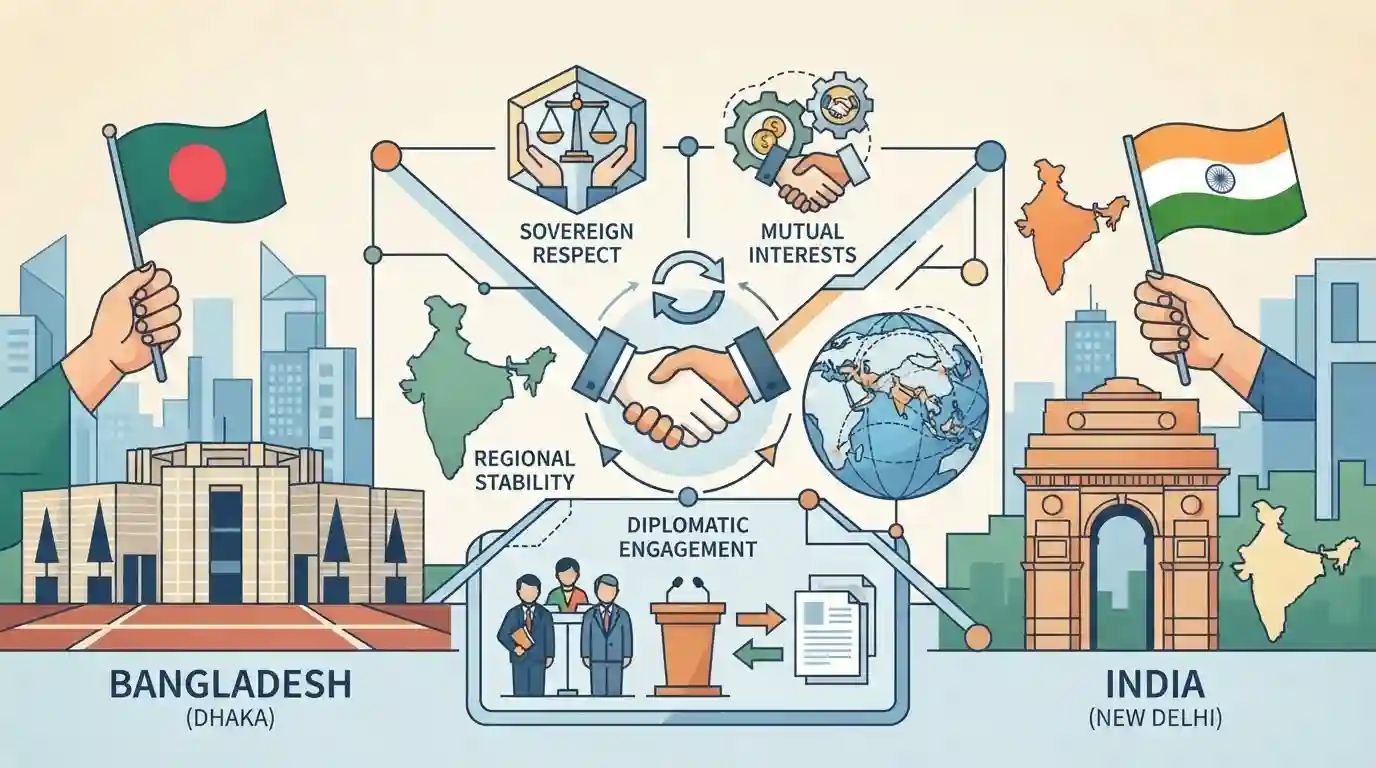
Bangladesh has initiated diplomatic steps to reset its bilateral relations with India, underlining that the ties should be anchored in mutual interests and sovereign respect. The article discusses ongoing geopolitical dynamics, regional stability, and diplomatic engagement between New Delhi and Dhaka.
Key Points
- Bangladesh has expressed a desire to reset diplomatic ties with India, emphasizing that the relationship must be built on mutual interests and sovereign equality.
- The diplomatic outreach comes amidst political transitions in Dhaka, with both nations seeking to address security concerns, cross-border stability, and bilateral cooperation.
- India-Bangladesh relations remain critical for regional stability, trade, connectivity, and water resources management in South Asia.
Important Terms
Ganges Water Sharing Treaty

A historic bilateral accord signed in 1996 regulating the dry-season sharing of Ganges River waters between India and Bangladesh through the Farakka Barrage, crucial for transboundary water management.
UPSC context
WBCS Paper II (International Relations & Neighborhood Policy): Tests understanding of India-Bangladesh bilateral treaties, transboundary water disputes, and regional hydro-diplomacy.
Interim Government of Bangladesh
A temporary administration formed in Bangladesh following the ouster of Sheikh Hasina in 2024, headed by Nobel laureate Muhammad Yunus to oversee governance and institutional reforms.
UPSC context
WBCS Paper II (Current Affairs & Regional Stability): Important for questions on political transitions in India's immediate neighborhood and foreign policy adjustments.
Ministry of External Affairs India
The nodal government agency in India responsible for conducting foreign relations, formulating diplomatic strategies, and managing bilateral ties with neighboring nations like Bangladesh.
UPSC context
WBCS Paper II (Indian Polity and International Relations): Tests institutional mechanisms of Indian foreign policy formulation and diplomatic engagements.
Static Concepts Connected
What are the core principles of India's Neighbourhood First Policy and key bilateral frameworks with Bangladesh?
- Core Focus: Focuses on priority engagement, connectivity, non-reciprocity, and disaster relief with immediate neighbours.
- Ganges Treaty: Signed in 1996 for a 30-year period, governing dry-season water sharing at Farakka.
- Land Boundary: Resolved long-standing enclaves and adverse possessions through the 100th Constitutional Amendment Act.
Cross-Topic Patterns
Neighbourhood Policy + Border Security Integration
India's bilateral re-calibrations in South Asia connect neighbourhood diplomacy with internal security management and border infrastructure under the Act East framework.

Bangladesh political transition + Ganges Treaty renewal likely to be tested as a multi-statement IR question.
Linked PYQs · 1
Linked PYQs · 1
- 2008WBCS_PRELIMSGS1
India's dispute over sharing of water with Bangladesh arises out of the distribution of water from
