Bangladesh Approves Hilsa Fish Export to India for Durga Puja
Source:Indian Express ↗
Why It Matters
Important for regional awareness regarding bilateral trade, cultural ties, and iconic regional products of West Bengal.
Summary
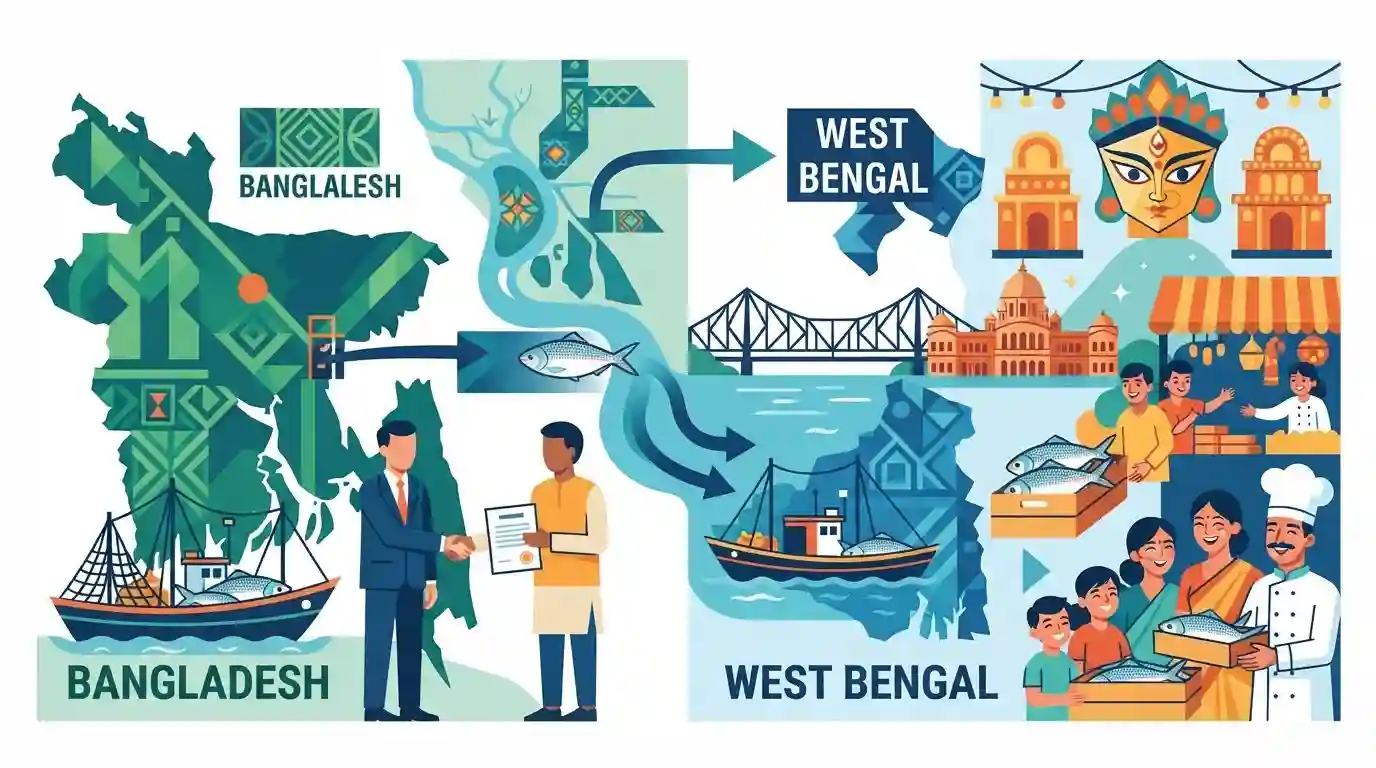
The Bangladesh government has approved the export of Hilsa fish to India ahead of the Durga Puja celebrations, bringing joy to seafood lovers in West Bengal where the fish is culturally indispensable during the festive season.
Key Points
- Bangladesh has permitted the export of Hilsa fish to India ahead of the Durga Puja festival, continuing a diplomatic and cultural tradition.
- Hilsa (Ilish) is a prized delicacy in West Bengal and holds immense cultural significance during festive seasons like Durga Puja.
- Export policies on Hilsa often reflect bilateral relations and domestic availability considerations in Bangladesh.
Important Terms
Hilsa Fish (Ilish)

An anadromous herring-like fish found in the Bay of Bengal and major rivers like the Padma, considered a cultural delicacy and indispensable during Durga Puja in West Bengal.
UPSC context
WBCS Paper I (Geography of India & West Bengal, Economy) and cultural heritage; tests riverine resources and regional trade linkages.
Bangladesh Government
The executive authority of Bangladesh, which periodically regulates or permits seasonal Hilsa export quotas to India as a diplomatic goodwill gesture.
UPSC context
WBCS Paper II (International Relations, India-Bangladesh bilateral ties, and economic diplomacy).
Durga Puja
A major Hindu festival in West Bengal where cultural identity, community feasting, and traditional fish consumption—especially Hilsa—reach their annual peak.
UPSC context
WBCS Paper I (West Bengal Culture, History, and Social Traditions).
Prelims Trap
Hilsa fish is exclusively caught and traded within the eastern riverine ecosystems of West Bengal and Bangladesh.
Aspirants often assume Hilsa production is exclusive to the Padma-Meghna river system in Bangladesh/West Bengal, ignoring growing production in western maritime estuaries like Gujarat.
Static Concepts Connected
What are the key geographical and ecological features of the Padma-Meghna river system in the Bengal delta?
- Distributary Origin: Originates as the principal distributary of the Ganga upon entering Bangladesh, joining the Jamuna and Meghna before emptying into the Bay of Bengal.
- Delta Formation: Forms the world's largest delta, characterized by high tidal influence, heavy silt deposition, and rich nutrient mixing ideal for anadromous fish like Hilsa.
- Mangrove Ecology: Supports vast mangrove ecosystems in its lower reaches, notably the Sundarbans shared between India and Bangladesh.
Cross-Topic Patterns
Bilateral Diplomacy & Cultural Soft Power
Hilsa export permissions act as a classic barometer of diplomatic relations and soft power goodwill gestures between New Delhi and Dhaka.
River Ecology & Migration Shifts
Climate-induced changes in river flow and siltation in the Padma-Meghna basin directly alter hilsa migration routes and catch yields in eastern India.

Hilsa trade patterns and Padma river diplomacy with Bangladesh will likely feature in a statement-based IR or WB geography question.
Linked PYQs · 2
Linked PYQs · 2
- 2018WBCS_PRELIMSGS1
Geomorphologists opine that change of the course of the Kosi river resulted in
- 2021WBCS_PRELIMSGS1
Mica producing district of West Bengal is
