Bangladesh Political Transition and Bilateral Relations
Source:Indian Express ↗
Why It Matters
Regime changes in neighboring countries directly impact India's strategic, economic, and internal security interests. Understanding the political shift in Bangladesh is vital for analyzing the future trajectory of the Neighborhood First policy and border management in the North East.
Summary
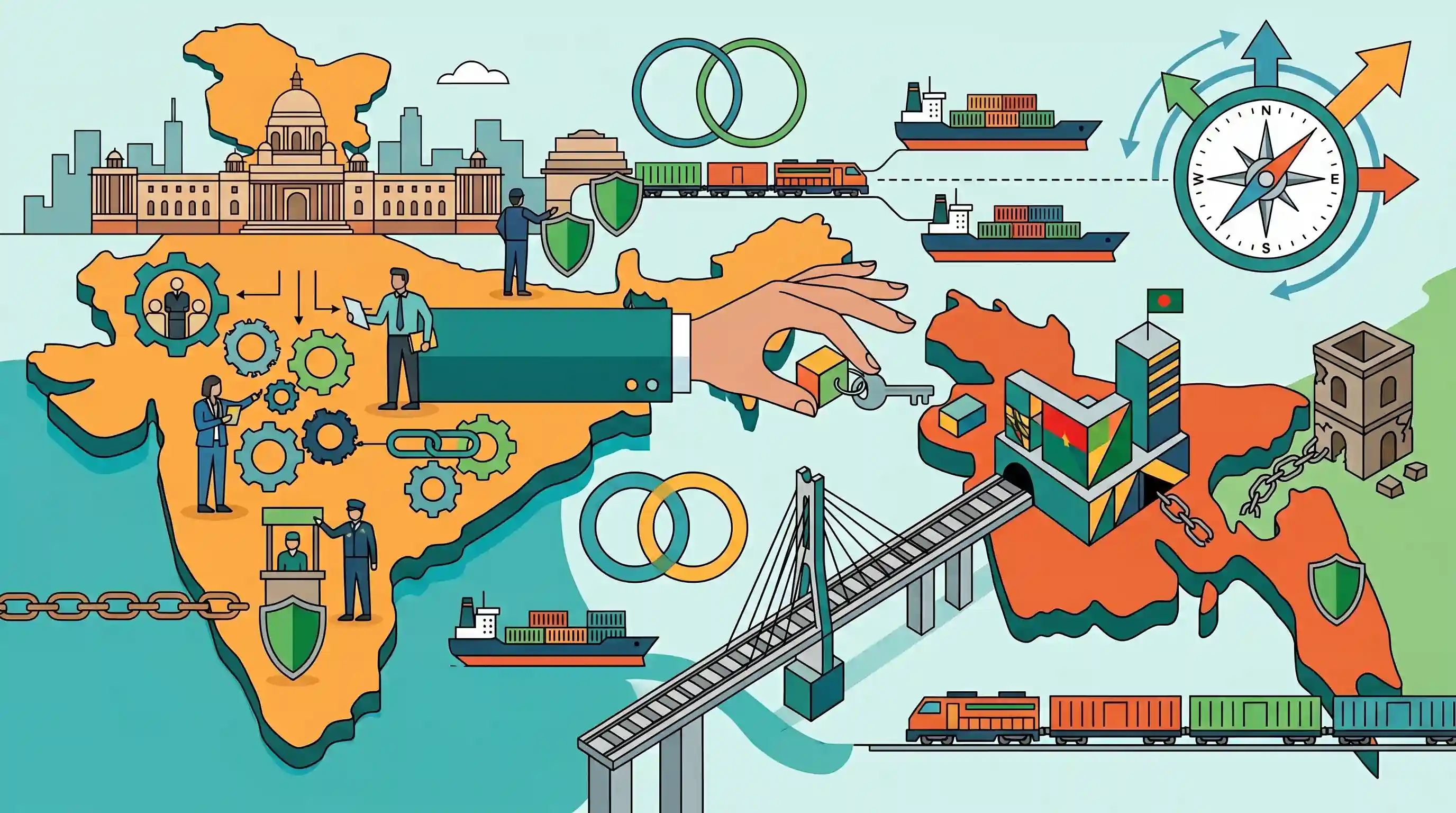
The article analyzes the political transition in Bangladesh and advocates for New Delhi to proactively engage with the Bangladesh Nationalist Party (BNP) and its acting chairman Tarique Rahman. With the traditional reliance on the Awami League no longer viable, a diplomatic reset is crucial for India to protect its strategic interests, ensure border security, and maintain the efficacy of its 'Neighborhood First' policy amidst shifting regional dynamics.
Key Points
- The shifting political landscape in Bangladesh, particularly the ouster or marginalization of the Awami League, compels India to rethink its diplomatic strategy.
- The Bangladesh Nationalist Party (BNP), led by acting chairman Tarique Rahman, is poised to play a central role in the country's future governance.
- Historically, India-BNP relations have been strained due to New Delhi's concerns over anti-India insurgents and radical elements receiving sanctuary during previous BNP regimes.
- A pragmatic diplomatic reset is required for India to safeguard its security, economic, and connectivity interests, preventing external powers from exploiting the political transition.
- Broader engagement with major democratic forces beyond just the Awami League is crucial for the long-term success of India's 'Neighborhood First' policy.
Important Terms
Neighborhood First Policy

India's core foreign policy priority focusing on building stable, well-connected, and mutually beneficial relations with its immediate neighbors through a consultative and non-reciprocal approach.
UPSC context
GS Paper II: International Relations; tests understanding of India's regional strategy and commitment to neighborhood stability.
Awami League
A major center-left secular political party in Bangladesh that led the 1971 independence movement; it has historically maintained strong, cooperative ties with New Delhi.
UPSC context
GS Paper II: International Relations; significant for understanding the historical continuity and ideological alignment in India-Bangladesh relations.
Bangladesh Nationalist Party (BNP)
One of the two major political parties in Bangladesh, founded by Ziaur Rahman; historically characterized by its nationalist stance and perceived skepticism toward Indian influence.
UPSC context
GS Paper II: International Relations; highlights the challenge of maintaining bilateral stability during shifts in neighboring governments.
Tarique Rahman
The acting (now formal) Chairman of the BNP, who has led the party from exile; his evolving stance is pivotal to the future of India-Bangladesh diplomacy.
UPSC context
GS Paper II: International Relations; tests knowledge of key political figures shaping regional geopolitics and security.
1971 Liberation War
The 1971 conflict that led to Bangladesh's independence from Pakistan, where India's military intervention played a decisive role in the liberation.
UPSC context
GS Paper II: Bilateral Relations; forms the emotional and historical foundation of the Indo-Bangla strategic partnership.
Border Management
The monitoring and safeguarding of the 4,096 km shared boundary to address challenges like illegal migration, smuggling, and cross-border insurgency.
UPSC context
GS Paper III: Internal Security; critical for stability in India's Northeast and preventing non-traditional security threats.
Prelims Trap
"Bangladesh is currently India's largest trading partner, reflecting the success of the Neighbourhood First Policy."
Bangladesh is India's largest trading partner *in South Asia*, not globally (where USA and China lead). UPSC often drops regional qualifiers to create traps.
Static Concepts Connected
What is the Siliguri Corridor and why is Bangladesh transit vital?
- Chicken's Neck: A highly sensitive, narrow 22-km strip connecting mainland India to the Northeast, vulnerable to geopolitical choke-points (e.g., Doklam proximity).
- Transit Alternatives: Bangladesh provides crucial bypass routes, such as the Akhaura-Agartala rail link and protocol inland waterways, drastically reducing logistics costs and time.
- Northeast Integration: Connectivity through Bangladesh offers landlocked Northeastern states direct access to the Bay of Bengal via ports like Chattogram and Mongla.
What are the flagship connectivity and energy initiatives between India and Bangladesh?
- Friendship Pipeline: A cross-border energy pipeline transporting high-speed diesel from Numaligarh Refinery in Assam to Parbatipur in Bangladesh.
- Maitri Setu: A strategic bridge built over the Feni River, connecting Sabroom in Tripura to Ramgarh in Bangladesh, enhancing trade and port access.
- Cross-Border Rail: Passenger and freight rail links like the Bandhan Express, Maitree Express, and Mitali Express that restore pre-1965 connectivity.
Cross-Topic Patterns
Regime change & Northeast insurgency
Political transitions in Dhaka directly impact internal security in India's Northeast, historically dictating whether insurgent groups like ULFA find cross-border safe havens.
Act East & Bay of Bengal
Bangladesh's coastal positioning is vital for monitoring sea lines of communication and countering China's strategic maritime encirclement in the Indian Ocean.

Expect a 2026 GS2 Mains question on adapting 'Neighbourhood First' to regime changes, or Prelims mapping of Indo-Bangla transit routes.
Linked PYQs · 2
Linked PYQs · 2
- 2020MainsGS3
Analyze internal security threats and transborder crimes along Myanmar, Bangladesh and Pakistan borders including Line of Control (LoC). Also discuss the role played by various security forces in this regard.
- 2022MainsGS2
Do you think that BIMSTEC is a parallel organisation like the SAARC ? What are the similarities and dissimilarities between the two ? How are Indian foreign policy objectives realized by forming this new organisation?
